Best Man Speech Timeline: When to Write It, When to Give It
Best man speech anxiety comes from bad timing, not writing. Follow this week-by-week best man speech timeline to draft, practice, and deliver a memorable toast.
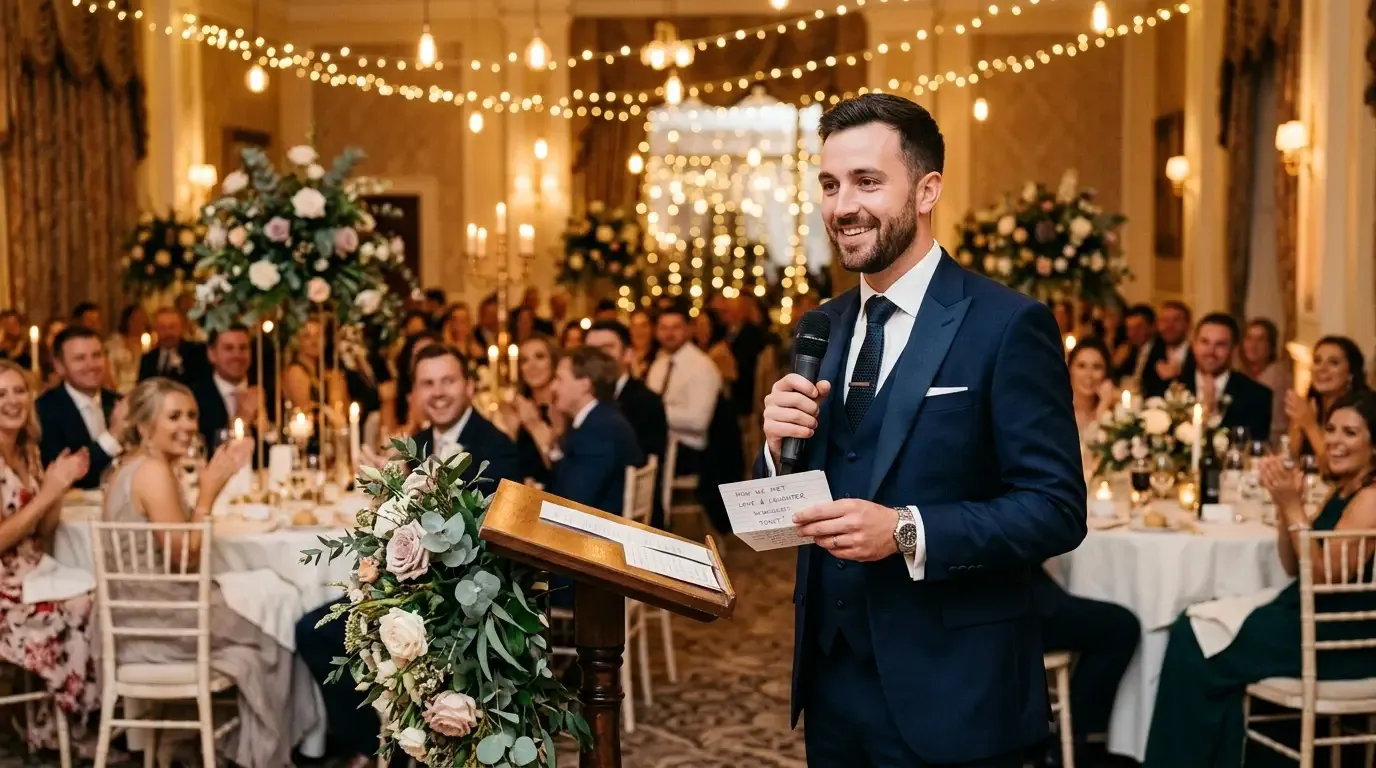
Best man speech anxiety comes from poor timing. When you lack a clear schedule, blank-page panic sets in, and you end up scrambling the week of the wedding.
Key Takeaways
- A best man speech timeline provides a structured schedule to gather memories, write drafts, and practice out loud before wedding week.
- Gather stories and themes 6 to 8 weeks before the ceremony date.
- Complete your first draft 3 to 4 weeks out to allow time for revisions and cutting inside jokes.
- Spend the final two weeks rehearsing out loud with a timer to lock in your pacing.
- Use physical index cards or a pocket notebook at the microphone to avoid phone screen glare in wedding photos.
Write the night before, and you produce inside jokes that alienate the room. Start six months early, and you overthink every sentence until it sounds corporate.
Over a decade of coordinating weddings, I have watched dozens of best men stand up with a microphone. The best toasts do not come from natural-born speakers. They come from groomsmen who followed a calendar. A best man named Chris set deadlines, rehearsed three times, and gave a toast that brought the room to tears while he stayed calm enough to eat his dinner.
Best Man Speech Preparation: Good vs. Bad Timeline
| Action | Good Timeline | Bad Timeline |
|---|---|---|
| Brainstorming | 6–8 weeks before | The night before |
| First Draft | 3–4 weeks before | During the ceremony |
| Practice | 2 weeks of out-loud reading | Winging it at the mic |
| Notes | Index cards or pocket notebook | Reading off a bright phone screen |
The Ultimate Best Man Speech Timeline
6–8 Weeks Before: Collect Stories
Do not draft from scratch or rely on memory alone.
- Crowdsource material: Text the wedding party and mutual friends for one specific memory involving the groom.
- Choose specifics over summaries: Two concrete anecdotes tell a better story than five vague compliments.
- Include the partner: Write down your first impression of the groom’s partner and how that relationship changed him for the better.
3–4 Weeks Before: Write the First Draft
Target 3 to 5 minutes read aloud, which equals 500 to 700 words (Toastmasters International recommends this pacing for dining audiences).
Use a four-part structure:
- The Hook (1 minute): State your relationship to the groom, then thank the hosts.
- The Story (2 minutes): Share one anecdote showing why the groom makes a loyal, dependable friend.
- The Pivot (1 minute): Address the partner directly and explain why they suit each other.
- The Toast (30 seconds): Ask the room to stand and raise their glasses.
2 Weeks Before: Read and Refine
Read your draft out loud with a timer at least twice.
- Drop inside jokes: If a reference requires a five-minute backstory, cut it. The audience will tune out.
- Trim setup time: Get straight to the action in your stories.
- Listen for rhythm: Spoken words land differently than written text. Fix sentences that trip your tongue.
1 Week Before: Check Logistics
Confirm details with the couple or wedding planner:
- Confirm the speaking slot: Know your exact position in the reception program. You will usually follow the maid of honor during dinner.
- Check the microphone setup: Ask whether you will hold a wireless handheld mic, stand at a podium, or speak unamplified.
- Transfer words to paper: Write your outline in a pocket notebook or on sturdy index cards. Paper keeps your hands steady and looks clean in professional photos.
Day Of: Deliver and Enjoy
Keep your physical cards in your jacket pocket. Do not memorize your speech verbatim.
- Cut your pace: Nerves push people to rush. Take one deliberate breath and speak at three-quarters of your conversational speed.
- Make eye contact: Look at the couple during personal lines and sweep the room during jokes.
- Rely on your cards: Reading cleanly from notes looks far better than freezing mid-speech from memory.
Running Out of Time? The 7-Day Emergency Plan
If the wedding is next week and you have not written a word, skip the panic. Use this seven-day triage:
- Days 1–2 (Pick One Story): Drop the plan to review his whole life. Pick one memory showing his character.
- Days 3–4 (Write 450 Words): Write four sections: Hook (30 seconds), Story (90 seconds), Tribute to the couple (45 seconds), Toast (15 seconds).
- Days 5–6 (Practice on Cards): Write notes on two index cards. Time yourself reading aloud five times.
- Day 7 (Reception Day): Drink water, save alcohol until after your toast, and step up to the mic with your cards.
When to Give the Best Man Speech (Reception Toast Order)
You should know the exact order of events before sitting down for dinner.

Delivering your toast while guests are seated with drinks prevents restlessness and keeps attention on the couple.
The Traditional Reception Toast Order
Wedding programs follow a standard sequence to maintain energy through dinner:
- The Welcome Toast: The host or parents of the bride speak shortly after guests take their seats, thanking everyone for coming.
- The Maid of Honor Speech: Delivered midway through dinner or before dessert, establishing a personal and celebratory tone.
- The Best Man Speech: Follows the maid of honor immediately. The audience is warmed up, seated, and ready for a mix of humor and sincerity.
- The Newlyweds’ Toast: The couple thanks their guests, wedding party, and families before opening the dance floor.
Toast Timing Rules
- Wait for dinner service: Hungry guests waiting on food make an inattentive audience.
- Finish before dancing begins: Once guests stand up and head to the bar or dance floor, background noise destroys the moment.
- Coordinate with catering: Speak 15 to 20 minutes after entrées arrive, or right as staff pour champagne for dessert.
Common Timing Mistakes to Avoid
The biggest mistake best men make is writing the speech the week of the wedding.
First drafts always read generic. You need two weeks to cut clichés and isolate the one story that defines your friendship.
Starting two months out gives you room to write, trim, and practice without panic. Since your audience shapes what you can say, check out our guide on wedding guest list etiquette before finalizing your material.
If you are also coordinating the party before the wedding, read our Ultimate Bachelor Party Guide for complete group logistics.
Frequently Asked Questions
When should I write my best man speech?
Collect stories and memories 6 to 8 weeks before the wedding, and finish your first draft 3 to 4 weeks prior. This leaves time for revisions and out-loud rehearsal.
When during the wedding reception does the best man give his speech?
The best man speech occurs during dinner after the main course or before dessert, following the parents' welcome and maid-of-honor toasts.
How long should a best man speech be?
Aim for 3 to 5 minutes at a conversational pace (roughly 500 to 700 words). Longer speeches lose guest attention during dinner.
Should I use notes for my best man speech?
Yes. Speaking from index cards or a notebook prevents stage freeze and keeps your delivery steady. Avoid phones, as screen glare shows up in photos.
Do I have to give a best man speech?
While customary, talk to the groom early if severe anxiety is an issue. You can give a 60-second welcome toast or share the microphone with the maid of honor.

Bridal by Bentley
Wedding Editorial
Bridal by Bentley publishes wedding inspiration and practical planning guides to help couples compare options and prepare for their celebrations.