What to Do When Your Wedding Budget Doubles (Before You Panic)
Has your wedding budget doubled? Don't panic. Learn the steps to trace where the cost increases came from, trim guest counts, prioritize vendors, and recover your budget.
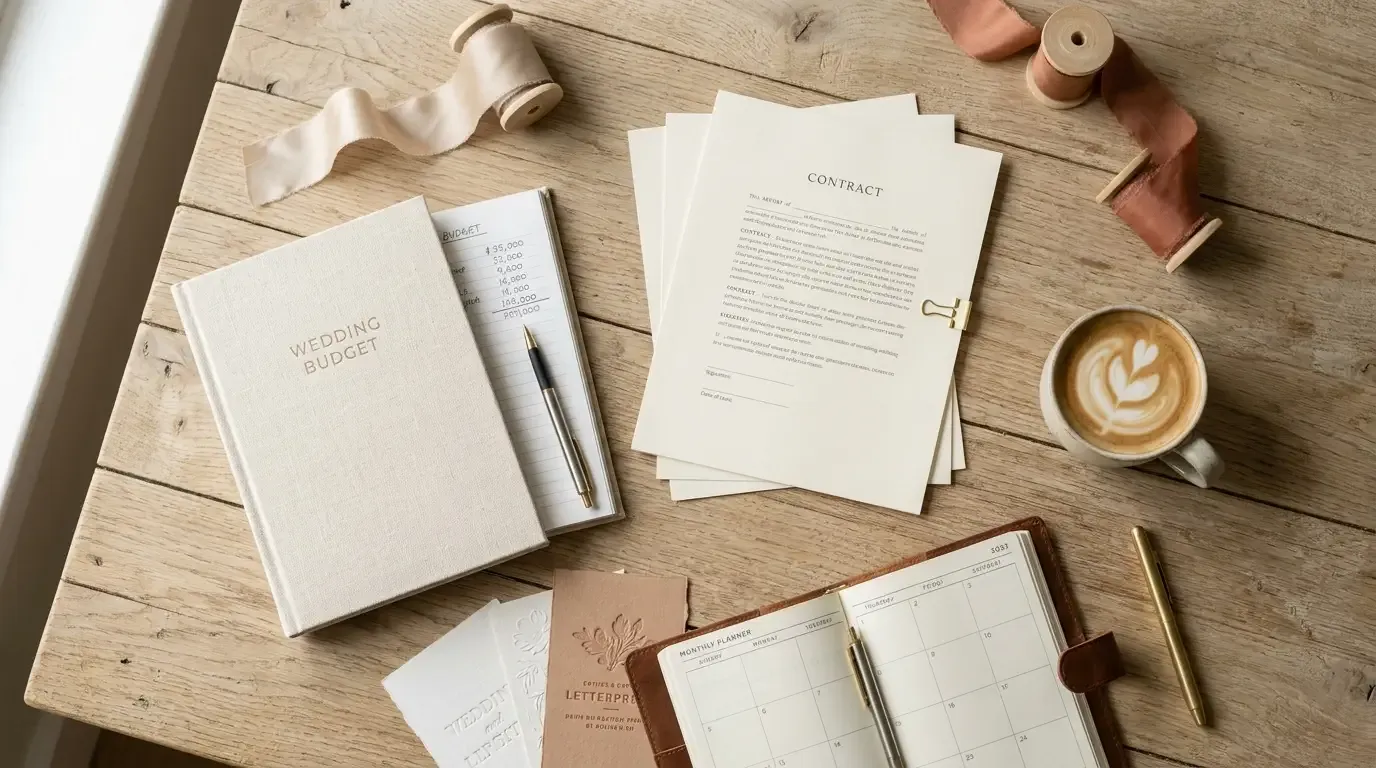
It is the call or email every couple dreads: the final vendor estimates arrive, you open the spreadsheet, and the total is twice what you originally set out to spend.
If this has happened to you, take a deep breath. This happens to far more couples than the wedding industry likes to admit. The average US wedding now runs between $34,000 and $36,000, but that average hides a very common reality: a couple planning a $15,000 celebration who ends up facing a $30,000 bill hasn’t done anything wrong. They’ve simply run headfirst into the reality of how the wedding industry’s hidden costs add up, typically adding 9% to 15% on top of every base vendor quote you collect.
A doubled budget is not a planning failure. It is simply the moment your wedding vision meets the real-world cost of executing it. Before you panic, follow this step-by-step action plan to audit your quotes, reclaim control of your spending, and keep your sanity intact.
1. Trace Where the Doubling Actually Happened
Do not look at the final total as one giant, terrifying number. Instead, pull your original estimate and compare it line-by-line against your current vendor quotes.
Almost always, the budget gap is concentrated in two or three specific categories, rather than spread evenly across everything. Look closely at:
- Venue food & beverage minimums: Many venues require a minimum spend on catering and alcohol that exceeds what your actual headcount would cost on an à la carte menu.
- Catering headcount calculations: Tax, gratuity, and service fees (which can add 20–30% to food bills) are often omitted from initial pricing lists.
- Florals & rentals: Initial floral estimates are often generic, but once a florist conducts a site visit and quotes for the venue’s actual scale, the numbers can rise significantly.
2. Cut Guest Count Before Cutting Anything Else
At roughly $290 to $300 per guest in 2026, your guest list is the single biggest lever you have to control costs.
Removing just 20 guests from your list recovers close to $6,000 immediately in catering, drinks, rentals, and stationery. This is the highest-leverage decision available to you, and it is usually the one couples try hardest to avoid. If you need a clear system for making these cuts, read our guide on Wedding Guest List Do’s and Don’ts to help you set boundaries without the guilt.
3. Separate “Must-Stay” from “Nice-to-Have” Vendors
Sit down with your partner and align on which categories are non-negotiable.
- The Non-Negotiables: Photography and the venue are the two categories couples report regretting cutting most after the fact. These are the elements that define the day and preserve the memories.
- The Flexible Categories: Florals, stationery, and live music (versus a DJ) are the categories couples report being able to scale down or substitute without regretting it later.
4. Ask for a Revised Scope, Not Just a Discount
Vendors rarely agree to lower their rates for the same amount of work, but almost all of them will work with you to revise the scope of services to hit your target number:
- Catering: Ask if you can switch from a food-station setup to a plated dinner (which requires less waste), or shorten the cocktail hour.
- Florals: Ask your florist if they can substitute premium blooms with high-quality greenery, or repurpose ceremony arrangements for the reception tables.
- Photography: Ask if you can reduce coverage time from 8 hours to 6 hours to lower the base package cost.
For more negotiation strategies and exact scripts to use, check out our guide on How to Negotiate With Wedding Vendors.
5. Build in the Hidden-Cost Buffer Now
Once you have trimmed and adjusted your budget, set aside a 10% buffer specifically for hidden expenses.
This fund covers service charges, tips, wardrobe alterations, and day-of transportation overages. Budgeting for this buffer upfront prevents a second, smaller “budget shock” in the final weeks of planning. To make sure you’ve accounted for every detail, review our complete breakdown of Hidden Wedding Costs You Need to Know.
The Bottom Line
A doubled budget is a call to action, not a crisis. By auditing your quotes, prioritizing your vendor list, and adjusting your scope of work, you can bring your wedding expenses back into a comfortable range while still hosting a beautiful, unforgettable day.

Bridal by Bentley
Wedding Editorial
Bridal by Bentley publishes wedding inspiration and practical planning guides to help couples compare options and prepare for their celebrations.