Wedding Rings Guide: History, Styles, Metals and Care
Explore wedding ring history, compare metals and band styles, and learn how to choose the right fit and care for plain, diamond and gemstone wedding rings.
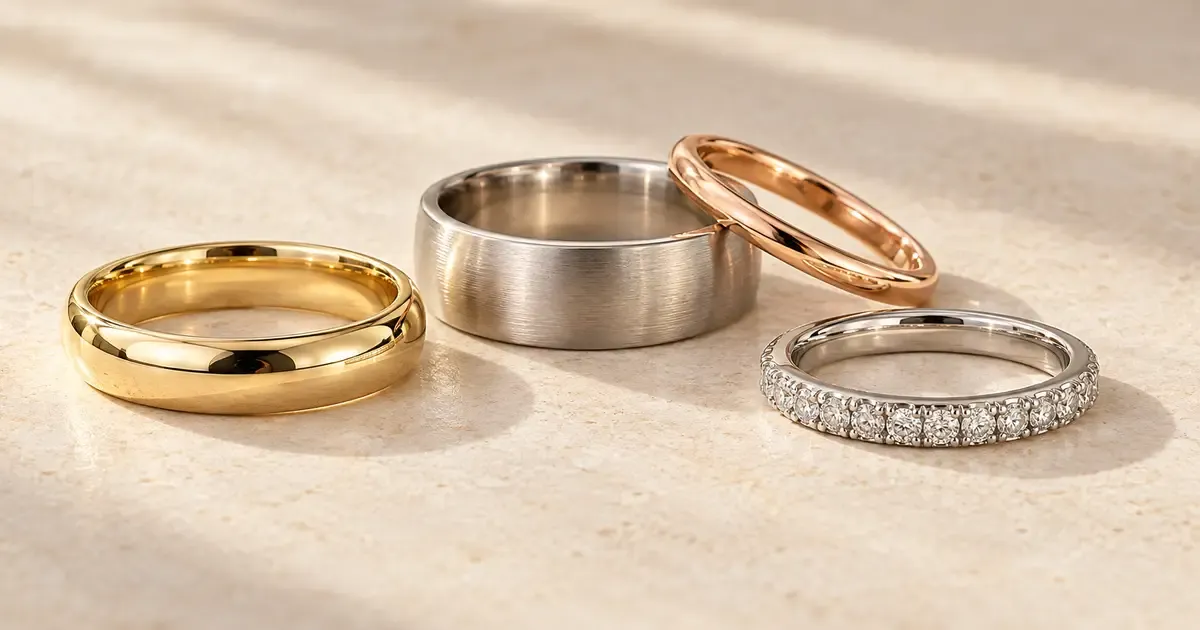
Wedding rings are bands worn to mark marriage, with styles ranging from plain metal to diamond-set and coloured-gemstone designs. The best choice balances appearance, fit, maintenance and how you use your hands. A ring that looks beautiful in a display case still needs to feel comfortable through an ordinary day.
This guide explains the history behind wedding rings, the differences between common metals and band styles, and the care questions to ask before buying. It was updated on 6 October 2026, with historical and gemstone guidance attributed to the Gemological Institute of America (GIA).
In this guide
- How do you choose wedding rings?
- Wedding ring history and meaning
- How to compare wedding ring metals
- Wedding band styles and settings
- How to choose the right size and fit
- How to care for wedding rings
- What to ask before buying
How do you choose wedding rings?
Choose wedding rings by comparing the metal, band style, fit and maintenance requirements within your budget. Try the intended width and profile on the correct finger, check how the ring sits beside any engagement ring, and confirm resizing, repairs and return terms before ordering or engraving.
- Set a budget for the rings and any extras.
- Compare metals for weight, wear and maintenance.
- Choose a band style and any stone settings.
- Try the width and profile, then confirm the size.
- Check the fit beside an engagement ring, if applicable.
- Confirm repairs, delivery and return terms before personalising.
The sections below explain these choices, with material comparisons and care guidance for different gemstones.
Wedding ring history and meaning
Wedding rings belong to a long history of rings used for affection, betrothal and marriage. These roles overlapped rather than following one identical custom across every culture. GIA’s history of wedding rings traces ancient examples and later European developments, including clasped-hand fede rings, interlocking gimmel rings and inscribed posy rings.
A fede ring depicts clasped hands. A gimmel ring has linked hoops that can fit together. A posy ring, also spelled poesy, carries a short inscription; the name describes the words, not a requirement that the ring be sterling silver.
These historical forms can inspire a modern engraving or design, but a newly made ring should not be presented as an antique simply because it uses a traditional motif.
Why is a wedding ring worn on the ring finger?
The familiar story of the vena amoris, or “vein of love”, is a historical belief rather than an anatomical fact. GIA explains that this belief helped associate the fourth finger of the left hand with marriage. There is no special vein connecting only that finger directly to the heart.
The hand used for a wedding ring varies between families, traditions and personal preferences. If a religious or cultural ceremony matters to you, ask your officiant which ring, hand and exchange format will be used. You do not need to adopt a custom simply because it appears in a general bridal guide.
What is the difference between a wedding ring and an engagement ring?
An engagement ring usually marks a proposal, while a wedding ring marks the marriage. A wedding ring, also called a wedding band, can be plain or set with stones. Couples may wear both together, wear them separately or choose one ring to serve both purposes.
You can choose a stone-set wedding band, a plain band alongside an engagement ring, or one ring that serves both purposes. Partners can wear matching rings, related designs or entirely different styles. Agree on what you want the rings to represent before comparing specifications.
How to compare wedding ring metals
Compare the actual alloy and construction, not just the metal’s name. Surface scratching, resistance to impact, weight and ease of repair are different properties. No ring is indestructible, and a material that resists scratches may still be difficult to alter later.
Common wedding ring materials and practical trade-offs
| Material | What to expect | What to confirm |
|---|---|---|
| Yellow or rose gold | Gold alloy with a warm colour; available in different purities. | Karat, alloy ingredients, maintenance and resizing options. |
| White gold | A white-coloured gold alloy, often rhodium plated. | Whether it is plated and what refinishing costs. |
| Platinum | Naturally white; surface wear can develop into a patina. | Alloy, weight, finish and repair options. |
| Sterling silver | A white precious-metal option that needs tarnish care. | Suitability for the design and intended daily wear. |
| Titanium | Lightweight; alteration options can be limited. | Exact grade and the maker’s sizing or replacement policy. |
| Tungsten carbide | Highly scratch resistant, but can chip or crack under impact. | Correct size, binder composition and replacement policy. |
GIA’s white-metal guide explains the differences between white gold, platinum and silver. Rhodium plating on white gold may need renewal as it wears. Platinum remains white without that coating, but can still show wear; “naturally white” does not mean “scratch-proof”.
For tungsten carbide, Titan Jewellery’s materials guide distinguishes scratch resistance from impact resistance and confirms that its rings cannot be resized. Do not choose it on the assumption that it will survive every sporting or manual activity.
What do 9K, 14K and 18K mean?
Karat describes the proportion of gold in an alloy: 9K is 9 parts gold out of 24, 14K is 14 out of 24, and 18K is 18 out of 24. The other metals affect colour and working properties. Karat alone does not tell you everything about a finished ring’s durability.
Ask for the metal specification in writing. If you already know that certain metals irritate your skin, ask about the complete alloy and any coating rather than relying on a broad “hypoallergenic” description.
Wedding band styles and settings
Plain bands and textured finishes
A plain band can have a flat, rounded or bevelled outer profile. Polished, brushed, hammered and engraved surfaces change the appearance without necessarily changing the band’s basic shape.
Compare finishes on actual samples. A polished surface and a brushed surface may show everyday marks differently. Ask whether the finish can be refreshed, and what regular refinishing would involve.
Diamond and gemstone bands
A channel setting holds stones between metal walls; a pavé design uses small stones held by fine metal details; a bezel surrounds a stone with a rim. The right choice depends on the finished construction as well as its name. Run a finger lightly over the sample and ask which areas need inspection during wear.
A half-eternity band places stones around part of the ring. A full-eternity band carries them all the way around. Stones on the underside can contact objects you grip, and a full-eternity design may be difficult to resize. Confirm the repair options before treating the design as a permanent size solution.
For coloured stones, look beyond symbolism. GIA explains that ruby and sapphire have excellent toughness, while treatments can affect cleaning requirements. Its emerald care guide notes that emerald needs more care than ruby or sapphire, particularly where fractures have been filled. Ask about the stone’s identity and treatments before buying.
Curved bands and stacking rings
A curved or contoured band can sit around an engagement-ring setting. A straight band may leave a gap, which can be an intentional choice. Try both rings together and inspect the side view: the question is whether the combination fits comfortably and avoids unwanted contact.
Stacking adds width on the finger. Try the complete stack rather than assuming several individually comfortable rings will feel the same together. Ask a jeweller whether the settings could rub, especially when combining different profiles or exposed stones.
For more options, see our men’s wedding band guide and bridal jewellery styling guide.
How to choose the right size and fit
Have the intended finger measured with a sample close to your chosen width and profile. A size taken for a narrow ring may not feel the same in a wider band. Your engagement ring’s size is a starting point, not a substitute for trying on the wedding band.
At the appointment, compare a few widths and move your hand naturally. The ring should pass over the knuckle with appropriate resistance and sit comfortably at the base. Ask the jeweller to assess both security and comfort rather than judging the fit from a single quick try-on.
A rounded inner profile is often called comfort fit. It describes the inside shape, not a promise that every ring in that category will fit every finger. Compare it with a flatter interior in the width you intend to order.
For a custom or engraved ring, confirm the measured size, width, metal, finish and wording on the order form. Ask whether the engraving or stone placement would limit later alterations. Also confirm which sizing system the seller uses when ordering across countries.
How to care for wedding rings
When should you remove a wedding ring?
Remove the ring before tasks that could expose it to heavy impact, abrasion or cleaning chemicals. Follow workplace and activity rules around jewellery. Keep a consistent, secure storage place so taking it off does not become an easy way to mislay it.
GIA’s jewellery-care guidance recommends protection from chemicals, careful storage and cleaning appropriate to the material. Store rings separately so stones and metal surfaces do not knock against other jewellery.
How to clean a wedding ring at home
First ask your jeweller whether the whole ring is suitable for wet cleaning. The metal, stones, treatments, glue, inlays and condition of the setting all matter. Antique, damaged or unidentified rings need individual advice.
For a ring your jeweller has approved for this method:
- Prepare a small bowl of lukewarm water with a little mild soap.
- Clean gently with a soft brush, without forcing it beneath the setting.
- Rinse over a bowl, away from an open sink drain.
- Dry with a soft, clean cloth and check that no residue remains.
Do not apply that routine indiscriminately to every gemstone. GIA advises against ultrasonic or steam cleaning for many emeralds because of their fractures and fillings. Filled or dyed sapphires also need special care. Leave ultrasonic cleaning to a professional who can assess the ring and its treatments.
When does a ring need professional attention?
If a stone moves, a claw catches, or the band changes shape, stop wearing the ring and arrange an inspection. Cleaning cannot fix a loose setting. Ask the maker about an inspection schedule suitable for the design and any service requirements attached to the purchase.
Keep the receipt, metal details and any gemstone reports together. If you choose insurance, check the policy’s actual cover and documentation requirements rather than assuming every type of loss or damage is included.
What to ask before buying
A useful quote should describe the ring, not just give a total. Compare like-for-like specifications and ask:
- What are the metal, purity, width, profile and finish?
- Are stones natural or laboratory-grown, and what treatments are disclosed?
- Can this exact ring be resized, repaired or refinished?
- Are engraving, alterations and delivery included?
- What happens if the fit is wrong, particularly on a personalised order?
- What maintenance does the maker recommend?
Set a budget for both rings and any intended extras. The wedding budget calculator can help you account for engraving, adjustments and accessories alongside other wedding costs. A broad price range is less useful than an itemised local quote for your chosen specifications.
If your ring is being made to order, work back from the wedding date and leave time to check the finished fit. Agree who will hold the rings before the ceremony and how they will be passed to you during the exchange.
Choose a ring you like wearing, with maintenance and repair options you understand. Its value as a symbol comes from your relationship; its usefulness as everyday jewellery comes from its fit and construction.
Frequently Asked Questions
What is the difference between a wedding ring and an engagement ring?
An engagement ring usually marks a proposal, while a wedding ring or wedding band marks the marriage. Wedding bands can be plain or set with stones. Couples may wear both rings together, wear them separately or choose a single ring.
Does a wedding ring have to match an engagement ring?
No. Matching is a style choice. If you wear the rings together, check that their profiles sit comfortably and that settings do not rub. Ask a jeweller to assess the combination before ordering, particularly if the rings use different metals or have exposed stones.
Can all wedding rings be resized?
No. Many plain gold and platinum bands can be resized, but construction, engraving and stone placement can limit the work. Tungsten carbide rings cannot be resized. Confirm the options for the exact ring before buying.
How should I clean a wedding ring at home?
First confirm the metal, gemstones, treatments and setting with your jeweller. For a ring approved for wet cleaning, use lukewarm water, mild soap and a soft brush, rinse over a bowl and dry gently. Unknown, antique, damaged or specially treated rings need individual advice.

Bridal by Bentley
Wedding Editorial
Bridal by Bentley publishes wedding inspiration and practical planning guides to help couples compare options and prepare for their celebrations.