Wedding Hairstyles for Every Face Shape
Compare wedding hairstyles for seven face shapes, with tips on hair texture, length, accessories, and what to check at your bridal hair trial.
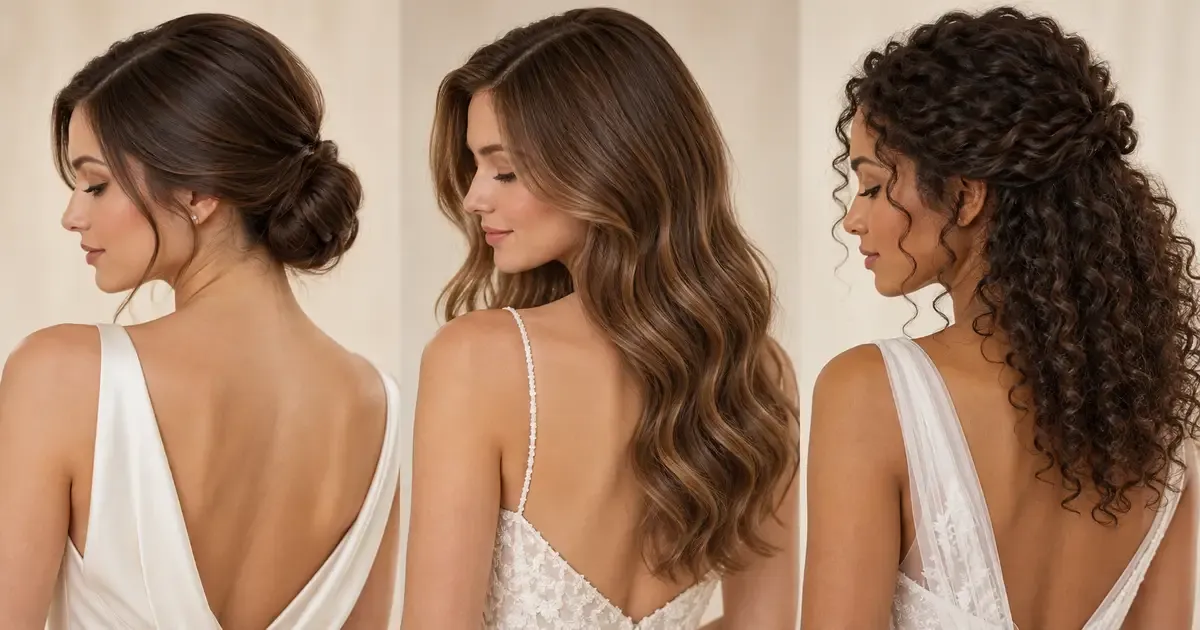
How do you choose a wedding hairstyle for your face shape?
Choose a wedding hairstyle by comparing the parting, volume, and face-framing details you enjoy, then checking whether the style works with your hair texture, length, and accessories. Face-shape categories can help you shortlist options, but they are not restrictions. Test your preferred look at a trial for comfort and hold.
Use the suggestions below to shortlist looks for a trial rather than rule out a favorite. You can highlight a strong jawline, embrace a round silhouette, or choose a style simply because you love it. No face shape needs correcting.
Key Takeaways
- Face-shape categories are optional styling references; many faces combine features from several shapes.
- Choose parting and volume around the effect you like, rather than rules about what you must avoid.
- Hair texture, density, length, and existing cut affect which styles are practical.
- Bring your veil, accessories, and a dress photo to your hair trial.
- Check comfort, hold, movement, and veil removal as well as how the style looks in photos.
How do you determine your face shape?
Determine your face shape by comparing your forehead, cheekbone, and jaw widths with your face length. Notice whether your chin and jaw are rounded, angular, or tapered. Choose the closest category as a styling reference, knowing that mixed features are common and an exact label is unnecessary.
Use these five steps to compare your proportions:
- Pull your hair away from your face and look straight ahead in a well-lit mirror.
- Compare the widths of your forehead, cheekbones, and jaw.
- Compare your face length, from hairline to chin, with its widest point.
- Notice whether your jaw and chin look rounded, angular, or tapered.
- Choose the closest description below, or borrow suggestions from more than one category.
A front-facing photo can help, but camera angle and close-up lens distortion can change apparent proportions. Treat the result as a styling reference, not an exact measurement. Hairlines and mixed features can also make categories overlap.
Which wedding hairstyles can you try for each face shape?
Compare the forehead, cheekbones, jaw, and overall length in the diagram below. The outlines show typical patterns; your features may fit more than one category.
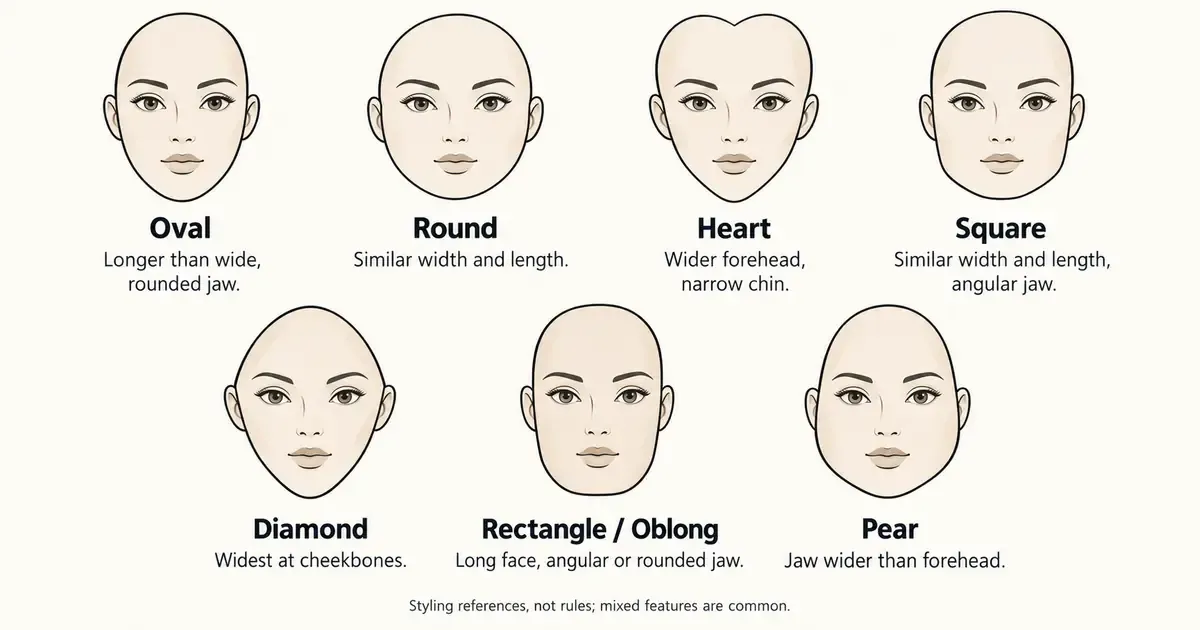
These are options to try, not rankings or requirements. Make adjustments only if you like the visual effect.
| Face shape | Typical proportions | Styles to try | Optional adjustment |
|---|---|---|---|
| Oval | Longer than wide, with a rounded jaw | Chignon, sleek bun, center-parted waves | Experiment with parting and volume |
| Round | Similar length and width, with soft contours | Half-up style, side-swept waves, textured updo | Add crown height if you want a longer silhouette |
| Heart | Wider forehead and narrower chin | Low bun, side part, loose curls | Place fullness lower if you want to emphasize the jaw area |
| Square | Similar length and width, with an angular jaw | Sleek bun, soft waves, textured chignon | Use loose pieces for softness or expose the jaw to highlight it |
| Diamond | Cheekbones wider than forehead and jaw | Half-up style, side fringe, loose waves | Try fullness at the temples or below the cheekbones |
| Rectangle or oblong | Noticeably longer than wide | Low updo, side waves, styled bob | Add side fullness if you prefer less emphasis on length |
| Pear | Jaw wider than forehead | Half-up style, textured updo, side part | Try temple fullness if you want more width above the jaw |
Wedding Hairstyles for Oval Face Shapes
Oval faces are generally longer than they are wide, with softly rounded contours. Many styles are worth trying, but hair characteristics and personal preference still shape the result.
Styles to Try for Oval Faces:
-
Classic Updos: Showcase your balanced features with elegant chignons or French twists
-
Side-Swept Styles: Whether partially up or completely down, side-swept styles add romantic asymmetry
-
Center-Parted Waves: Frame your face with soft waves cascading from a center part
-
Sleek and Straight: Modern, sleek styles highlight your naturally balanced proportions
Try both pinned and loose styles at your consultation. Compare how each feels with your dress and accessories rather than choosing by face shape alone.
Wedding Hairstyles for Round Face Shapes
Round faces feature soft angles with similar width and length dimensions, full cheeks, and a rounded chin.
Styles to Try for Round Faces:
-
Voluminous Updos with Height: Create the illusion of length with styles that add height at the crown
-
Side Parts with Asymmetrical Styles: Break up the symmetry of a round face with side-swept bangs or tendrils
-
Half-Up Styles with Volume: Maintain height at the crown while allowing length to elongate your face
-
Long, Layered Styles: Use longer face-framing pieces if you prefer a more vertical silhouette
If you want less fullness at cheek level, try lifting some hair into a half-up style or moving volume toward the crown. A chin-length bob or full curls can still be a good choice if you enjoy that silhouette.
Wedding Hairstyles for Heart-Shaped Faces
Heart-shaped faces feature a wider forehead that tapers to a narrow, sometimes pointed chin, often with prominent cheekbones.
Styles to Try for Heart-Shaped Faces:
-
Chin-Length or Longer Styles: Add volume around the jawline to balance a narrower chin
-
Side-Swept Bangs: Soften a wider forehead while maintaining an elegant look
-
Low Updos with Face-Framing Pieces: Draw attention to your cheekbones while creating balance
-
Deep Side Parts: Create the illusion of a more proportional forehead width
Compare crown volume with a lower, fuller arrangement. Choose the version you prefer; highlighting your forehead or keeping the hair sleek is equally valid.
Wedding Hairstyles for Square Face Shapes
Square faces feature strong jawlines, broad foreheads, and straight sides, creating an angular appearance with similar width and length dimensions.
Styles to Try for Square Faces:
-
Soft, Rounded Updos: Contrast your angular features with curls and rounded shapes
-
Side-Swept Styles with Soft Waves: Create diagonal lines that soften strong angles
-
Layered Styles with Wispy Ends: Reduce the appearance of sharp angles with soft, feathered edges
-
Off-Center Partings: Break up symmetry and create a softer overall impression
Soft waves can contrast with an angular jaw, while a sleek bun can highlight it. Neither effect is inherently better. Try both if you are deciding how much face-framing detail you want.
Wedding Hairstyles for Diamond Face Shapes
Diamond faces feature prominent cheekbones with a narrow forehead and jawline, creating a diamond-like silhouette.
Styles to Try for Diamond Faces:
-
Side-Swept Bangs or Fringe: Add width to a narrower forehead
-
Chin-Length or Longer Styles: Create volume around the jawline for balance
-
Half-Up Styles with Volume at the Temples: Add width where your face is narrowest
-
Layered Cuts with Fullness: Balance prominent cheekbones with volume at the forehead and jaw
If you want to emphasize your cheekbones, try tucking one side behind the ear. If you prefer fullness elsewhere, experiment with temple volume or waves below cheekbone level.
Wedding Hairstyles for Rectangle Face Shapes
Long face shapes are noticeably longer than they are wide. Rectangle is often used for a more angular jaw, while oblong can describe softer contours; the styling suggestions can overlap.
Styles to Try for Rectangle Faces:
-
Styles with Fullness at the Sides: Create the illusion of width with volume at the temples and cheeks
-
Soft Bangs or Fringe: Visually shorten the face by breaking up its length
-
Wavy Bobs or Lobs: Add width while maintaining an elegant bridal appearance
-
Low, Full Updos: Create width at the jawline while maintaining sophisticated style
Side fullness and a low updo can place less emphasis on length. If you prefer a high bun or long straight hair, you can still wear it; compare the overall silhouette during your trial.
Wedding Hairstyles for Pear-Shaped Faces
Pear-shaped faces have a jaw that is wider than the forehead. Naming conventions vary, so use the proportions rather than the label when discussing a style with your hairstylist.
Styles to Try for Pear-Shaped Faces:
-
Volume at the Crown and Temples: Balance a wider jawline with fullness above
-
Side-Swept Bangs: Add the appearance of width to the forehead
-
Updos with Height and Fullness: Create balance with volume at the top of the head
-
Layered Styles with Volume on Top: Add dimension where your face is narrowest
Temple or crown volume can emphasize the upper part of the silhouette. A bob or fuller curls near the jaw remain options if you like how they frame your face.
Work With Your Hair Texture, Length, and Density
Choose reference photos that resemble your own hair, and ask your stylist which details are achievable with your existing cut.
- Fine or lower-density hair: Compare a compact bun, softly pinned style, or half-up look. Ask whether the reference relies on extensions or padding, and test any additions for comfort.
- Dense or thick hair: Discuss how to distribute the weight of an updo. Check that pins and accessories feel secure without pulling.
- Naturally curly or coily hair: Consider shapes that use your natural texture, including a pinned updo or half-up arrangement. Discuss your usual routine and how face-framing curls will sit once dry.
- Straight or wavy hair: Ask how a smooth style or added waves are likely to hold in the expected conditions. Test the actual preparation and products at your trial.
- Short hair: A styled bob, pixie, side part, or carefully placed accessory can be a complete bridal look. An updo or extensions are not required.
Bangs, bobs, and layers are haircut decisions, not wedding-day styling steps. Try a temporary parting or pinned face-framing arrangement before committing to a cut solely because a face-shape guide suggests it.
Considering Your Wedding Style
Consider which dress details you want visible and how your accessories attach:
Your Dress Neckline
-
V-neck or plunging necklines: These pair beautifully with down styles or low updos
-
High necklines: Consider updos that showcase the neckline detail
-
Off-shoulder: Soft, romantic styles with some hair down complement this feminine style
-
Backless dresses: Updos or side-swept styles that highlight the back design
Your Veil and Accessories
Try your actual veil and accessories with the style. Check where the comb or pins attach, whether the weight feels comfortable, and whether you can remove the veil without disturbing the hair. Accessory placement can change the silhouette, but it does not need to follow a face-shape rule.
If you want your neckline or back detail visible, compare bridal updos such as chignons and twisted buns with a side-swept style before choosing how much hair to pin up.
What should you check at a bridal hair trial?
At a bridal hair trial, check how the hairstyle looks from different angles, how comfortably it stays in place, and whether your veil can be removed without disturbing it. Bring your accessories and a dress photo. Test movement, note how the style settles, and agree on preparation and touch-ups.
Bring two or three reference photos that resemble your hair texture and length, and explain which details you like.
During and after the trial:
- Take front, side, and back photos in natural and indoor light.
- Turn your head, sit, bend gently, and move as you expect to during the celebration.
- Check for pulling, heavy accessories, or pins that press against your scalp.
- Practice removing the veil and confirm who will help on the day.
- Note how the style settles over the following hours, where practical.
- Agree on preparation instructions, touch-ups, and any changes before the wedding.
Use what you learn to plan a small wedding day emergency hair kit. For example, if a loose piece needs repinning during the trial, ask your stylist which pins to carry and how to use them without disrupting the style.
Choose the Style You Enjoy Wearing
Use face-shape suggestions to explore options, then judge the result on your own preferences, comfort, and hair characteristics. A style that highlights your natural contours is just as valid as one that changes the silhouette. Choose a look you enjoy wearing and confirm its practical details with your stylist at the trial.
Frequently Asked Questions
What if I am not sure about my face shape?
Compare your forehead, cheekbone, and jaw widths with your face length, or ask your hairstylist for suggestions. Many faces combine features from several categories. You do not need an exact label to choose a hairstyle you enjoy.
Can I wear a bridal hairstyle not traditionally recommended for my face shape?
Yes. Face-shape suggestions are optional starting points, not restrictions. Try the style you like and discuss adjustments to parting, volume, or face-framing pieces with your stylist. Hair length, texture, comfort, and personal preference also matter.
Should I choose my wedding hairstyle before my dress?
It helps to consider your hairstyle alongside your dress, but there is no required order. Bring a dress photo to your hair trial and decide whether you want to show the neckline or back detail. Choose a combination that feels comfortable and suits your preferences.
How can I check my wedding hairstyle in photos?
Take front, side, and back photos during your trial in natural and indoor light. Check whether you like the result, then test movement, comfort, and veil removal. Photos help you compare options, but they do not guarantee how every wedding photograph will look.

Bridal by Bentley
Wedding Editorial
Bridal by Bentley publishes wedding inspiration and practical planning guides to help couples compare options and prepare for their celebrations.