How to Write Unforgettable Wedding Vows: Complete Step-by-Step Guide
Learn how to write unforgettable wedding vows with our step-by-step guide. Includes heartfelt examples, tips for personalization, and what to avoid.
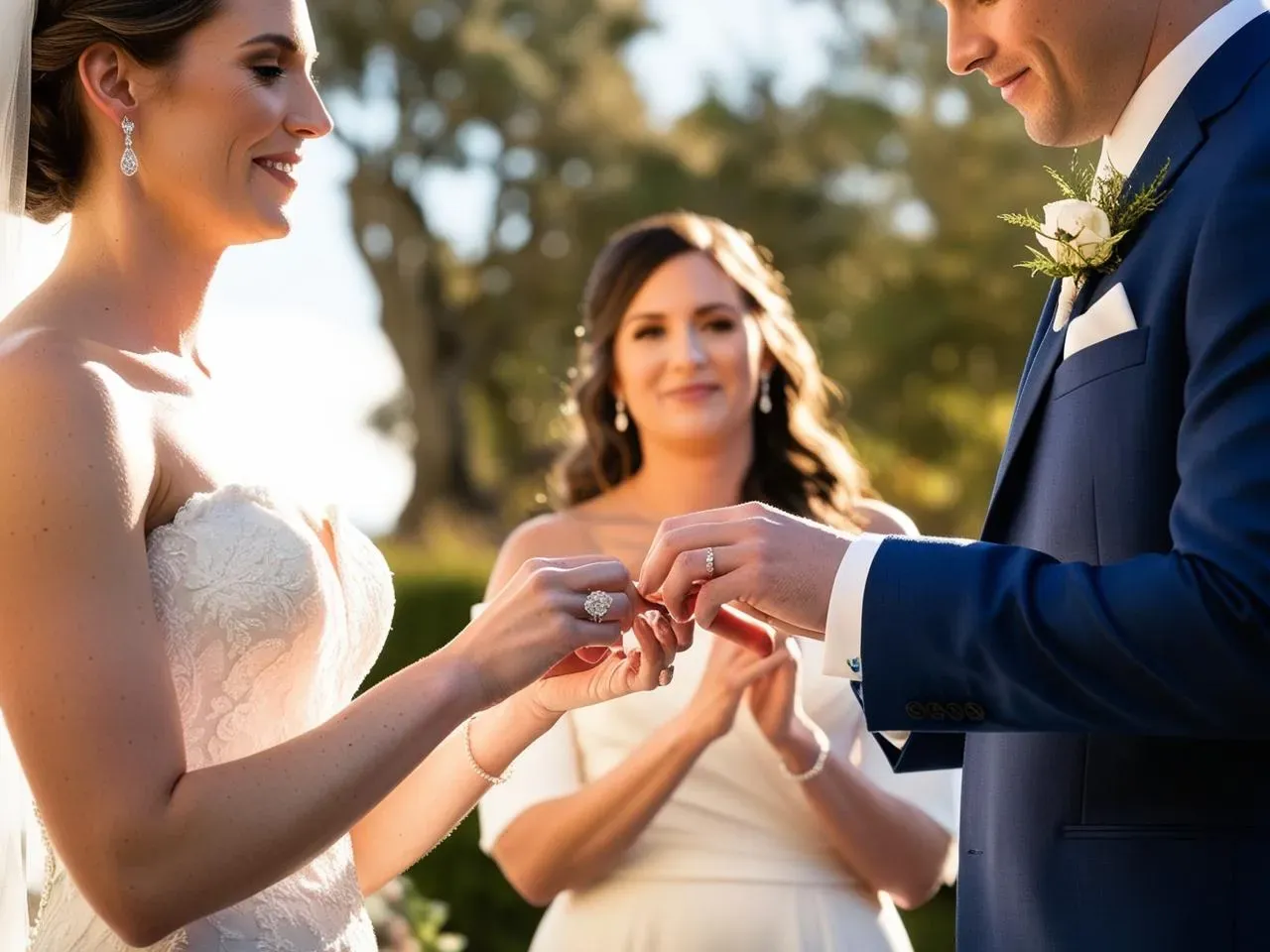
Wedding vows declare your lifelong commitment out loud. Spoken with sincerity, they anchor the entire ceremony in the reality of your partnership.
Pair this guide with our wedding planning guide and our collection of wedding ceremony ideas to coordinate your vows with your overall ceremony structure.
Key Takeaways
- Aim for 150 to 250 words—roughly one to two minutes spoken at a calm, conversational pace.
- Anchor promises in concrete moments and real relationship habits rather than generic declarations.
- Balance sincere emotion with everyday humor and specific gratitude.
- State what you commit to give and build, rather than listing negative behaviors you promise to avoid.
- Read your draft aloud at least three times to identify awkward phrasing and natural breath pauses.
The Purpose of Personal Vows
Traditional vows carry centuries of ceremonial weight, but personal vows do specific work:
- They ground the ceremony in real life: Citing actual turning points and daily routines shows guests what your commitment looks like on an ordinary Tuesday.
- They draw guests into your story: Concrete details invite friends and family into your partnership rather than keeping them at a distance.
- They outlast the wedding day: Specific promises stick with both of you long after the reception ends.
Five Steps to Draft Your Vows
Work through these five steps to turn raw relationship memories into a cohesive ceremony speech:
1. Identify Your Core Memories
Spend twenty minutes recording specific details about your partner and your relationship:
- Which habit or character trait do you rely on most?
- What was the turning point where the relationship became permanent for you?
- Which shared obstacle proved you handle pressure well together?
Concrete notes give you authentic material to build on.
2. State Your Feelings Directly
Avoid poetic posturing. Make clear, direct statements:
- Name what your partner gave you that you lacked on your own.
- Point out where your partner changed your perspective.
- Acknowledge the daily support that keeps your partnership steady.
Honest statements carry far more emotional weight than grand, abstract claims.
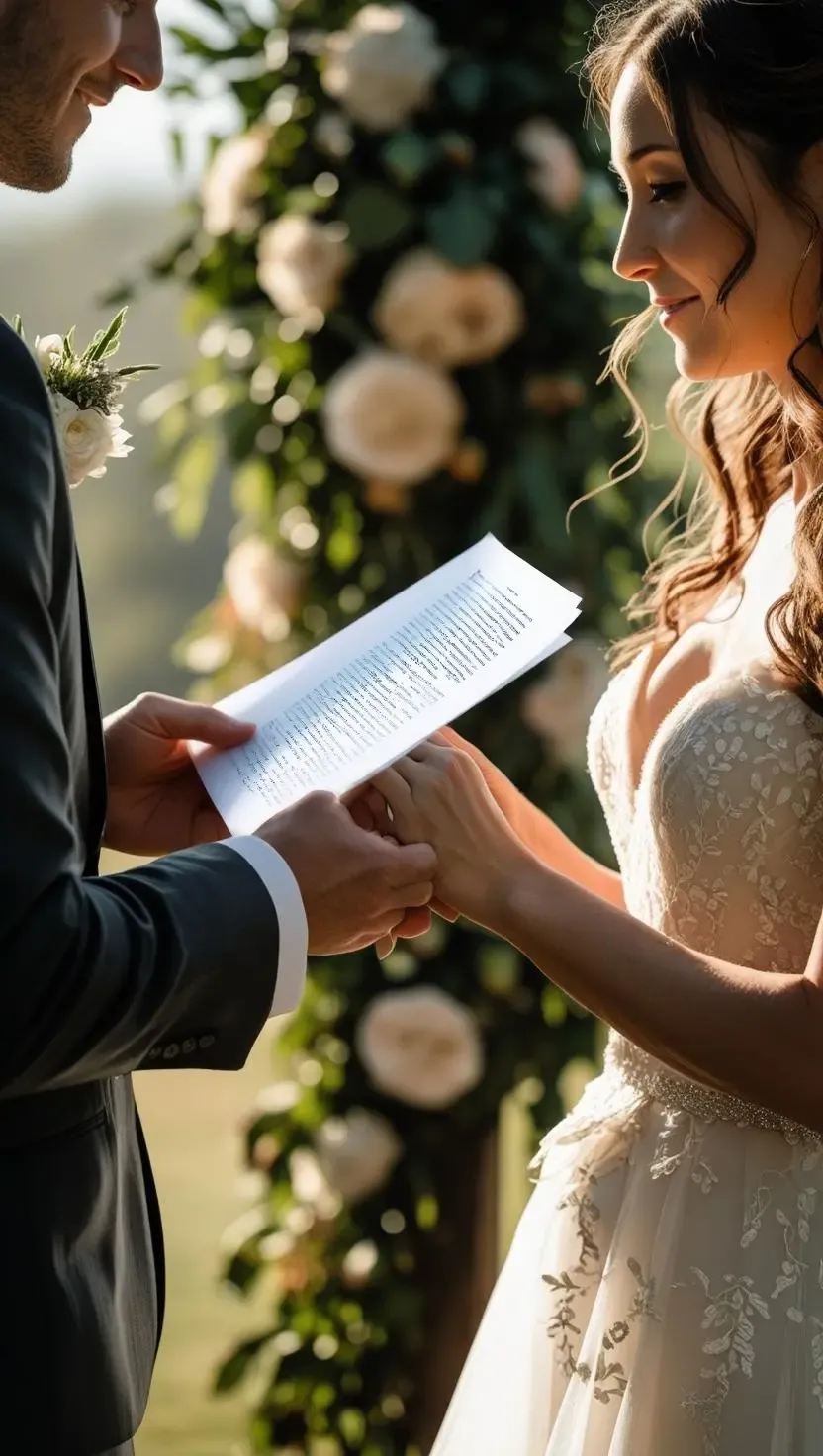
Bride and groom exchanging handwritten wedding vows during an intimate ceremony.
3. Anchor Promises in Specifics
General declarations fade quickly. Pick one or two distinct moments to carry the narrative:
- The exact afternoon you knew you wanted to marry them.
- A difficult week when your partner supported you without being asked.
- A mundane routine you both look forward to every morning.
4. Write How You Speak
Avoid archaic phrasing and stiff vocabulary. If you wouldn’t say “you are my compass across life’s uncharted seas” over dinner, don’t say it at the altar. Conversational sentences sound steady and sincere.
5. Close with Definite Promises
Finish with clear, forward-looking commitments. State what you will do as an equal partner, and thank them for standing beside you.
Recommended Vow Length
The ideal length for wedding vows is 150 to 250 words, which takes one to two minutes spoken slowly.
Vows longer than three minutes test guest patience and increase delivery mistakes if emotion catches your throat. Vows under one minute often feel rushed.
Practical pacing rules:
- Practice with a timer running.
- Keep the written text between three and five short paragraphs.
- Stick to one or two core anecdotes.
- Plan deliberate pauses after significant lines to let the words land.
Wedding Vow Formats & Recitation Guide
Use this quick-reference table to select the style and pacing that fits your ceremony format:
| Vow Style | Typical Word Count | Speaking Duration | Emotional Tone | Best Suited For |
|---|---|---|---|---|
| Classic & Timeless | 150–200 words | 1.0–1.5 mins | Reassuring, sincere, grounded | Traditional church or ballroom ceremonies |
| Deeply Romantic | 200–250 words | 1.5–2.0 mins | Poetic, passionate, intense | Sunset ceremonies and intimate garden weddings |
| Modern Minimalist | 100–150 words | ~1.0 min | Direct, honest, contemporary | City hall, loft, and modern minimalist venues |
| Humorous & Warm | 175–225 words | 1.5 mins | Playful, joyful, relatable | Casual outdoor and rustic barn weddings |
| Thematic / Adventure | 200–250 words | 1.5–2.0 mins | Evocative, metaphorical | Mountain elopements and destination weddings |
Common Vow Pitfalls
- Negative framing: Avoid promises defined by what you won’t do (“I promise never to yell”). Frame commitments positively around how you resolve conflict together.
- Private codes and long inside jokes: A brief nod to a shared joke works well. A full paragraph referencing an event nobody else understands isolates your guests.
- Comparisons to past relationships: Focus exclusively on your partner and your shared future.
- Reciting a template verbatim: Use examples for pacing and structure, but deliver promises in your own vocabulary.
Vow Examples for Every Ceremony Style
Read through these seven vow examples to find the tone and rhythm that matches your ceremony:
Example 1: Classic and Timeless
“From the moment I met you, I knew there was something extraordinary about you. Over time, you’ve shown me what real love looks like: kindness, patience, understanding, and unwavering support. You’ve made me a better person simply by being in my life. Today, I vow to stand beside you through thick and thin, celebrate your victories, comfort you in times of need, and always remind you just how loved you are.”
Structure note: Centers on mutual growth, emotional security, and steady partnership.
Example 2: Humorous Yet Emotional
“If someone had told me years ago that I’d fall head-over-heels for someone as quirky, funny, and wonderfully weird as you, I wouldn’t have believed them. But here we are, a team that thrives on laughter, late-night talks, and maybe a little chaos. Thank you for making life so much brighter. I promise to keep laughing with you, arguing less, and reminding you daily why you’re stuck with me.”
Structure note: Uses affectionate humor in the opening to ease ceremony tension, then lands on daily loyalty.
Example 3: Deeply Romantic
“Love isn’t just a feeling, it’s a choice. And every single day, I choose you. You’ve given me a love that feels infinite, a home within your heart, and a future I couldn’t imagine without you. As we begin this next chapter together, I vow to honor you, protect you, and love you until the end of time, and beyond.”
Structure note: Frames marriage as an active daily decision rather than passive affection.
Example 4: Adventure and Outdoor Theme
“Standing here with you today, I am reminded of all the trails we’ve walked together and the summits we’ve reached. Loving you is my favorite adventure. I promise to stand by you not just during the sunny climbs and breathtaking views, but through the sudden storms and steep paths. I promise to be your partner on every trail, to hold your hand through the climb, and to always cherish the quiet rest with you at the top.”
Structure note: Uses outdoor metaphors to illustrate handling challenges and celebrating shared milestones.
Example 5: Vintage and Classic Theme
“I, [Name], take you, [Name], to be my wedded partner, to have and to hold from this day forward. I remember that rainy Tuesday at the coffee shop when you looked at me and said we were in this together—that is the moment I knew my future was with you. I promise to love you, comfort you, honor and keep you, in sickness and in health, and forsaking all others, be faithful to you as long as we both shall live.”
Structure note: Pairs the solemn cadence of traditional vow language with a specific personal memory.
Example 6: Modern Minimalist Theme
“I love you for who you are today, and who you will become tomorrow. I promise to listen to you, support your dreams, and share the daily responsibilities of our home. I promise to stand by you through whatever life brings our way. You are my best friend, and I am proud to be your partner.”
Structure note: Eliminates decorative language to focus directly on equality, friendship, and practical devotion.
Example 7: Destination and Cultural Fusion Theme
“Our love story spans different paths, traditions, and backgrounds, bringing two distinct worlds into one shared life. Today, I promise to honor the heritage that shaped you, while we build a new legacy together. I promise to weave our families, our customs, and our values into a home filled with mutual respect and understanding. From this day forward, my heart and my history are bound to yours.”
Structure note: Explicitly acknowledges both heritages and vows to respect both family cultures in the new household.
Delivery Practice
Read your draft out loud to a trusted friend or your officiant at least one week before the ceremony. Ask them to flag any stumbling words or unnatural pauses.
On the wedding day, read from a printed card or a dedicated vow book rather than an unlocked smartphone. A physical card looks timeless in ceremony photography and avoids screen dimming mid-vow.
To continue planning your ceremony details, read our complete guide to handfasting ceremonies, explore creative wedding ceremony ideas, or browse stunning wedding decoration ideas to style your altar space.
Frequently Asked Questions
How long should wedding vows be?
Most wedding vows range from 1 to 2 minutes when spoken aloud, which typically equals 150 to 250 words. This length allows you to express meaningful promises without losing your guests' attention.
How do I start writing my wedding vows?
Begin by reflecting on key milestones, traits you admire in your partner, and how your relationship has grown. Draft your memories freely before refining them into a structured speech with a beginning, middle, and end.
What makes wedding vows memorable?
Memorable wedding vows combine emotional honesty, specific shared memories, and genuine promises rather than generic clichés. Balances personal intimacy with words that resonate with your guests.
What should I avoid in my wedding vows?
Avoid overused clichés, obscure inside jokes that alienate guests, negative promises (what you won't do), and comparisons to past relationships.
