Handfasting Ceremonies: Guide to Cords, Vows, and Traditions
Explore the ancient Celtic ritual of handfasting. Learn cord color meanings, ceremony scripts, and how modern couples integrate hand tying into their wedding vows.
Understanding Handfasting
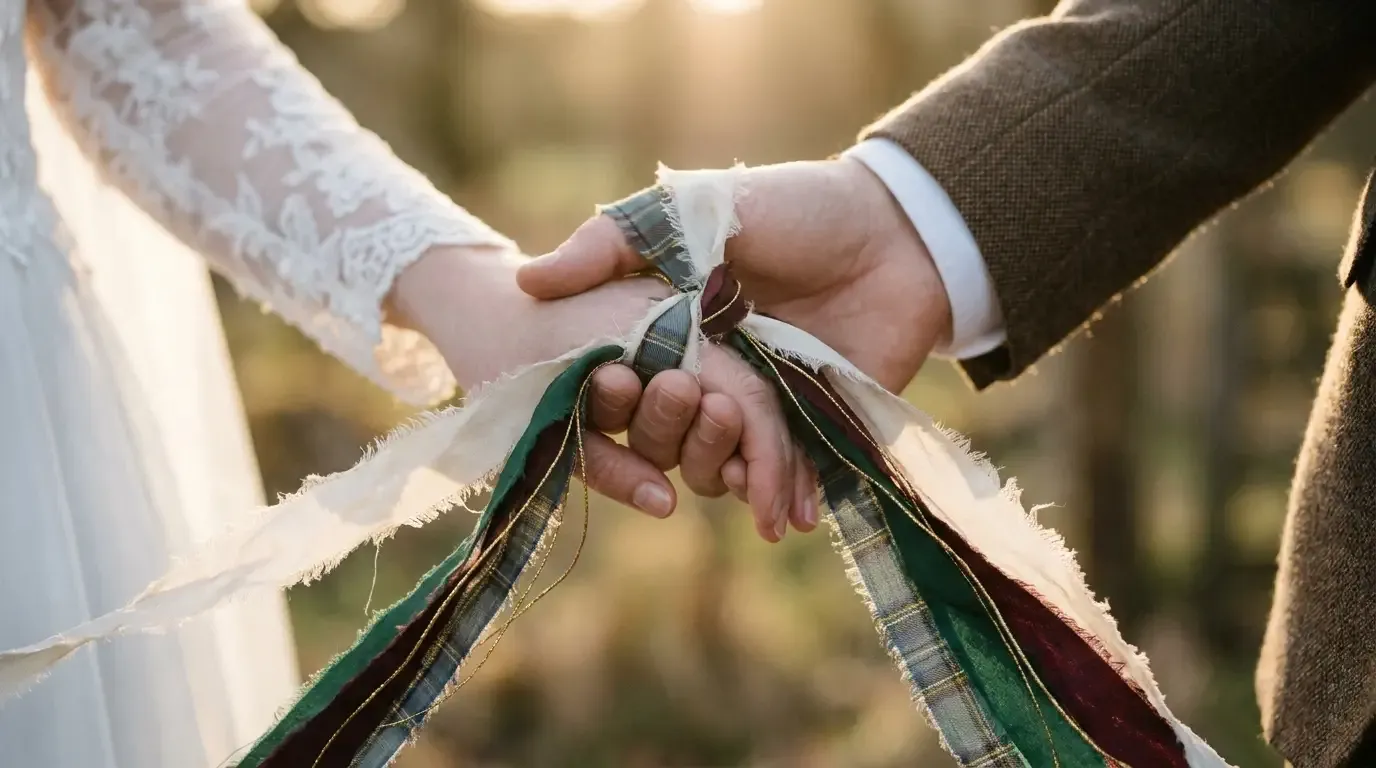
Handfasting is a historic marriage custom rooted in Celtic tradition. The ceremony unites two partners through the symbolic gesture of joining and wrapping hands with ceremonial ribbons. This tactile ritual gave rise to the phrase “tying the knot” and provides couples with a visible expression of their promises.
A handfasting ceremony is a traditional Celtic wedding ritual where an officiant wraps cords around a couple’s joined hands to symbolize marriage. The practice serves as a standalone secular ceremony or an intimate unity ritual integrated into modern wedding vows.
Pair this guide with our creative wedding ceremony ideas and our step-by-step tutorial on writing unforgettable wedding vows. If you plan an intimate event, read our guide to planning an intimate micro wedding.
Key Takeaways
- Handfasting originated in medieval Celtic regions as a recognized marriage contract between partners and community witnesses.
- The physical act of binding wrists created the enduring English idiom 'tying the knot.'
- Cord counts range from a single braided strand to six or more ribbons representing distinct virtues.
- Cord colors carry specific symbolic associations, including red for passion and green for prosperity.
- Couples can integrate handfasting alongside modern ring exchanges and civil marriage licenses.
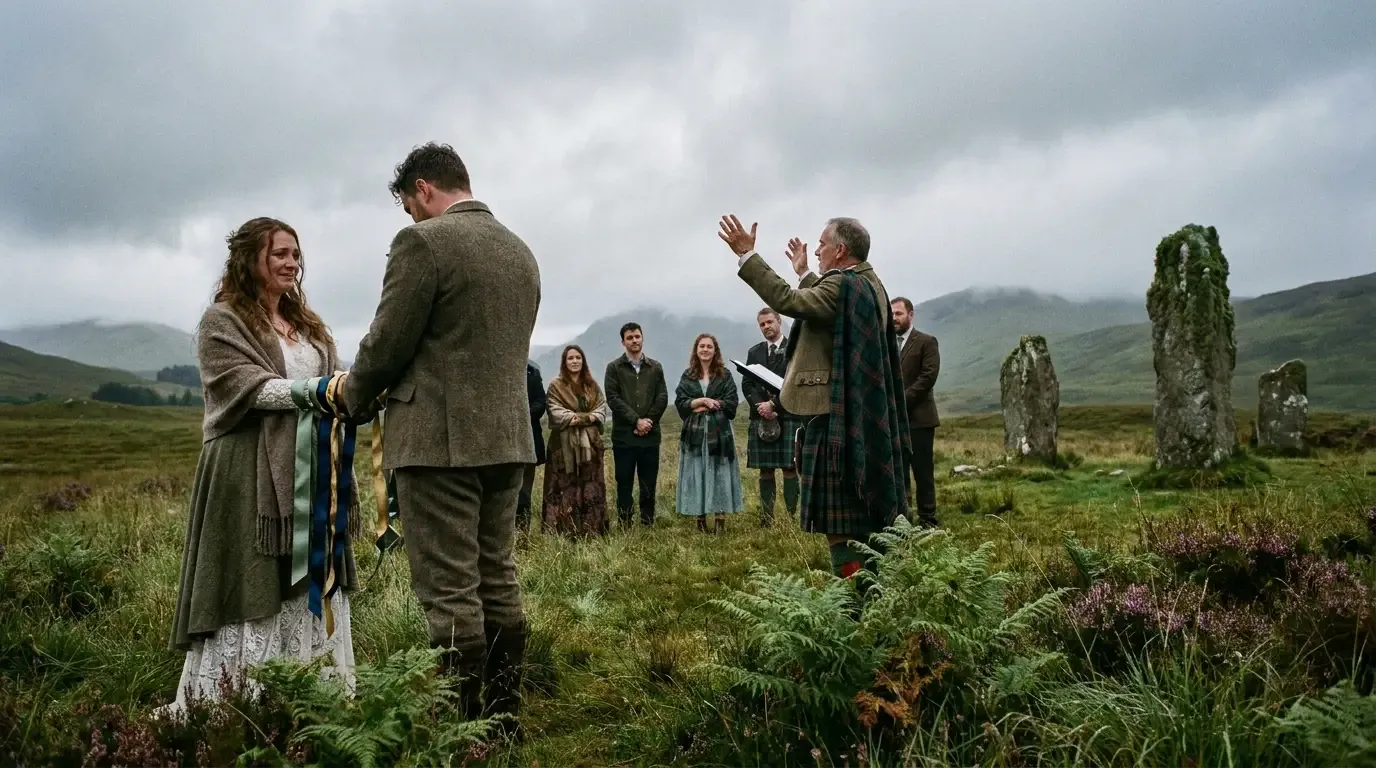
An outdoor handfasting ceremony held among standing stones, honoring Celtic marriage traditions.
Celtic Origins and Historical Practice
In medieval Scotland and Ireland, handfasting functioned as an accessible approach to marriage. Couples agreed to live as partners for a year and a day. At the end of that trial period, both partners chose whether to formalize the union for life or separate without social stigma.
The custom reflected pragmatic priorities: marriage stood as a mutual contract based on compatibility, trust, and shared labor. Handfasting required no church authority or ordained priest. In remote Scottish Highland glens where clergy traveled once a year, couples formalized their union before friends and kin.
Spiritual Meaning and Knot Symbolism
Handfasting ranks among the oldest unity rituals documented across human culture. Wrapping the wrists symbolizes two independent lives merging into one shared path. Many officiants tie the cords into an infinity knot, where pulling the loose ends secures a permanent center loop.
The ritual honors consent and mutual promise. Couples focus their vows on personal commitment and shared devotion.
Cord Materials and Ribbon Selection
Modern ceremonies invite couples to design cords that match their style, heritage, and values.
Couples often invite parents or bridal attendants to drape individual strands over their hands. Some weave ribbons ahead of time, while others braid cords during the ceremony.
Cord Quantity and Structure
Select a cord count that reflects your ceremony vision:
- Single Cord: A clean design focused on singular commitment.
- Three Cords: Represents mind, body, and spirit joined in balance.
- Four Cords: Honors the four cardinal directions and elemental energies.
- Six Cords: Dedicates individual ribbons to virtues such as trust, kindness, patience, courage, joy, and peace.
Fiber Selection
Couples select materials that bring tactile character to the ceremony:
- Silk: Delivers clean drape, soft sheen, and strength.
- Cotton: Conveys comfort, understated devotion, and durability.
- Wool: Provides earthy warmth and endurance in outdoor settings.
- Linen: Features crisp texture and traditional craftsmanship.
- Braided Leather: Adds rustic texture and rugged longevity.
- Tartan Ribbons: Connects the ceremony to Scottish clan heritage.
- Heirloom Lace: Repurposes fabric preserved from family wedding gowns.
Cord Color Symbolism Matrix
Colors communicate specific hopes and intentions for married life:
| Cord Color | Traditional Meaning | Associated Focus |
|---|---|---|
| White | Purity, peace, new beginnings | Clarity and truth |
| Red | Passion, courage, vitality | Energy and devotion |
| Green | Prosperity, abundance, renewal | Health and fertility |
| Blue | Loyalty, patience, open communication | Calm and steady faith |
| Purple | Wisdom, sanctuary, reverence | Purpose and spirit |
| Gold | Warmth, celebration, longevity | Radiance and prosperity |
| Silver | Intuition, reflection, protection | Insight and adaptability |
| Black | Resilience, healthy boundaries, strength | Stability and endurance |
| Multicolor | Blended backgrounds and balance | Harmony across differences |
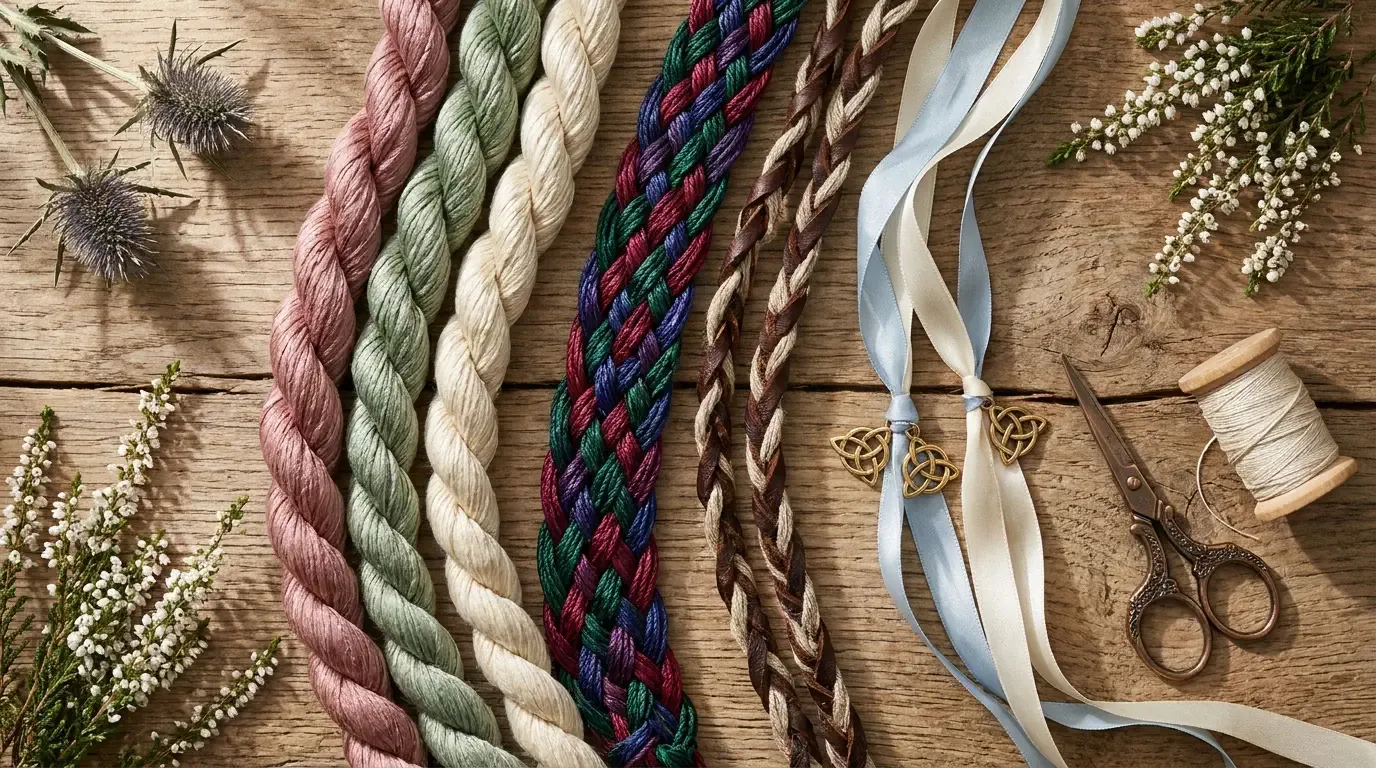
Handfasting cords in natural silks, braided cords, and metallic threads selected for custom ceremony vows.
Practical Planning and Civil Legalities
Planning a handfasting ceremony requires coordinating logistics alongside your vows:
- Select cords between four and six feet long so the officiant can wrap and knot them with ease.
- Choose a flat width between one and two inches for clean drape against the wrists.
- Decide whether family members will step forward to lay ribbons across your hands.
- Practice the wrapping sequence before wedding morning so the movements feel natural.
Handfasting on its own does not fulfill modern marriage registry requirements in most jurisdictions. Couples seeking civil status must hire an authorized officiant to sign marriage certificates. Many couples pair the knot ritual with an exchange of precious metal rings. To explore band styles and metal care, read the ultimate guide to wedding rings. To settle on your ideal season, consult our guide on how to choose the perfect wedding date.
Global Binding Traditions
The gesture of binding hands appears across diverse world cultures:
- Hindu wedding ceremonies incorporate the Kanyadaan, where holy threads link the couple’s hands.
- Greek Orthodox weddings feature the Stefana crowns connected by a delicate ribbon.
- Traditional Celtic gatherings bind wrists with woven wool or tartan before clan witnesses.
These customs express a universal human truth: commitment thrives through active partnership and public acknowledgment.
The Handfasting Ceremony Step-by-Step
Preparing the Cords
Partners place cords on the ceremony table before guests arrive. The officiant arranges the ribbons in order to ensure smooth handling during the vows.
Ceremony Progression
- The Address: The officiant welcomes guests and explains the Celtic origins of handfasting.
- Joining Hands: Partners face each other and join hands, crossing right to right and left to left to form an infinity figure eight.
- The Ribbon Draping: The officiant or designated family members drape cords across the couple’s wrists while reciting blessings.
- The Knot: The officiant folds the cord ends beneath the crossed hands. As the couple steps back and pulls their hands free, the cords slide into a clean center knot.
- Exchange of Promises: Partners recite spoken vows and follow with the exchange of wedding bands.
Post-Ceremony Keepsakes
Couples retain their tied knot as a lasting memento:
- Mount the tied ribbons inside a glass shadow box alongside dried bouquet flowers.
- Drape the knot across a mantle or bedside table.
- Place the cord in an heirloom keepsake box for future anniversaries.
Recommended Books and Reading
-
Handfasting and Wedding Rituals: Welcoming Hera's Blessing by Raven Kaldera
-
Creating Circles and Ceremonies: Rituals for All Seasons by Oberon Zell-Ravenheart
-
Magickal Weddings: Pagan Handfasting Traditions by Joy Ferguson
-
Modern Handfasting: A Complete Guide by Liz Williams
-
Passages Handfasting: Commitment Rituals by Kendra Vaughan Hovey
-
Humanist, Celtic, Handfasting Ceremony by Mike Wood

Community and Support Networks
Couples planning a handfasting ceremony can connect with online communities, regional discussion groups, and celebrant networks for advice, script inspiration, and vendor recommendations.
Online Communities and Social Groups
- Search Handfasting on Reddit: Active discussion threads covering knot mechanics, vows, and photo inspiration across alternative wedding forums.
- Handfasting and Pagan Weddings Facebook Group: A collaborative community sharing cord-crafting tutorials, blessing recitations, and Celtic wedding customs.
- Handfasting Cords Search on Facebook: Connect with independent ribbon braiders and fiber artisans.
- #HandfastingWedding on Facebook: Real-world wedding photographs and cord display ideas.
- Discord and Alternative Wedding Communities: Dedicated chat servers supporting humanist, pagan, and non-traditional wedding planning.
- Social Tags: Explore
#Handfastingand#CelticWeddingon Instagram to find photographers, cord weavers, and floral artists.
Professional Organizations and Celebrant Registries
- The Celebrant Directory: International directory connecting couples with independent officiants experienced in Celtic handfasting.
- Humanist Society Scotland: Accredited celebrants authorized to conduct legal and ceremonial Celtic weddings.
- The Pagan Federation Officiant Register: Vetted contacts for celebrants who conduct traditional nature-based and Celtic rites.
- Fellowship of Professional Celebrants: Certified celebrants providing bespoke ceremony design.
Wedding Professionals Specializing in Handfasting
- Certified Handfasting Officiants: Specialists trained in knot mechanics, pacing, and blessing recitations.
- Celtic Ceremony Experts: Cultural consultants who provide authentic Gaelic phrases, clan tartan guidance, and historical context.
- Ritual Design Consultants: Planners who weave handfasting into modern, interfaith, or secular weddings.
- Cultural Heritage Wedding Planners: Coordinators experienced in outdoor highland ceremonies and traditional logistics.
Podcasts and Media Resources
- Tying the Knot: The Original Way to Say I Do: Feature documentary exploring the history, resurgence, and modern practice of handfasting.
- Irish Mythology Podcast (Candlelit Tales): Audio exploration of Irish folklore, ancestral customs, and sacred rituals.
- The Celtic Myth Podshow: Authentic audio tales and legends from Scottish, Irish, and Welsh heritage.
Digital Archives and Historical Documentation
- Tobar an Dualchais / Kist o Riches: Scotland’s online audio archive preserving oral traditions, Gaelic songs, and wedding lore from the School of Scottish Studies Archives.
- Dúchas.ie (National Folklore Collection UCD): Digital archive documenting historical Irish matchmaking, marriage blessings, and regional folk customs.
- Folklore Scotland: Comprehensive digital archive examining Scottish legends, clan heritage, and folk rituals.
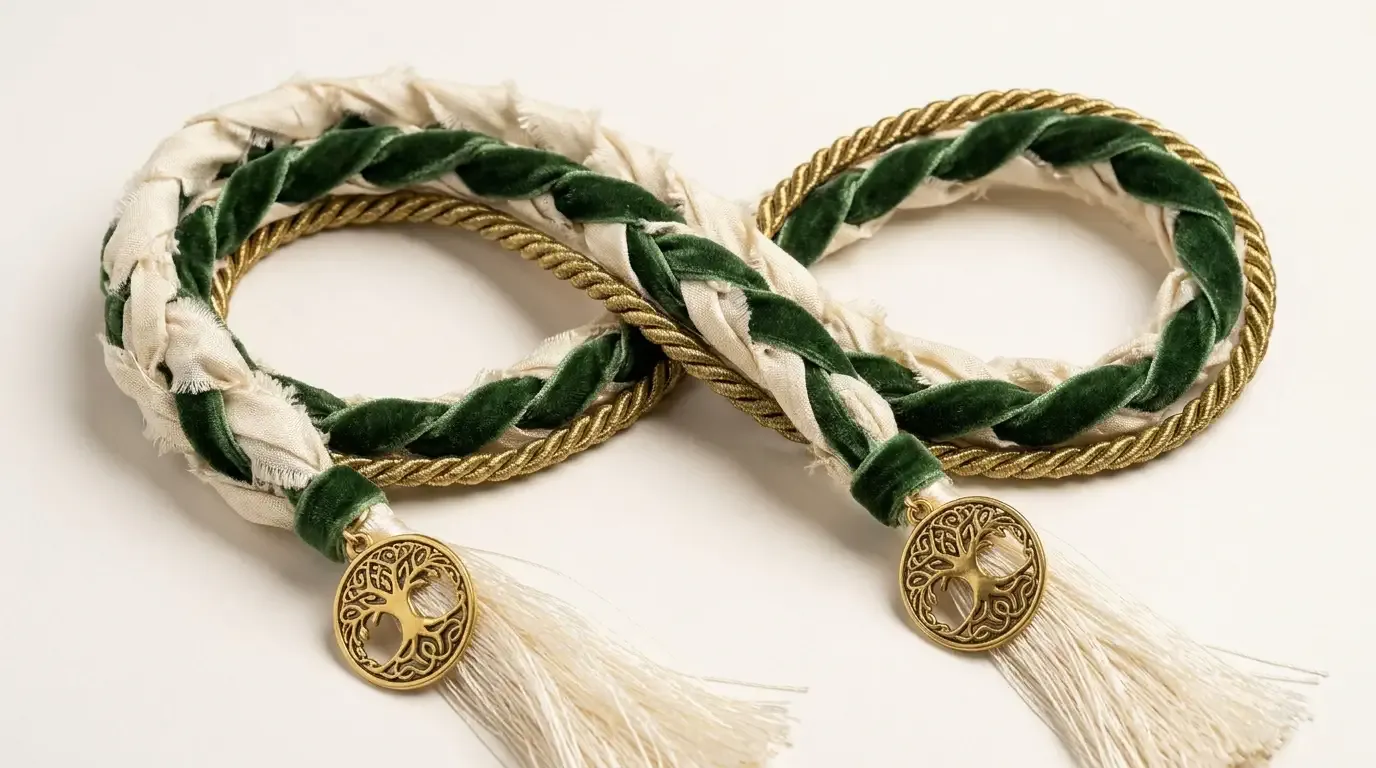
Handmade Artisan Handfasting Cords
Discover custom Celtic wedding ribbons, braided silk cords, and personalized clan tartan bindings created by independent artisans.
Practical Planning Steps
Couples preparing for a handfasting ceremony can follow this schedule:
- Select ribbon fibers and colors six months before the wedding day.
- Outline the ceremony script and assign readings with your officiant.
- Invite parents or attendants to participate in cord placement.
- Practice tying and unbinding cords during your ceremony rehearsal.
- Store the finished knot in a secure bag for safekeeping after the reception.
Handfasting grounds a wedding in direct personal commitment. Binding hands honors the conscious choice two people make to build a shared life.
Frequently Asked Questions
Is a handfasting ceremony legally binding?
A handfasting ceremony holds legal weight only when conducted by an officiant licensed with local civil authorities. Most couples sign civil marriage paperwork alongside the ritual to ensure full legal recognition.
How many cords do couples use in a handfasting ceremony?
Couples select between one and six cords. A single rope symbolizes core unity, three cords represent mind, body, and soul, and six cords dedicate promises to specific partnership values.
Can couples combine handfasting with modern wedding vows?
Yes. Many couples place the handfasting ritual right before or after exchanging rings, reciting custom promises as the officiant ties the knot.
What do couples do with handfasting cords after the wedding?
Couples preserve the tied knot as an heirloom. Popular options include framing the cord inside a glass shadow box, displaying it on a mantle, or tucking it into a wedding memory chest.
