How to Plan a Dream Wedding on a Budget: A Money-Saving Guide
Plan a wedding for half the national average cost with practical budget frameworks, venue alternatives, and catering strategies.

The average US wedding costs more than $30,000. You can host an intentional celebration for half that figure without taking on debt.
Couples with tighter financial limits can check our how to plan a $5,000 wedding cost breakdown. For guest counts between 40 and 100, three decisions control most of your total spend: guest count, venue type, and catering style.
Key Takeaways
- Apply the 50-30-20 rule to divide funds between venue/catering essentials, guest experience, and emergency buffers.
- Guest count drives total spend; trimming your guest list by 20% cuts catering, bar, and rental bills in direct proportion.
- Book off-peak months, Friday evenings, or Sunday afternoons to secure 20% to 30% venue discounts.
- Focus floral investments on high-impact focal points like ceremony arches and sweetheart tables.
- Use our interactive budget calculator to test custom cost breakdowns across every major vendor category.
Creating a Smart Wedding Budget
Divide your budget before booking any vendor using a 50-30-20 allocation model:
- 50% for Reception Essentials: Venue rental, catering, alcohol, and tabletop rentals.
- 30% for Guest Experience: Photography, music, flowers, attire, and hair and makeup.
- 20% for Extras & Contingencies: Invitations, marriage licensing, tips, vendor meals, and an emergency cushion.
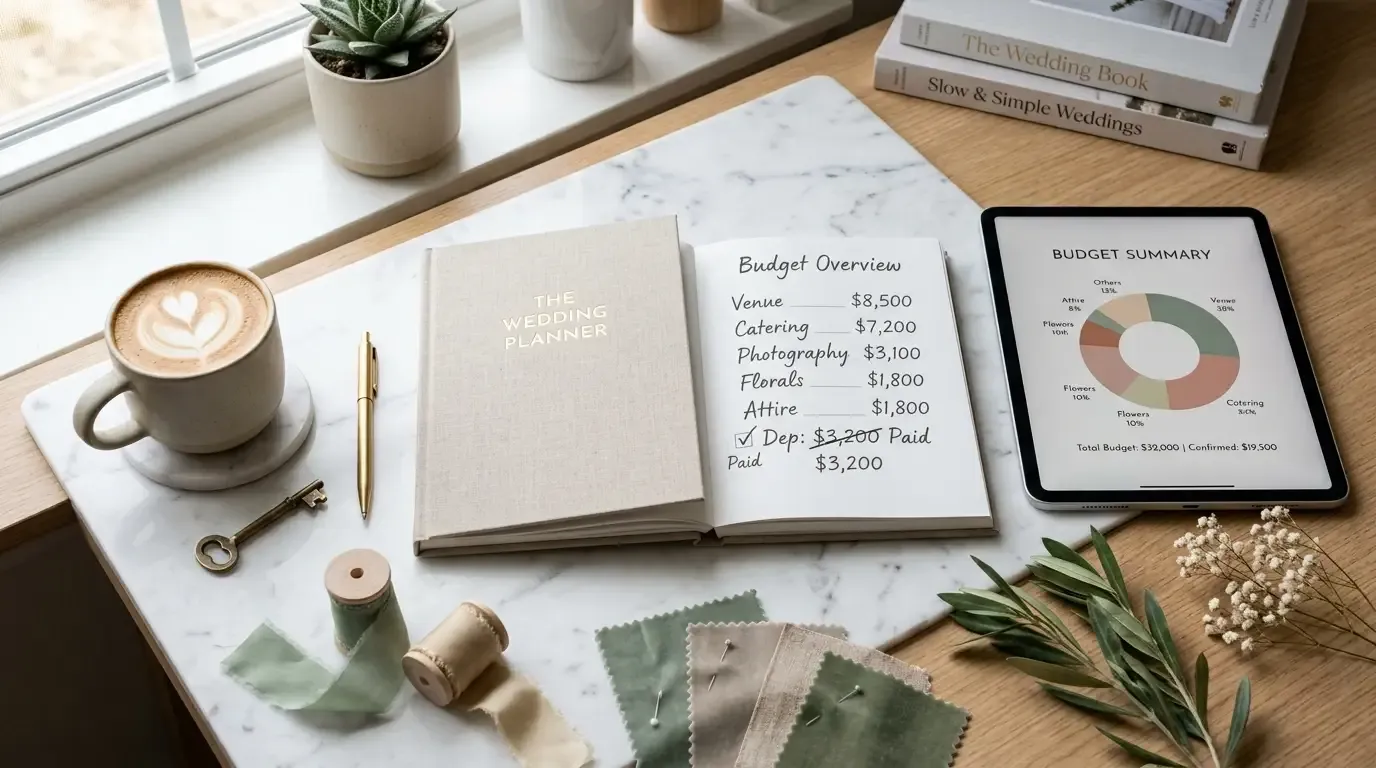
Mapping out your line-item limits in advance keeps spending intentional and protects your contingency reserve.
Wedding Budget Allocation Matrix
See how percentage allocations translate to actual dollars across budget tiers:
| Budget Category | % Share | Typical Spend ($10k–$25k) | Primary Money-Saving Strategy |
|---|---|---|---|
| Venue & Rentals | 25% | $2,500 – $6,250 | Public parks, historic lodges, or off-peak dates |
| Catering & Bar | 30% | $3,000 – $7,500 | Family-style service, food stations, or BYOB |
| Photography & Video | 12% | $1,200 – $3,000 | Partial-day coverage (4–5 hrs) or digital galleries |
| Attire & Beauty | 8% | $800 – $2,000 | Trunk sales, resale platforms, and suit separates |
| Flowers & Décor | 8% | $800 – $2,000 | Greenery-forward tables and repurposed ceremony florals |
| Music & Entertainment | 7% | $700 – $1,750 | Professional DJ or curated digital sound playlists |
| Ceremony & Rings | 4% | $400 – $1,000 | Classic bands and local municipal officiants |
| Stationery & Favors | 3% | $300 – $750 | Digital invitations and DIY edible favors |
| Contingency Buffer | 3% | $300 – $750 | Reserve for last-minute service fees and taxes |
Bentley Planning Tool
Calculate Your Custom Budget
Enter your total target spend to see estimated line items across venues, catering, and vendors.
Open Budget Calculator →Finding Hidden Gems for Venues
The venue is the largest single expense. Commercial estates and hotel ballrooms bundle mandatory food minimums and exclusive vendor lists that drive up final invoices. Flexible venues cut these baseline costs:
- Historic Community Buildings & City Properties: Municipal garden houses, renovated schoolhouses, and historic park lodges rent for $500 to $1,500.
- Private Residences & Backyards: Hosting on family property eliminates site rental fees, freeing funds for tenting and lighting.
- Restaurant Private Dining Rooms: Restaurants provide tables, chairs, bar staff, and fine dining without venue rental fees. You pay only the food and beverage minimum.
- Off-Peak Date Selections: Booking a Friday evening, Sunday afternoon, or winter weekend lowers site rental fees by 20% to 35%.
Smart Fashion Choices for Attire
Bridal elegance does not require a couture price tag:
- Sample Sales & Trunk Shows: Bridal salons discount designer floor samples by 40% to 70% twice a year to clear rack inventory.
- Online Consignment & Resale: Platforms like Stillwhite and Nearly Newlywed list pre-owned and unworn sample gowns at 50% below retail.
- Suit Rentals & Separates: Department stores and menswear retailers sell separates that cost less to purchase than a weekend tuxedo rental.
- Bridal Party Flexibility: Let bridesmaids pick styles within a shared color palette (such as champagne, sage, or navy). They can shop clearance sales and choose silhouettes they will wear again.
Modern Catering Strategies That Control Costs
Food and beverages represent 30% to 40% of total wedding costs. To curb catering expenses without compromising guest experience:
- Food Stations: Gourmet taco stations, pasta bars, or barbecue buffets cost $25 to $40 less per guest than formal plated dinners.
- Brunch or Lunch Celebrations: Midday celebrations reduce alcohol consumption and allow for crowd-pleasing menus like chicken and waffles, quiche, and fresh pastries.
- BYOB Alcohol Policies: Supplying your own beer, wine, and liquor avoids venue corkage markups of 200% to 400%. Use our wedding beverage calculator to calculate exact case counts.
High-Impact Décor Solutions
Ballroom florals can reach five figures fast. Focus decoration dollars on two focal points guests view most:
- One Hero Backdrop: Build a statement ceremony arch or photo wall. Guests take photos in front of it during both the ceremony and the reception.
- Greenery and Candlelight: Seeded eucalyptus runners, Italian ruscus, and glass pillar candles fill tables at one-third the cost of tall floral centerpieces.
- Repurpose Ceremony Arrangements: Have your coordinator move aisle urns and ceremony florals to the head table and bar during cocktail hour.
Budget-Conscious Entertainment and Photography
- Partial-Day Photography: Book 4 to 5 hours of coverage. This captures getting ready, the ceremony, family portraits, and the first dance while saving $1,000 to $2,000 compared to 10-hour packages.
- DJ Instead of a 7-Piece Band: A professional DJ averages $1,200 to $2,000, compared to $4,500 to $9,000 for a multi-piece live band.
- Scope Adjustments Over Price Haggling: Ask vendors to trim hours, substitute seasonal blooms, or swap staff counts to meet your price target. Read our guide on how to negotiate with wedding vendors for tested scripts.
Hidden Costs to Watch Out For
Last-minute fees can break a tight budget. Read our breakdown of hidden wedding costs you need to know and how to avoid them to account for:
- Service charges and administrative fees (20% to 24% added to food and beverage invoices)
- State and local sales taxes on food, beverage, and physical rentals
- Alterations on dresses and suits ($150 to $500 per garment)
- Gratuities for delivery drivers, setup crews, and bartenders
Final Budget Checklist
Every dollar cut from the guest list or venue fee protects your contingency buffer. Pick two priorities that matter to both of you, commit remaining funds to guest comfort, and track invoices as vendor contracts arrive.
Frequently Asked Questions
What is the 50-30-20 rule for wedding budgets?
The 50-30-20 wedding budget rule allocates 50% of funds to reception essentials (venue, catering, bar, and rentals), 30% to guest experience elements (photography, entertainment, florals, and attire), and 20% to administrative fees, stationery, and a contingency buffer.
How can you cut wedding costs in half?
To cut wedding costs by 50%, reduce your guest count by a third, choose an off-peak month (November through March) or a Friday/Sunday date, select venues like public gardens or historic estates with open vendor policies, and choose casual catering formats like food stations or barbecue drop-off dining.
What are the most overlooked hidden wedding costs?
Overlooked wedding expenses include service charges and gratuities (20% to 25% on top of catering), alteration fees on attire, vendor meal clauses, delivery and late-night strike fees, and local sales taxes.
Can you have a luxury-style wedding on a smaller budget?
Yes. Focus funds on one or two prominent visual features instead of spreading money thin across every table. Invest in one floral ceremony arch or custom lighting installation, choose minimalist place settings, and pick a scenic venue that requires minimal added decor.
How much buffer should you include in a wedding budget?
Reserve 10% to 15% of your total budget for unexpected vendor overtime, weather backup rentals, alterations, and county permits.
