Burnt Orange Wedding Theme: Ideas for an Elegant Celebration
How to style a burnt orange wedding theme without making it look rustic. Real color pairings, floral selections, attire guides, and seasonal palettes.
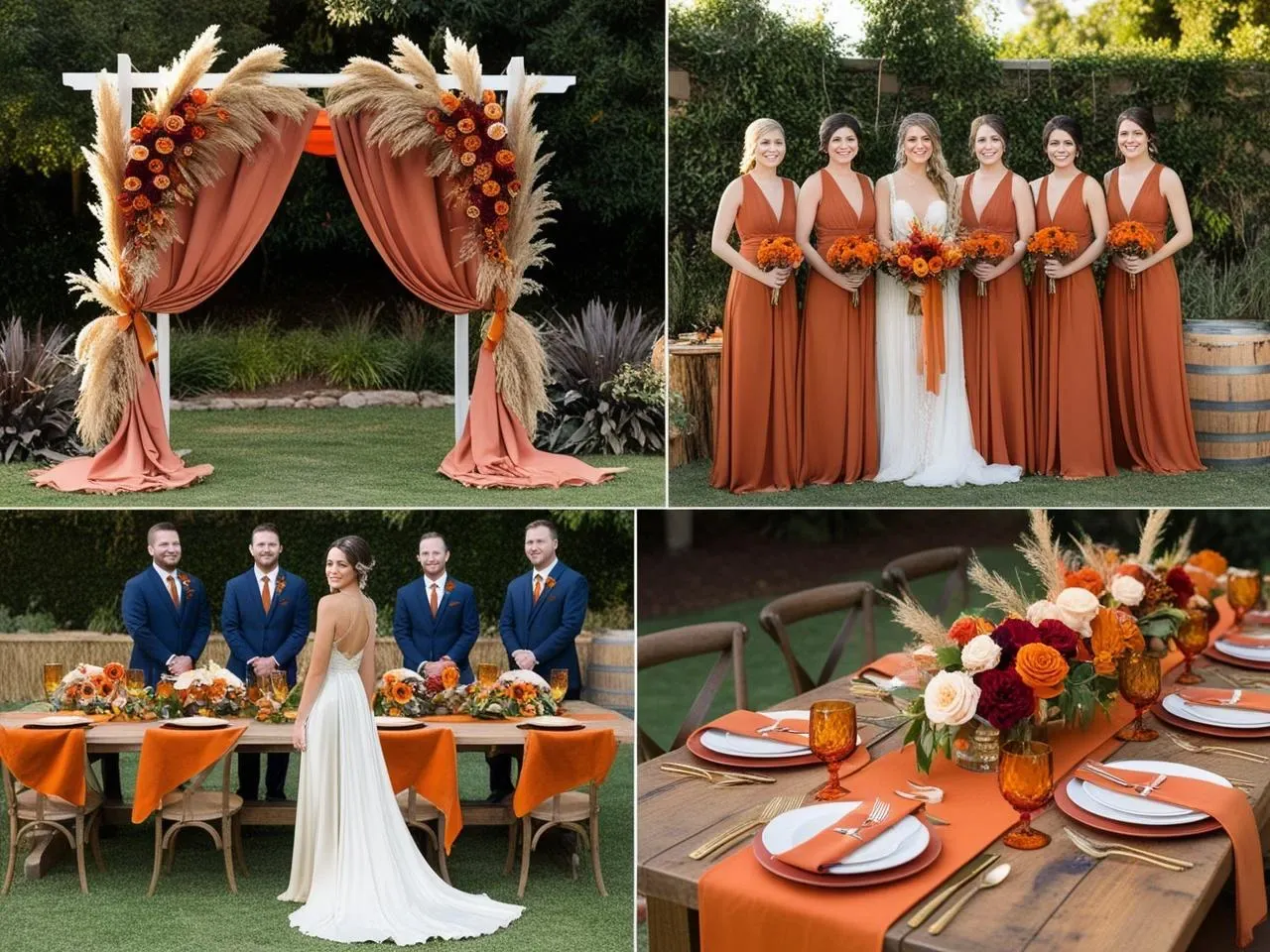
Burnt orange sits between rust and amber. It brings warmth to concrete lofts, pops against desert sand, and breaks the monotony of all-white ballrooms. Done right, the palette looks intentional and sharp. Done wrong, it looks like a Halloween display.
The difference comes down to supporting colors, fabric choices, and where you place the pigments.
Burnt Orange Wedding Theme
A wedding palette built around rust, terracotta, and amber. Couples pair it with neutrals for summer, sage for spring, or navy and emerald for late autumn and winter.
Key Takeaways
- Burnt orange works in any season. Pair it with cream in summer, sage in spring, and navy or emerald in winter.
- Keep 60% of your surfaces neutral. Reserve burnt orange for florals, napkins, and attire to prevent visual fatigue.
- Mismatched bridesmaid dresses in rust, terracotta, and champagne satin look better than identical gowns in one flat shade.
- Amber glassware, brushed copper candleholders, and terracotta planters add texture without inflating your floral budget.
- Charcoal, midnight navy, and hunter green suits contrast against rust ties and boutonnieres better than plain black.
Why Burnt Orange Works
Burnt orange delivers deep warmth without neon brightness:
- Works year-round: Most people associate rust with October. But pair it with linen and sand for July, or deep navy for December, and the color shifts character.
- Flattering on camera: Warm undertones soften midday sun and flatter most skin tones on film.
- Fits different venues: The shade works inside brick warehouses, open vineyards, and stone courtyards.
- Brings warmth to large rooms: Warm pigments pull walls inward, making cavernous reception spaces feel intimate.
Color Palettes and Accent Combinations
Burnt orange needs counterweights. Without cool tones or clean neutrals, reception tables feel heavy.
Cream, Champagne, and Sand
Soft neutrals quiet the color down. Use ivory tablecloths and champagne drapery so bright floral arrangements have space to stand out. This mix suits garden estates, tented lawns, and historic ballrooms.
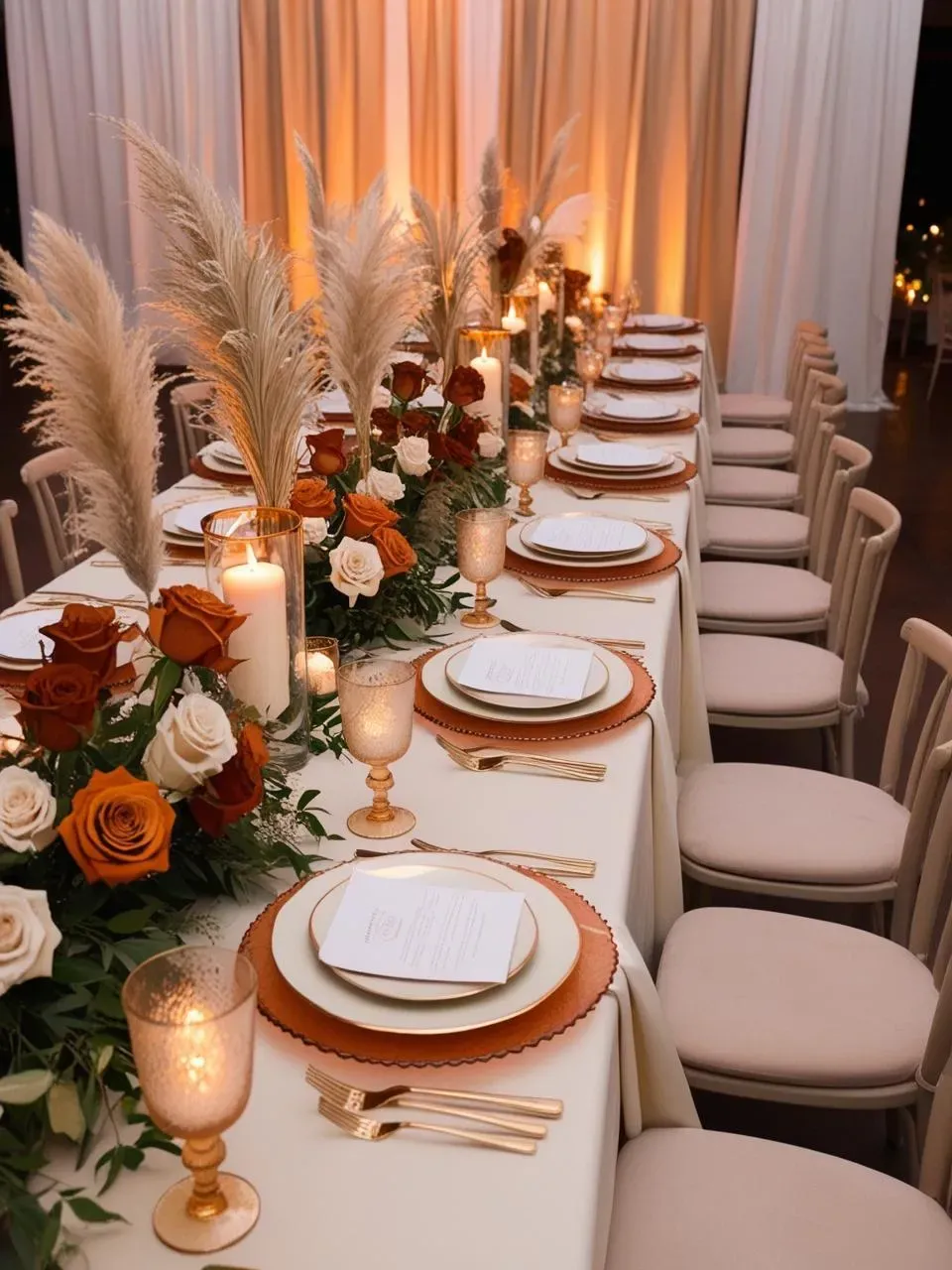
Terracotta roses and champagne drapes paired with pampas grass for a clean, neutral table setting.
Terracotta, Sage Green, and Ochre
Dusty greens cut the warmth of orange. For advice on balancing foliage with warm earth tones, check our sage green wedding guide.
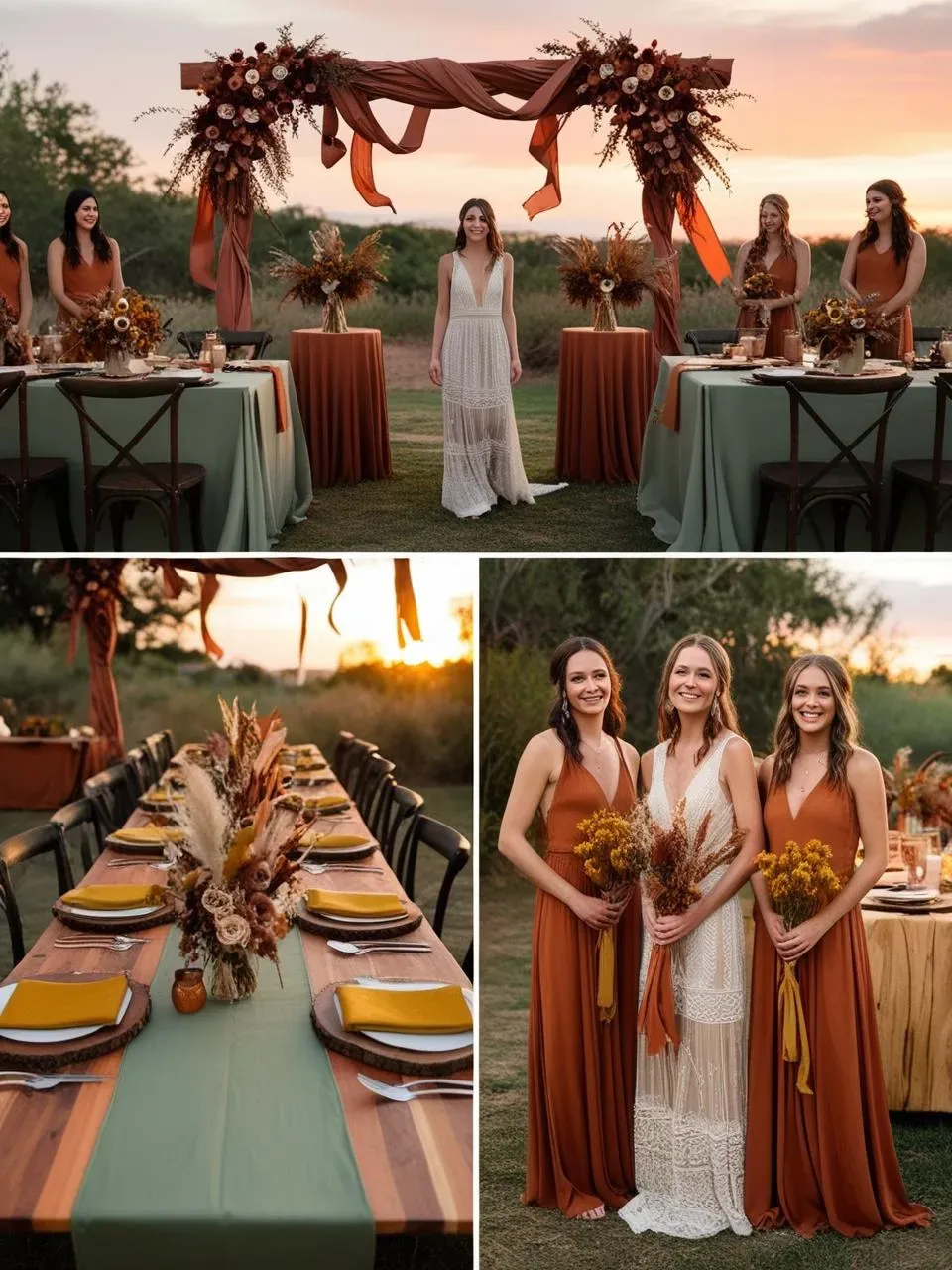
An outdoor ceremony arch combining terracotta roses, sage greenery, and mustard accents.
Midnight Navy and Emerald Green
Navy sits opposite orange on the color wheel. A dark navy tablecloth makes rust flowers jump out. For deep jewel tones, read our guide on emerald green wedding styling.
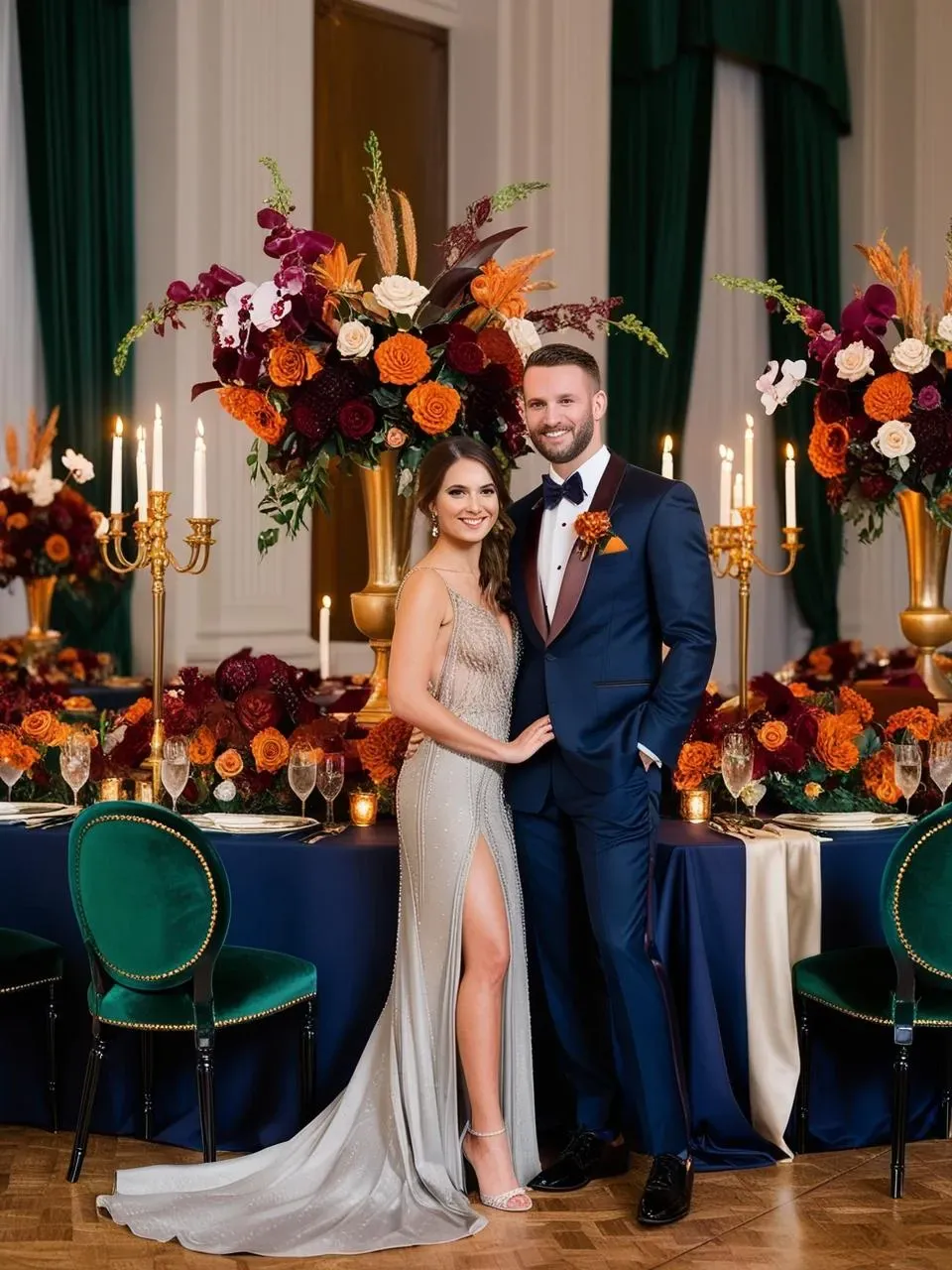
Navy tablecloths and emerald velvet chairs give bright orange centerpieces a dark backdrop.
Brushed Copper, Brass, and Gold
Warm metals catch candlelight. Use antique brass candlesticks, copper chargers, or gold-rimmed glassware instead of polished silver.
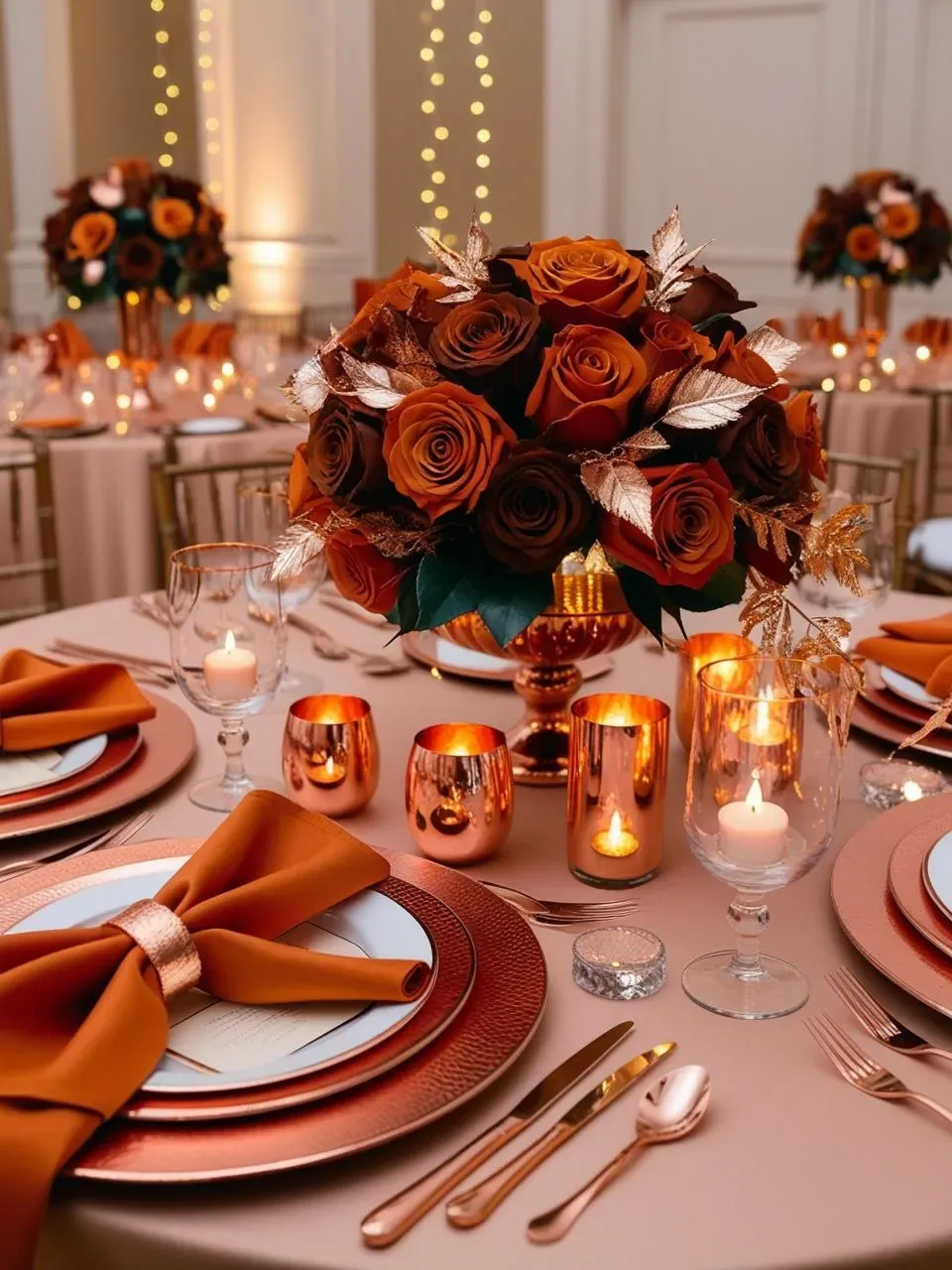
Brushed copper candleholders and gold-rimmed plates reflect warm lighting across the table.
Palette Comparison
| Palette Combination | Accent Shades | Mood | Best Season | Venue Type |
|---|---|---|---|---|
| Boho Earth | Terracotta, Sage, Ochre | Relaxed, botanical | Fall, Late Spring | Barn, Desert, Vineyard |
| Neutral Minimal | Ivory, Champagne, Sand | Soft, understated | Spring, Summer | Greenhouse, Lawn, Estate |
| Jewel Contrast | Midnight Navy, Emerald | Moody, formal | Late Fall, Winter | Mansion, Urban Ballroom |
| Sunset Glow | Antique Brass, Copper | Warm, glowing | Autumn, Winter | Historic Hotel, Gallery |
Wedding Attire: Bride, Groom, and Wedding Party
You can keep rust accents small or make them the focal point.
The Bridal Look
Most brides wear ivory and add warm tones through shoes, bouquet ribbons, or citrine jewelry. If you want a colored gown, choose an ombre silk that fades from cream into terracotta. Before buying your gown, read our guide on curating your bridal gown to match the fabric weight to your venue climate.
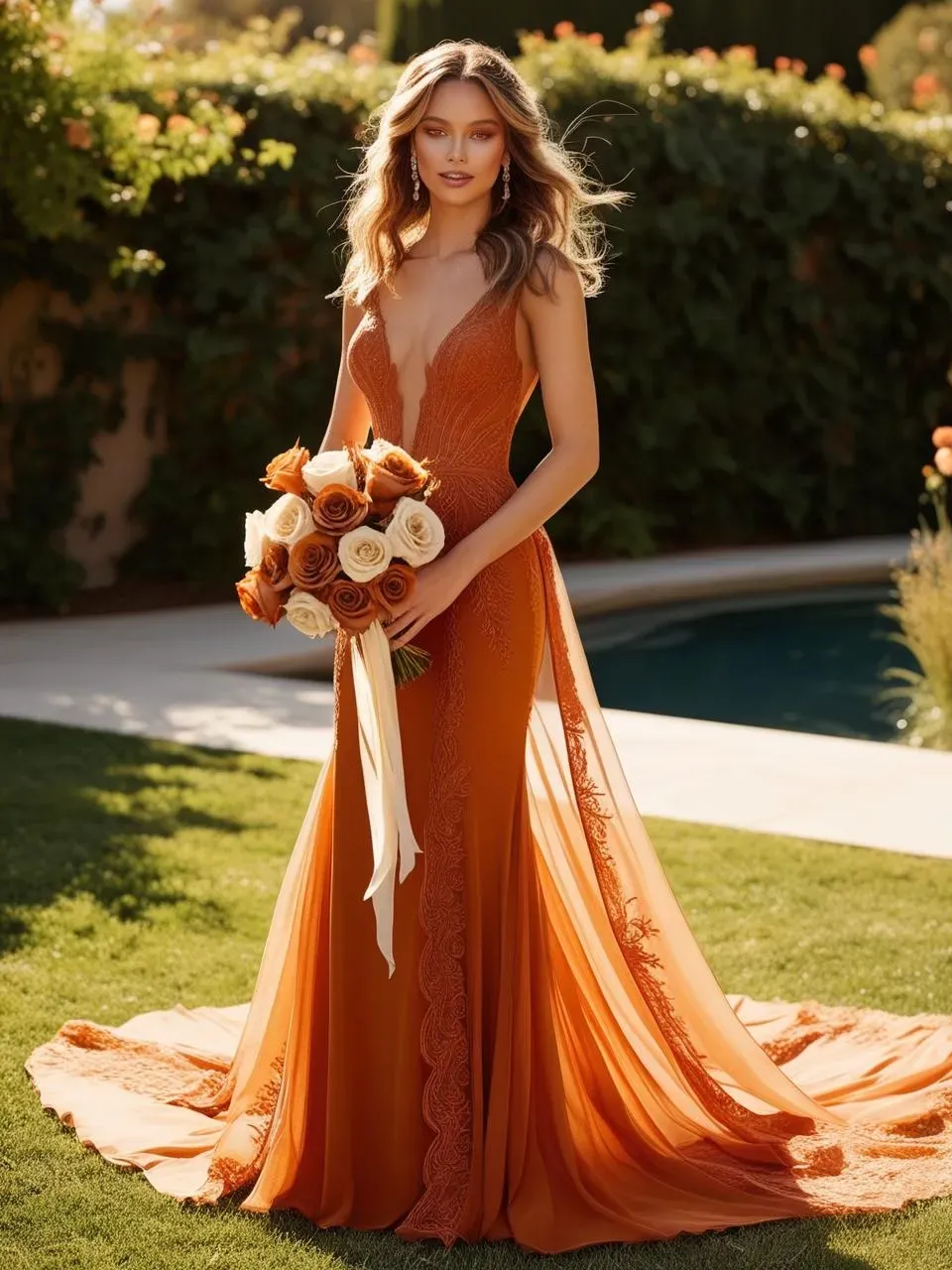
A terracotta bridal gown with lace embroidery for couples skipping traditional white.
Bridesmaids’ Dresses
Matching dresses in cheap orange satin look harsh under indoor flash photography. Instead, give your bridal party a color swatch with rust, cinnamon, terracotta, and champagne. Let each person pick a cut that fits their build. Velvet holds heat well from October through February. Crepe and matte satin work best in spring and summer.
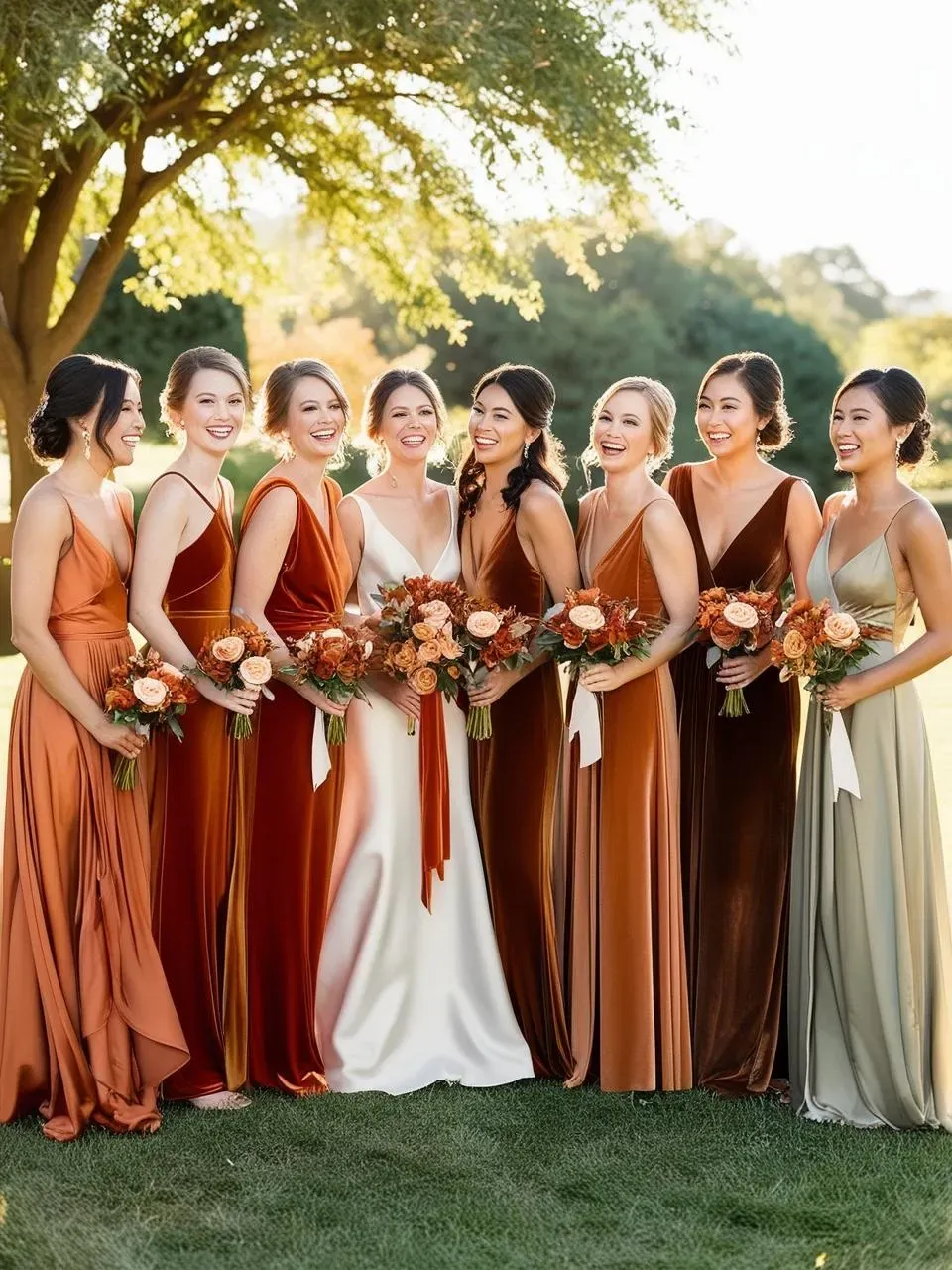
Mismatched dresses in rust, copper, and champagne satin give each bridesmaid a distinct look.
Groom and Groomsmen
A rust wool suit makes a strong statement. If the groom prefers classic tailoring, put him in charcoal or midnight navy with a rust silk tie and a terracotta ranunculus boutonniere. For desert or beach ceremonies, oatmeal linen suits soften the palette.
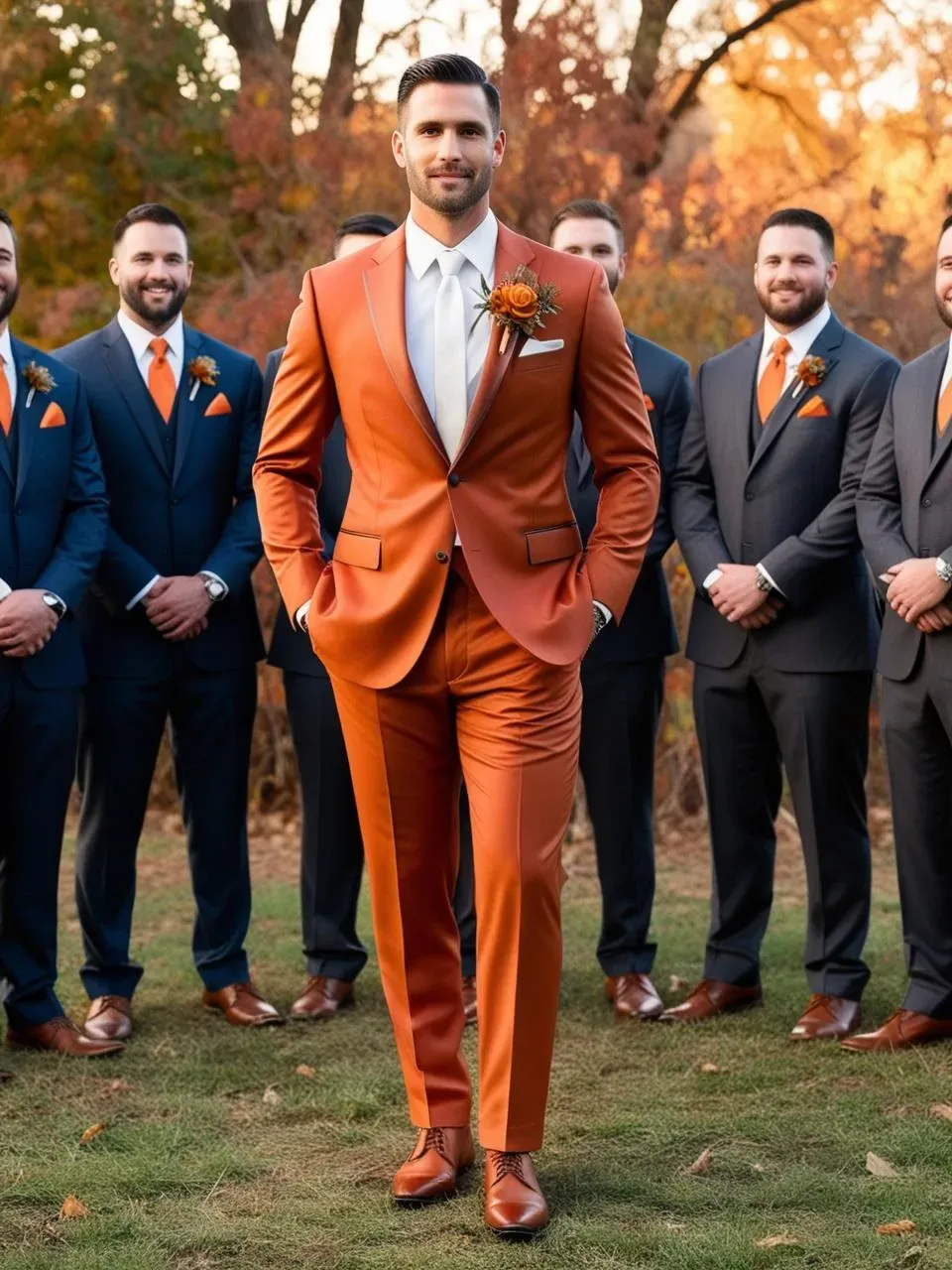
The groom in a tailored rust suit while groomsmen wear charcoal suits with matching ties.
Ceremony and Reception Decor
Layer color, raw materials, and lighting so the space feels finished without looking cluttered.
Ceremony Setup and Aisle Styling
Frame your vows with a clear focal point:
- Ceremony arch: Build an asymmetrical arch with terracotta fabric, fresh dahlias, and dried foliage like eucalyptus and bleached ruscus.
- Aisle runners: Line the walkway with wooden lanterns, potted succulents in terracotta bowls, or ground-level floral clusters.
Reception Tablescapes and Lighting
Guests spend hours at reception tables. Keep the design tactile:
- Linens: Put gauzy terracotta runners on raw wooden tables for a relaxed dinner. For formal rooms, choose ivory tablecloths with rust velvet napkins.
- Glassware: Amber wine glasses catch candlelight. Review our tips on wedding decor rental strategies before buying glassware sets you will only use once.
- Candlelight: Place caramel, rust, and ivory taper candles in brass holders along the tables to create low, warm light after dark.
Floral Arrangements
Flowers carry the theme best. Combine fresh blooms with dried grasses for texture:
- Main flowers: ‘Toffee’ garden roses, terracotta dahlias, burnt orange ranunculus, and bronze chrysanthemums.
- Foliage and filler: Silver dollar eucalyptus, copper beech branches, dried palm fans, and bunny tails.
- If you plan to arrange flowers yourself, our guide on DIY wedding bouquet techniques covers stem-wrapping and bouquet balance.
Cake and Desserts
Keep cake designs simple so the color accents pop:
- Minimal designs: Order a white fondant or semi-naked cake. Have your baker decorate the tiers with fresh ranunculus, dried orange wheels, and gold leaf.
- Buttercream texture: Ask for a smooth terracotta watercolor wash across the frosting.
- Flavor profiles: Choose flavors that match the look, like spiced carrot cake, salted caramel apple, orange blossom, or dark chocolate.
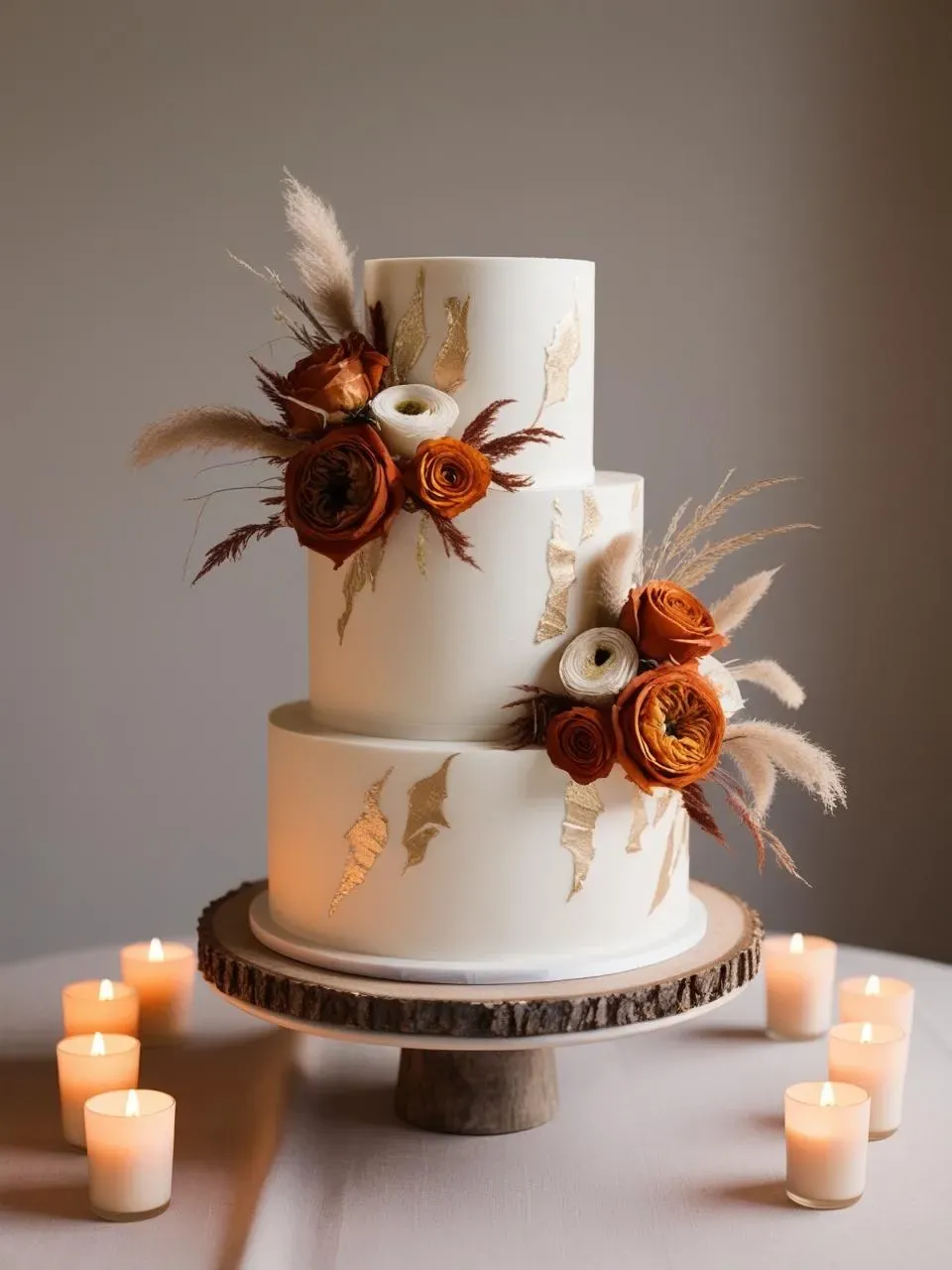
A white tiered cake decorated with fresh ranunculus and gold leaf details.
Invitations and Day-Of Stationery
Your paper goods give guests their first look at the theme:
- Paper stocks: Pick heavy, deckled-edge cotton paper in ivory. Use rust ink and terracotta mailing envelopes.
- Wax seals: Stamp envelope flaps with bronze or copper wax showing your initials or a botanical design.
- Reception signs: Welcome signs made of frosted acrylic with painted terracotta backs look clean. Use ceramic tile place cards with gold ink.
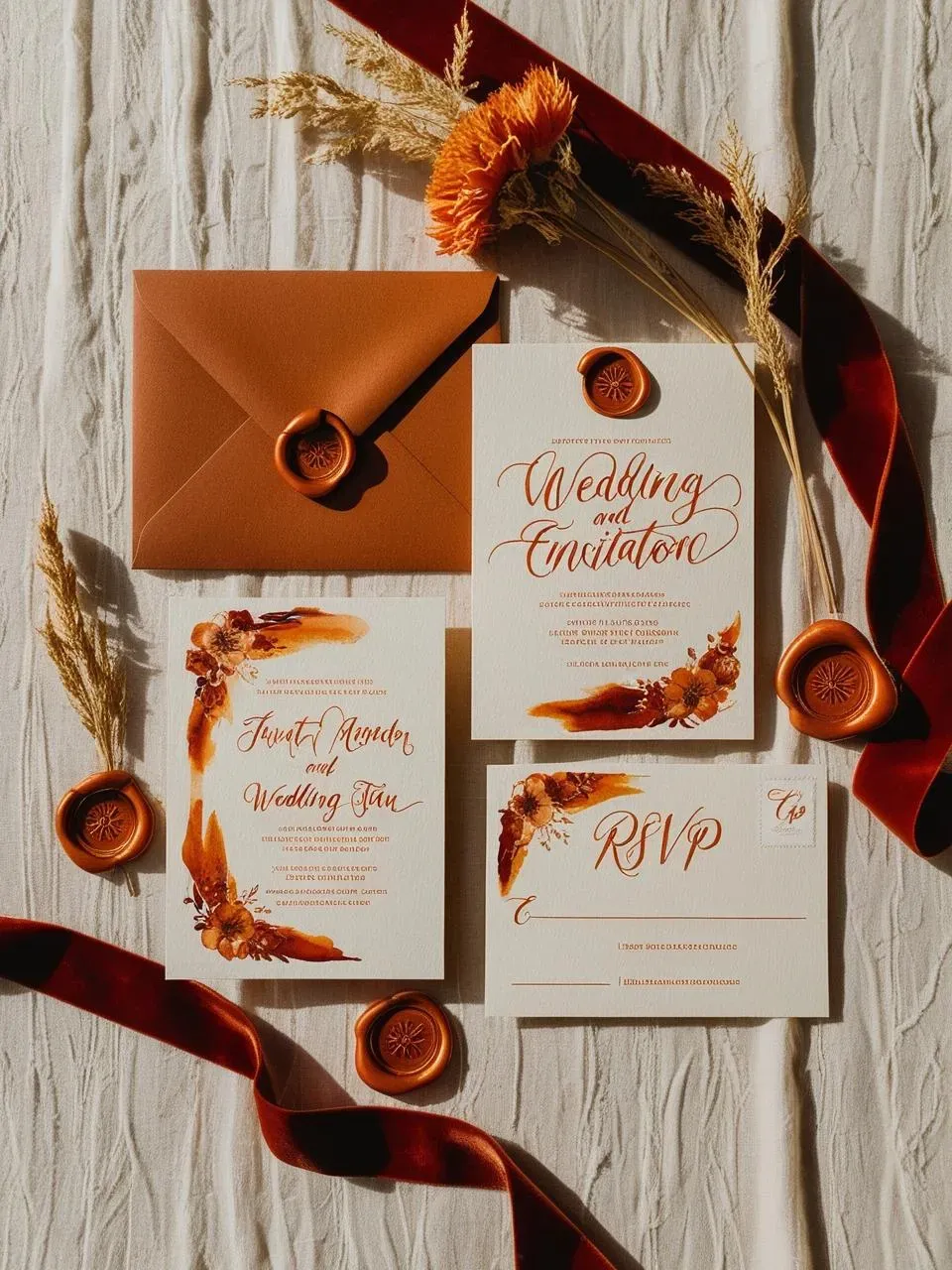
Deckled-edge paper finished with rust lettering and a bronze wax seal.
Guest Touches and Favors
Small details keep the theme present throughout the night:
- Favors: Give guests small terracotta pots with succulents, local honey jars tied with twine, or soy candles scented with cedar and amber.
- Cocktails: Pour blood orange margaritas, bourbon spiced cider, or aperol spritzes during cocktail hour.
- Lounge areas: Set up leather armchairs, rust throw pillows, and woven rugs near the bar so guests can sit between dances.
Seasonal Styling
Adjust the tone to match your wedding date:
Spring
Cut the heavy rust with apricot, peach, and blush. Add eucalyptus and light ivory linens for outdoor garden weddings.
Summer
Pair terracotta with bleached wood, rattan lanterns, and neutral stone. This fits outdoor cliff tops, vineyards, and desert venues.
Fall
Use the complete warm palette. Layer rust velvet runners, dark wood tables, brass candleholders, and white pumpkins.
Winter
Make it moody. Contrast orange flowers against forest green or navy velvet, dark blackberries, and tall taper candles.
Rules for Color Balance
Keep these guidelines in mind during planning:
- Keep 60% of surfaces neutral: Wood, white plaster, and light linens give eyes a rest.
- Mix textures: Pair porous clay pots with smooth silk ribbons and brushed metal. Texture prevents single-color setups from looking flat.
- Test the lighting: View flower and fabric swatches at 2 PM and 8 PM. Colors shift between direct daylight and evening bulbs.
- Spend on main sightlines: Put flower money where guests look: the ceremony arch, your sweetheart table, and personal bouquets. Read our guide on budget-friendly wedding themes that look luxurious for more budget allocation advice.
Conclusion
Burnt orange works because it adds warmth without shouting. Keep your base linens neutral, mix dried textures with fresh garden roses, and let the color do its job. The result is a celebration that looks intentional in person and holds up on film years down the line.
Frequently Asked Questions
What colors pair best with burnt orange for a wedding?
Cream, champagne, and ivory soften the palette for summer. Sage green and muted terracotta ground it for spring. Midnight navy and emerald green create contrast for late fall and winter. Brushed copper and antique brass work better than shiny gold.
Can you use burnt orange outside of fall weddings?
Yes. In summer, combine terracotta with rattan, bleached wood, and peach. In spring, pair rust with soft blush and eucalyptus. In winter, contrast it against dark green velvet and candlelight.
How do you keep burnt orange from looking too rustic?
Avoid burlap, mason jars, and hay bales. Instead, use clean ceramic plates, clear or amber glassware, tailored suits, and ivory linens. Keep 60% of your decor neutral to give the color room to breathe.
Which flowers grow in burnt orange shades?
Look for 'Toffee' and 'Leonidas' garden roses, terracotta dahlias, ranunculus, calla lilies, and marigolds. Mix them with dried bunny tails, copper beech leaves, and pampas grass.
What suit colors complement burnt orange dresses?
Charcoal gray, midnight navy, and hunter green provide contrast against rust bridesmaid dresses. Oatmeal or tan linen suits fit outdoor summer ceremonies.
