Sage Green Wedding Ideas: Colors, Dresses and Decor Guide
Plan a sage green wedding with five color palettes, fabric swatch tips, dress ideas, flowers, readable invitations and decor priorities for your budget.
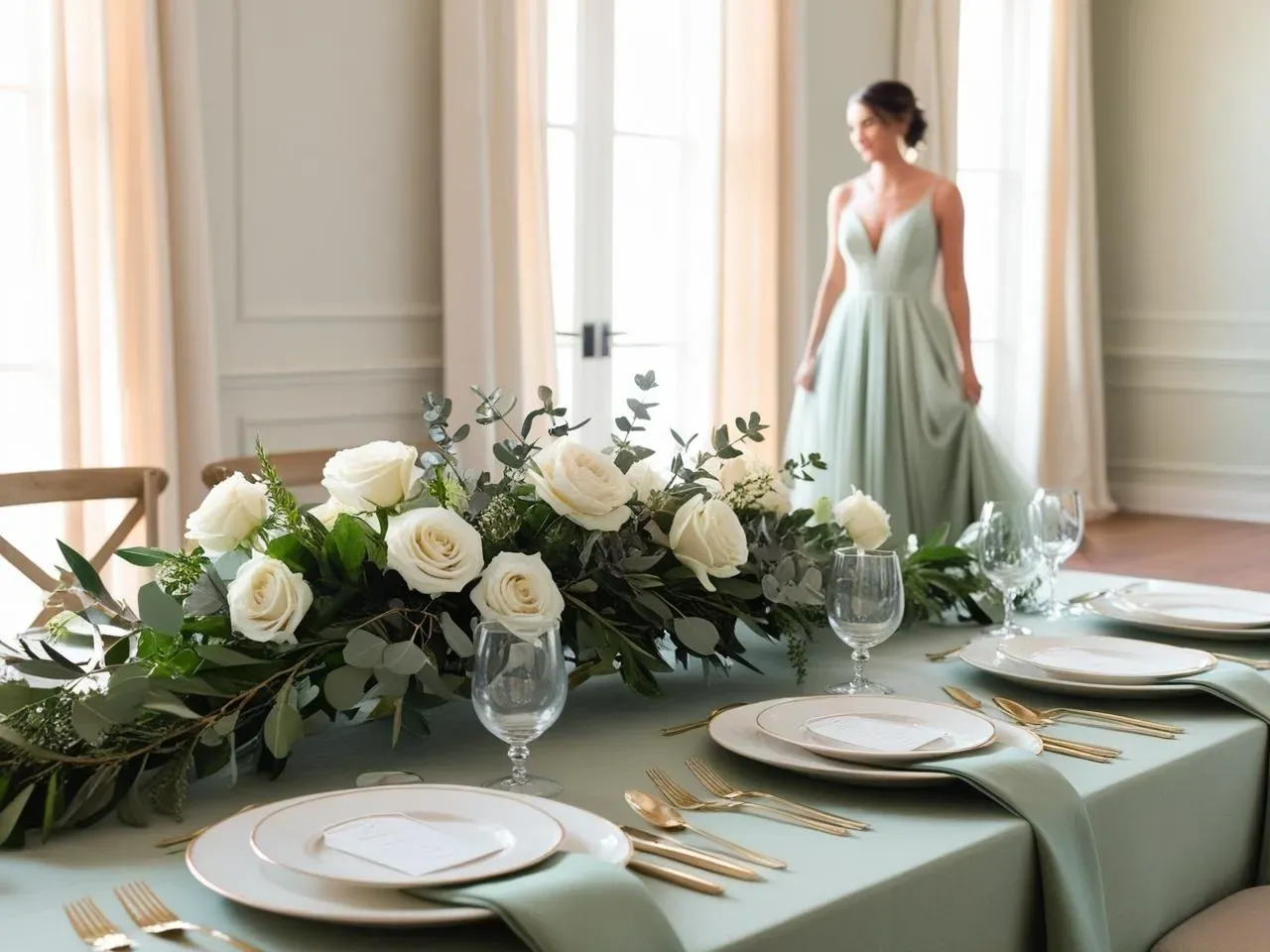
A sage green wedding uses muted gray-green as the connecting color across attire, flowers, stationery and reception decor. Pair sage with ivory and gold for warmth, navy and off-white for contrast, or dusty rose and terracotta for an earthy look. Repeat the chosen palette in a few visible details.
You do not need to match every detail. A few repeated touches, such as bridesmaid dresses, napkins and invitation borders, can carry the theme. This guide helps you choose a palette, compare real materials and spend on the elements guests will see most.
In this guide
- What colors go with sage green?
- How do you match sage green wedding colors?
- Style a sage green wedding dress
- Coordinate bridesmaids and menswear
- Choose sage green wedding guest attire
- Design invitations guests can read
- Plan flowers and reception decor
- Choose a sage green wedding cake design
- Set your decor budget priorities
- What the 2026 wedding data says
- Sage green wedding questions
What colors go with sage green for a wedding?
Sage green pairs with ivory and gold, navy and off-white, dusty rose and terracotta, lavender and silver, or peach and cream. Choose the combination that suits your venue, then use a neutral for large surfaces, sage for repeated details, and the accent color for flowers, stationery or small accessories.
Sage can lean toward blue-gray or yellow-green. Choose your actual fabric or paper sample first, rather than treating the color name as a guarantee of a match. A dress retailer’s sage may look quite different from a linen supplier’s sage.
Use the venue as your starting point. Look at permanent features such as carpet, curtains, wood, stone and chair upholstery. A palette that works with those features will be easier to carry through than one that needs expensive draping to hide them.
| Palette | Setting or mood | Where to use each color |
|---|---|---|
| Sage, ivory and gold | Garden, vineyard or formal reception | Ivory tablecloths and flowers, sage dresses and napkins, gold metal accents |
| Sage, dusty rose and terracotta | Barn, courtyard or rustic celebration | Sage textiles, dusty rose blooms, terracotta pots or small accents |
| Sage, lavender and silver | Soft, cool-toned styling | Sage attire, pale lavender flowers, silver cutlery or candleholders |
| Sage, navy and white | Evening reception or crisp modern styling | White tablecloths, sage napkins, navy suits or selected table accents |
| Sage, peach and cream | Light spring or summer styling | Cream base, sage greenery and ribbon, peach flowers |
These are styling suggestions, rather than rules about which colors belong in each season. For autumn, deepen a sage palette with burgundy or rust. For winter, try forest green with ivory and brass. If you prefer a darker green as the main color, compare our emerald green wedding styling guide.
Compare warm and cool pairings
The two examples below show how the supporting colors change the effect of sage. In the first, ivory and gold keep the place setting warm and light. In the second, a navy charger gives the white plate a darker border while sage remains the softer textile accent.
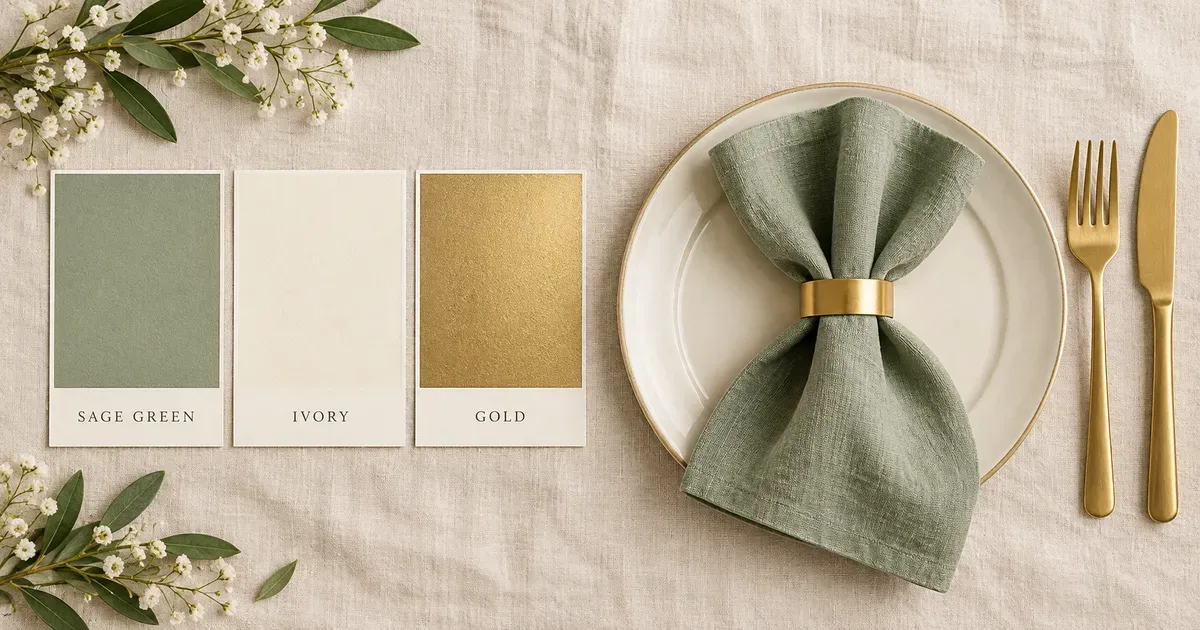
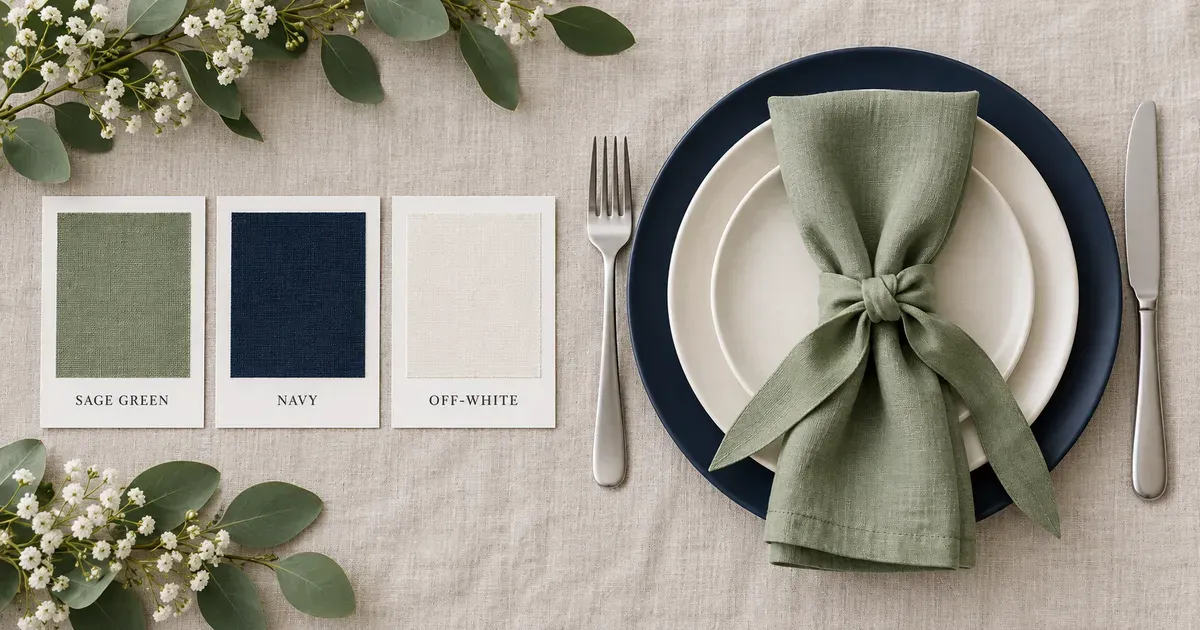
Use these images to compare color relationships, then confirm your choices with physical samples. Screen settings and photography can change how a shade appears.
Compare three softer accent palettes
Dusty rose and terracotta bring earthy warmth; lavender and silver give a cooler result; peach and cream keep the arrangement light. The comparison below shows each palette applied to flowers and textiles, rather than swatches alone.
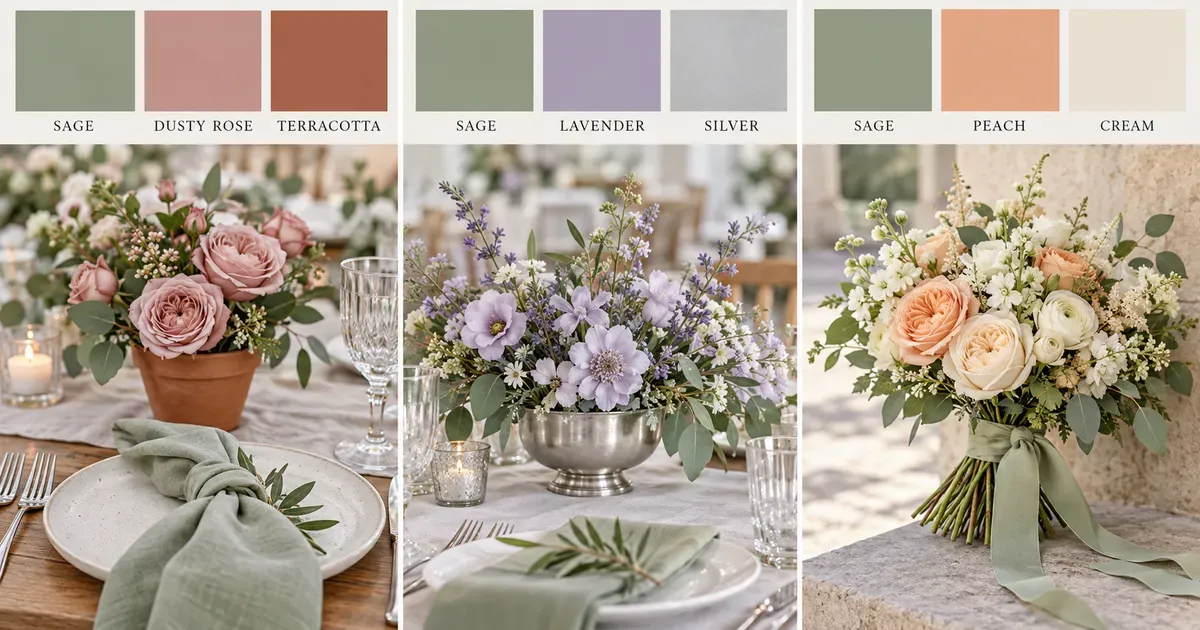
The comparison images in this guide are AI-generated styling concepts, not photographs of client weddings or products available to purchase. Use them to explain your preferences to suppliers, then confirm materials, colors and feasibility with real samples.
How do you match sage green wedding colors?
Match sage green wedding colors by comparing physical fabric, ribbon and paper samples against one anchor swatch. Check them in daylight and reception lighting, photograph the combination, and approve it with your suppliers before ordering. Color names and screen images alone cannot confirm that different materials will match.
A color that looks right online can feel different in satin, chiffon, linen or printed ink. Follow these five steps before ordering in quantity:
- Choose an anchor sample. Pick the material that matters most to you, such as the bridesmaid dress fabric, and use it as the reference.
- Collect the other materials. Put linen, ribbon and paper samples next to the anchor. Label each with its supplier, color name and fabric type.
- Check daylight and reception lighting. View the group outside and under lighting similar to the venue’s evening setup. If possible, take the samples to the venue.
- Photograph them together. Check a close view and a wider view with your neutral and accent. Use photos as a comparison aid; do not rely on them alone for an exact match.
- Approve the final combination. Share the same reference with the florist, stationer and rental company, and keep a copy of the agreed samples.
If two greens are close but visibly different, separate them with a neutral or choose a clearly intentional variation. For example, pale sage napkins and darker olive foliage can look deliberate; two nearly matching sage fabrics touching each other can draw attention to the mismatch.
When matching bridesmaid dresses exactly, ask the retailer whether ordering together matters for dye-lot consistency. Keep ordering dates and alteration time in mind before giving the wedding party a deadline.
Style a sage green wedding dress
A sage green bridal gown can be the main color statement, with ivory flowers and neutral accessories providing contrast. Start with the silhouette and level of formality you want, then check whether that style is available in your preferred shade. Ask boutiques for current color options instead of assuming a particular designer offers sage.
Try the fabric near your face in natural light. There is no need to follow a strict skin-undertone rule: choose the shade you enjoy wearing and assess it with your planned makeup and accessories.
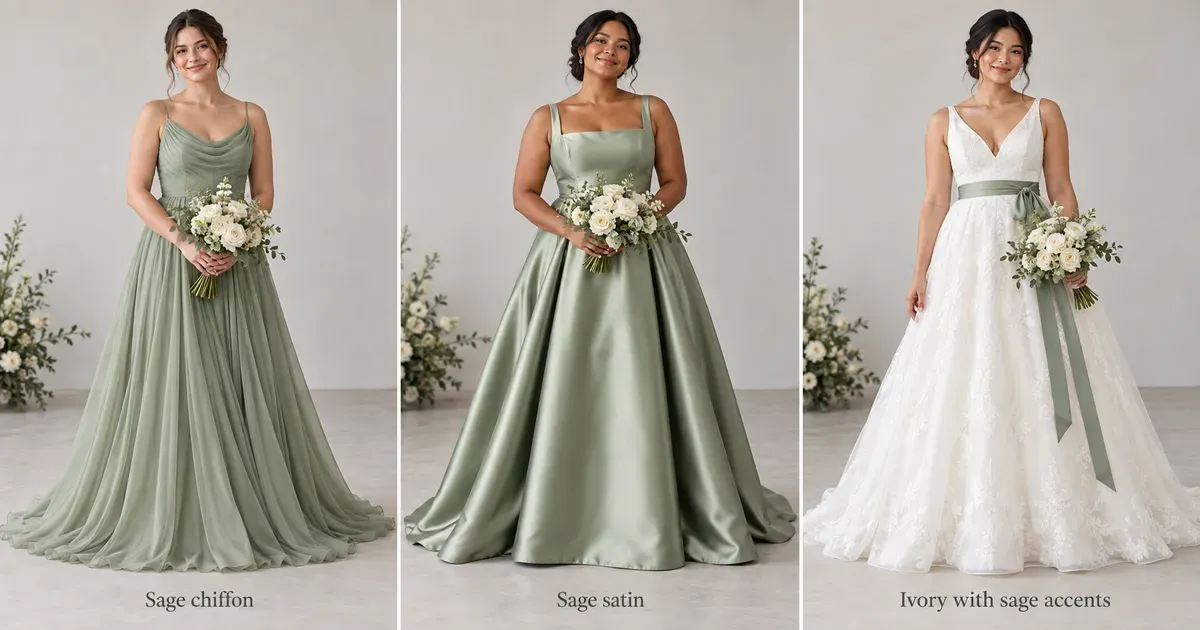
Chiffon gives a soft, flowing effect, while satin has a sheen that can make the same color look lighter or darker as it moves. Crepe offers a less reflective alternative. Compare an actual garment or substantial fabric sample before committing.
For accessories, try champagne shoes, pearl details or a small amount of gold or silver jewelry. Hold the bouquet against the dress during planning: ivory blooms create separation, while a bouquet made mostly of green foliage may blend into the fabric. If you choose a white or ivory gown, sage can appear in a sash, shoes or bouquet ribbon instead.
The examples below make the fabric differences easier to compare: chiffon falls in softer folds, satin reflects more light, and an ivory dress can carry sage through a sash and bouquet ribbon. They illustrate design directions rather than specific gowns for sale.
Coordinate bridesmaids and menswear
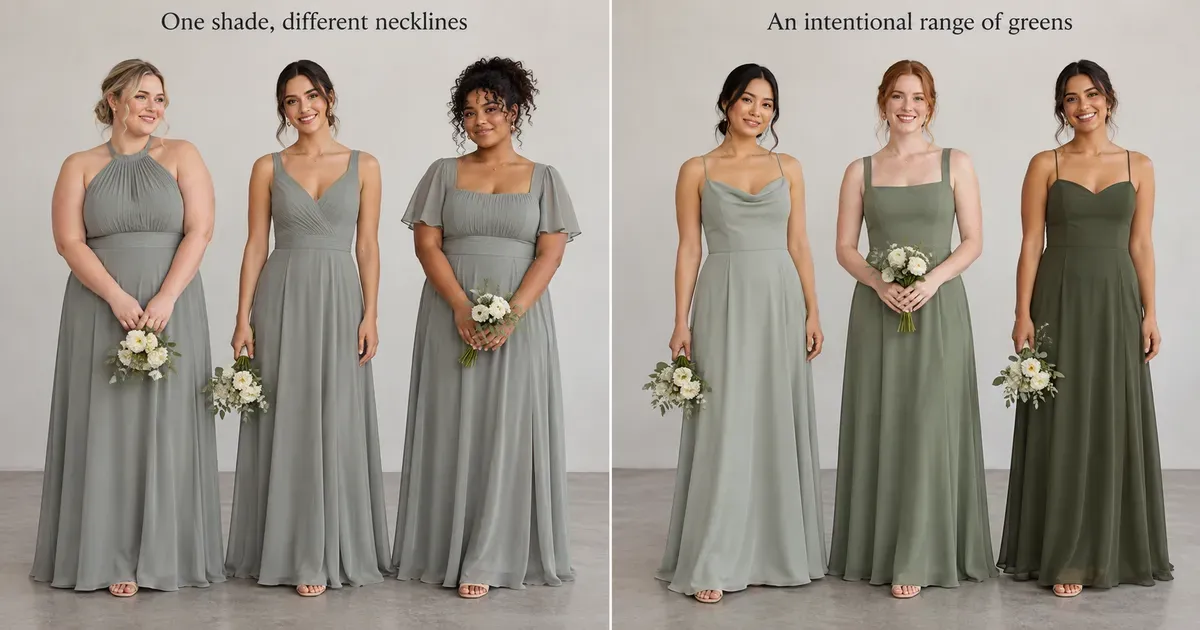
For bridesmaids, choose one of two clear approaches: the same fabric and shade in different silhouettes, or an intentional range of greens. A defined range is easier to communicate than asking everyone to buy anything labeled sage.
For a close match, specify the retailer, fabric and color name while allowing different necklines or sleeve lengths. For a varied palette, approve samples together and explain which tones fit: for example, gray-green sage through olive, with bright mint excluded.
Discuss dress prices, coverage preferences, sizing and alterations before choosing the final options. Matching accessories are optional; comfortable shoes in a shared neutral can be enough. Our bridesmaid proposal box guide includes ideas for inviting your party before you move into outfit planning.
What color suit goes with sage green bridesmaid dresses?
Navy, charcoal and tan suits can complement sage green bridesmaid dresses. Navy and charcoal create a darker contrast; tan keeps the combination lighter. Choose the suit fabric and formality for your dress code, then connect the outfits with sage ties or boutonniere ribbons checked against the bridesmaid dress swatch.
Compare matching and varied bridesmaid shades
Compare the two approaches below. On the left, different necklines share one fabric and shade. On the right, the shade changes deliberately from pale sage to olive. If you choose the second approach, approve the group of swatches together so the variation feels intentional.
Choose sage green wedding guest attire
Sage green can work for a wedding guest outfit when it fits the invitation’s dress code and any color requests from the couple. Color alone does not make a dress formal or casual; fabric, length, construction and accessories matter too.
For a daytime garden wedding, a wrap dress or simple midi may suit the setting. For a formal evening celebration, consider a more structured or full-length option. Choose shoes for the ground as well as the outfit: narrow heels can be awkward on grass or gravel.
If you know the wedding party is wearing sage and want to avoid matching, choose another color or ask the couple about their preference. Very pale sage can look nearly ivory in some photographs, so check the outfit in daylight if its color is close to white. Follow any cultural or ceremony-specific clothing guidance on the invitation.
Design invitations guests can read
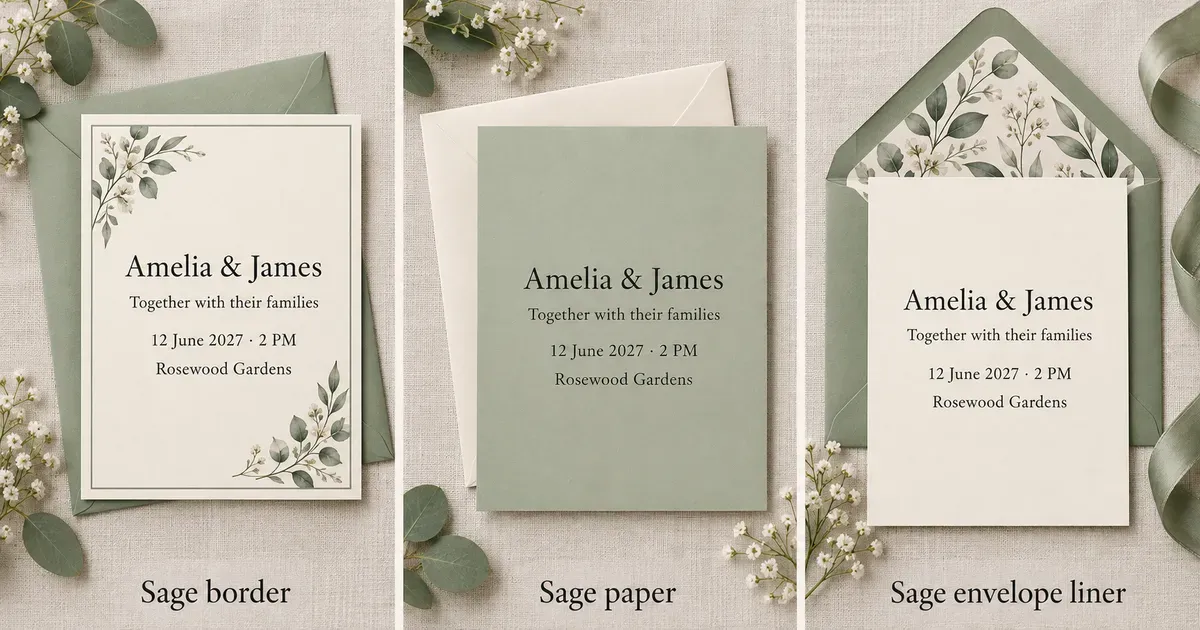
Use sage in borders, botanical illustrations, envelope liners or the paper itself. Keep the essential information easy to read: names, date, ceremony time, venue and RSVP instructions should stand out at the final printed size.
Dark charcoal text on pale sage or cream is a useful starting point. White ink on light sage and pale gold lettering can be harder to read, particularly in small type. Reserve delicate script for a short heading and use a clear font for practical details.
Order a printed proof before approving the full quantity. Check it in ordinary indoor light, including the smaller details card. If you choose foil, ask for a physical sample because its appearance changes with the viewing angle.
Repeat one motif across invitations, menus and the seating chart rather than commissioning a separate design for each item. Our DIY wedding invitation guide covers designing and printing your own suite. Check postage with your local postal service before adding bulky wax seals or layered inserts.
The invitation examples below compare a sage border on cream paper, dark text on sage paper, and a cream card with a sage envelope liner. A border or liner can carry the palette while leaving the main card light. These are layout concepts, not print-ready templates or a complete invitation suite.
Plan flowers and reception decor
What flowers go with a sage green wedding?
Ivory roses and white ranunculus with gray-green foliage suit a sage green wedding. Add blush or peach blooms for warmth, or burgundy for a deeper accent. Choose flowers for their shape and locally available colors, then ask your florist to suggest seasonal varieties within your budget.
Build the floral brief around shape, palette and placement. Sage-toned foliage can help connect flowers to the textiles, but natural leaves will not necessarily match a dress swatch exactly. Bring that sample to the florist and agree how much variation you are comfortable with.
Ask which foliage and blooms are available locally for your date, and request alternatives if a preferred variety is costly or unavailable. White or cream flowers keep a sage palette simple; blush, peach or burgundy flowers introduce your accent color. Avoid specifying a long list of varieties before the florist has priced the overall design.
Compare bouquet shapes and table arrangements
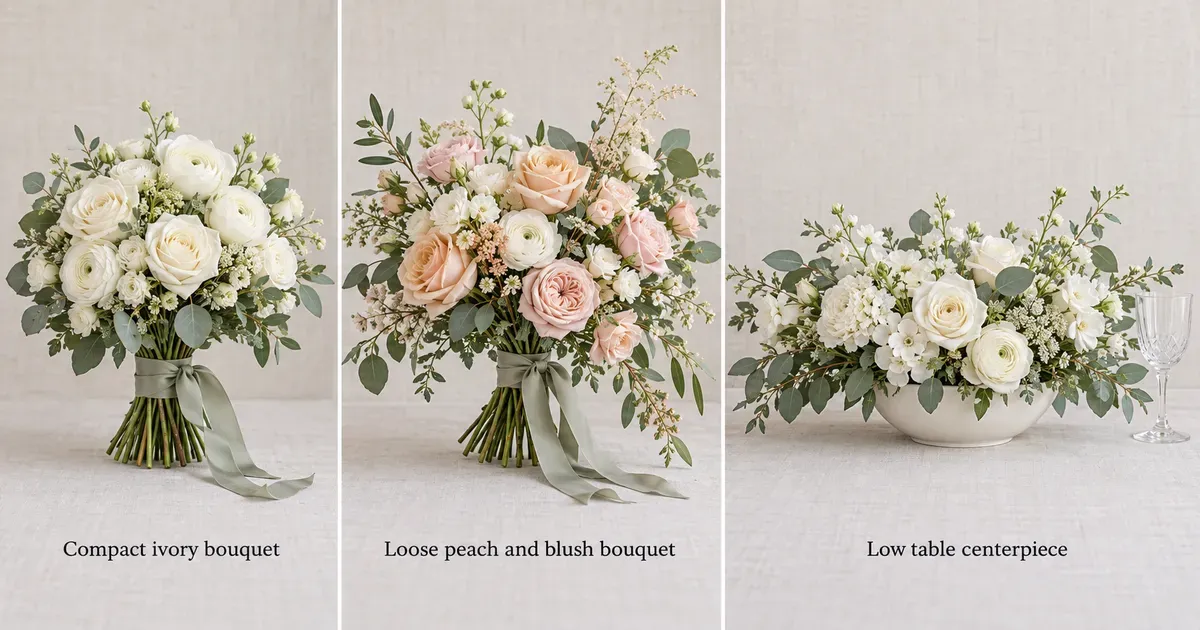
A compact rounded bouquet keeps the flowers close together. A looser bouquet gives peach and blush accents more space among the foliage. For reception tables, a low bowl arrangement spreads the flowers horizontally; check its finished height and width against your actual place settings.
Build one sample table
Before hiring decor for every table, assemble or request a mock-up of one place setting with the chosen linen, napkin, plate, stationery and centerpiece. Check it at guest eye level as well as from above.
- Base: Use the venue’s neutral tablecloths if they work with your palette.
- Sage element: Choose napkins or a runner as the main textile accent.
- Contrast: Add white plates, a dark charger or a small metal detail according to your palette.
- Flowers: Keep the arrangement proportionate to the table and leave space for glasses, food and conversation.
- Lighting: Check venue rules before buying candles. Compare flameless options if open flames are restricted.
Start with one or two sage elements per table, then judge the whole arrangement before adding more. Sage linens, plates, glassware and candles together may blur the individual details. Our wedding decoration ideas for every budget can help you compare options for the wider room.
Choose a sage green wedding cake design
Carry sage into the cake with small piped borders, one colored tier, or sage-colored sugar leaves against ivory icing. The comparison below keeps the tier count similar so you can focus on how much color and detail each approach uses.
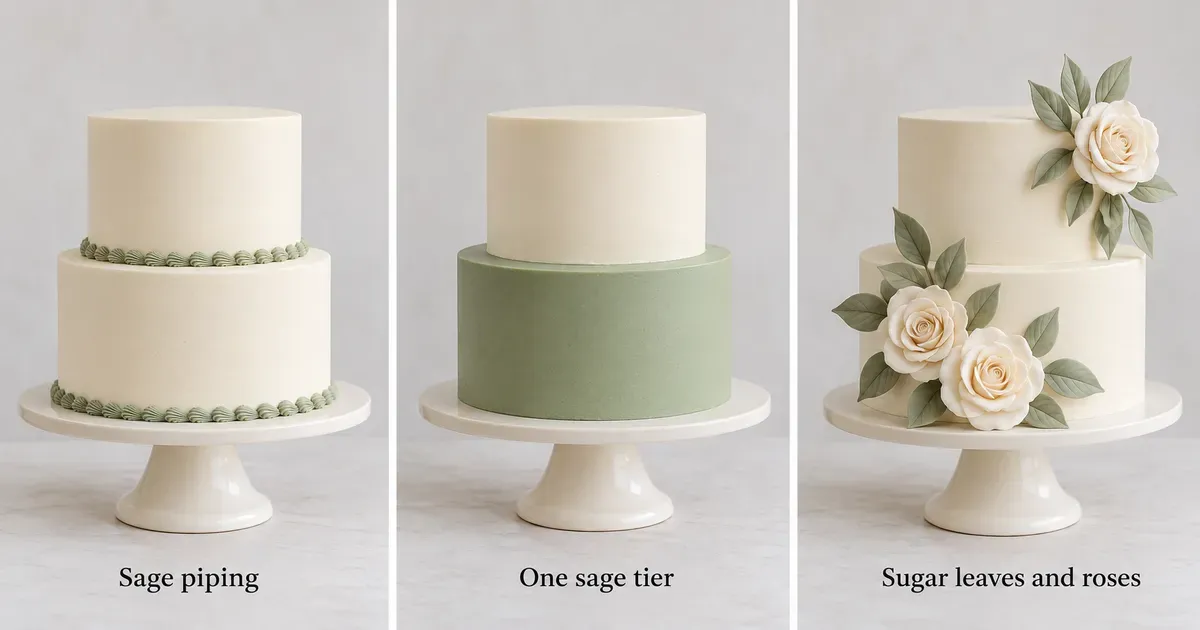
Ask your baker to compare quotes for the finish and decoration you prefer, then confirm portion requirements separately from the pictured tier sizes. Request a color sample or a previous example of the icing finish; a screen image cannot guarantee a match to your linens.
The botanical cake concept uses sugar decorations. Let your baker select and handle any decorations intended to touch the cake rather than transferring bouquet foliage onto it.
Set your decor budget priorities
Sage green does not require a complete set of custom rentals. Put money into repeated, visible details before small items scattered around the venue.
| Prioritize | Consider simplifying |
|---|---|
| Sage napkins or a runner on each guest table | Replacing every tablecloth |
| One ceremony focal arrangement | Decorating every aisle position |
| A readable seating chart and coordinated menus | Multiple decorative signs |
| A few arrangements placed where people gather | Flowers on every available surface |
Ask for itemized quotes that include delivery, setup, collection and any minimum order. A small rental price can become a larger total once those charges are included.
If you want to reuse ceremony flowers at the reception, confirm who will move them, when the room becomes accessible and whether the arrangements suit both locations. Treat this as a planned task with a quoted cost, rather than assuming it will happen during the drinks reception.
For a worked styling example, combine ivory venue linens, sage napkins, white flowers with green foliage and the venue’s existing cutlery. Then decide whether a navy charger or gold accent improves the table enough to justify its cost. This is a suggested combination, not a documented client wedding. Use our wedding budget planning guide to fit decor into the full celebration budget.
What the 2026 wedding data says
Sage remains a popular option in Zola’s 2026 survey. Its 2026 First Look Report, based on more than 11,500 couples getting married that year, reports that 53% of weddings incorporate green and 30% of couples choose sage specifically. White is listed at 39%, so the report does not support calling sage the single most chosen wedding color.
These figures describe Zola’s surveyed couples, rather than every wedding worldwide. They provide context for the color’s popularity; your venue, preferences and budget are better reasons to choose your own palette.
Sage green wedding questions
Does sage green work with gold or silver?
Sage green can work with either gold or silver. Gold adds warmth alongside ivory or cream; silver supports cooler combinations such as sage, lavender and off-white. Compare the metal finish with your actual fabric swatch and venue lighting, then repeat the chosen finish in a few small details.
Can you use sage green for a winter wedding?
Yes, sage green works for a winter wedding when paired with deeper colors such as forest green, burgundy or charcoal. Use ivory to lighten the overall palette, and choose fabrics appropriate for the weather and dress code. Compare swatches under your reception lighting before committing to the final combination.
Do all the sage green shades need to match?
No, all sage green shades do not need to match. Use the same fabric and shade where uniformity matters, such as coordinated bridesmaid dresses. Elsewhere, a planned range of muted greens can work. Compare physical samples together, and separate nearly matching shades with a neutral if the difference feels accidental.
How do you keep a sage green wedding affordable?
Keep a sage green wedding affordable by using the venue’s neutral linens, adding sage napkins or ribbon, and concentrating flowers in a few visible locations. Compare complete quotes, including delivery, setup and collection, before ordering custom rentals. Plan any reuse of ceremony arrangements with the florist and venue in advance.
Once the palette and samples are approved, share a simple styling brief with suppliers. Include the swatch reference, neutral and accent colors, agreed placements and budget priorities. That gives everyone a practical plan to work from.

Bridal by Bentley
Wedding Editorial
Bridal by Bentley publishes wedding inspiration and practical planning guides to help couples compare options and prepare for their celebrations.