How to Choose a Wedding Dress: Styles, Budget and Fittings
Learn how to choose a wedding dress with practical advice on silhouettes, fabrics, total costs, shopping timelines, boutique appointments and alterations.
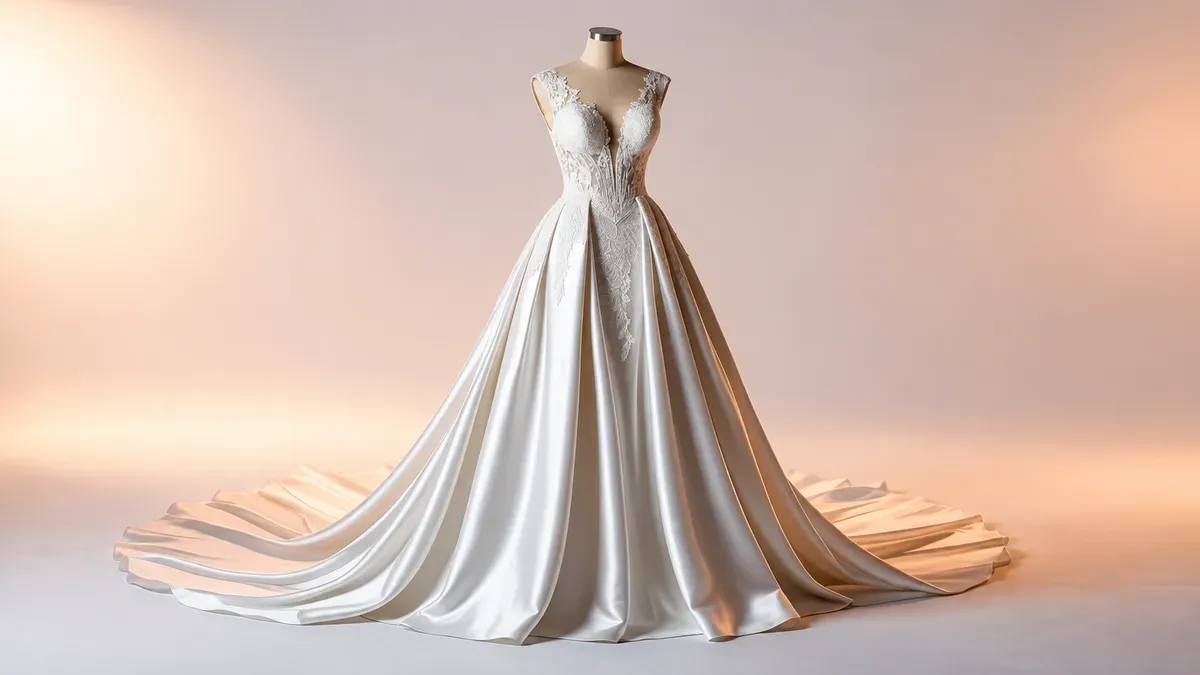
To choose a wedding dress, start with your total budget and wedding date, then try several silhouettes and test how each gown feels when you sit, walk and move. The right bridal dress should suit your preferences, give you the support you need and arrive with enough time for alterations.
You do not need to identify a body type before shopping. A photograph can help you explain what you like, but a fitting tells you much more about comfort, construction and movement. Use this guide to compare your options and prepare questions before you commit.
Key Takeaways
- Set a complete attire budget that includes alterations, shoes, undergarments, accessories and delivery costs.
- For made-to-order gowns, research early and confirm the designer's production and delivery deadlines with your boutique.
- Try several silhouettes; body-shape labels should never restrict your choices.
- Judge fabric by its weight, lining and layers as well as its appearance.
- Before ordering, confirm measurements, alteration options, the total price and cancellation terms in writing.
In this guide
- Choose a dress in six steps
- Set your budget
- Plan your shopping timeline
- Compare silhouettes
- Choose fabrics and details
- Prepare for appointments
- Check sizing and alterations
- Review the order terms
- Choose accessories
- Make your final decision
- Frequently asked questions
How do you choose a wedding dress?
- Set a total budget for the gown, alterations and accessories.
- Confirm the boutique’s ordering, delivery and fitting deadlines.
- Try several silhouettes and compare support and comfort.
- Check fabric weight, lining and suitability for your venue.
- Test sitting, walking and moving in each shortlisted gown.
- Review the complete price and written order terms before paying.
How much should you budget for a wedding dress?
Your wedding dress budget should cover the gown, alterations, undergarments, shoes, accessories, taxes and delivery. Set a total you can comfortably afford, then subtract the other outfit costs to find your gown limit. A fixed percentage of the wedding budget cannot account for your priorities or local prices.
Use this checklist to request itemized quotes:
| Cost | What to check |
|---|---|
| Gown | Price for the exact style, color and size you intend to order |
| Alterations | Hem, bodice adjustments, straps, bustle and any design changes |
| Undergarments | Bra, cups, shapewear or other support, if you want them |
| Accessories | Shoes, veil, jewelry and hair pieces |
| Additional charges | Taxes, delivery, customizations and possible rush fees |
| Care and transport | Garment bag, travel arrangements and cleaning if required |
Your maximum gown price is your total attire budget minus the other expected costs. Leave room for quoted costs that are still uncertain. Ask whether alterations are included; an attractive gown price may exclude substantial fitting work.
For example, if your total allowance is 20,000 in your local currency and you reserve 5,000 for quoted alterations and accessories, your gown limit is 15,000. This is a calculation example, not a recommended price or estimate of typical bridal costs.
Tell the consultant your gown limit before trying dresses. If you want to compare lower-cost options, ask about samples, ready-to-wear gowns and second-hand dresses. Inspect the condition, confirm cleaning requirements and get an alteration assessment before buying. A discounted dress that needs extensive reconstruction may exceed your budget.
Our wedding budget planning guide can help you decide how attire fits into your wider spending plan.
When should you start wedding dress shopping?
For a made-to-order wedding dress, start researching around 12–15 months before the wedding and discuss ordering 9–12 months ahead. Confirm your boutique’s production, delivery and alteration deadlines before paying. These planning windows are a starting point; timing varies by designer, gown availability and any customizations.
As one designer-specific example, Jenny Yoo’s wedding dress shopping timeline places exploration at 12–15 months before the wedding and ordering at 9–12 months. Ask your boutique to confirm its own schedule rather than treating those windows as a guarantee.
| Stage | What to arrange |
|---|---|
| Research and appointments | Check stock, available sample sizes and ordering deadlines early |
| Before paying | Obtain a delivery estimate and confirm whether rush production is available |
| While waiting for delivery | Book alteration appointments and choose shoes and undergarments |
| Once the gown arrives | Inspect it and begin fittings on the seamstress’s schedule |
| Before collection | Complete a movement check, confirm the bustle and agree on transport arrangements |
Made-to-order usually means a gown is produced after you order, often in a designer’s standard size. Made-to-measure and bespoke services may use different processes; ask exactly what the service includes and whether later alterations are additional.
If your wedding is close
Start by asking which dresses are physically available in your size or can arrive before your fitting deadline. Ready-to-wear, sample and second-hand gowns may offer a shorter route, but they still need inspection and may need alterations.
Confirm seamstress availability before purchasing. A dress being ready to ship does not mean it is ready to wear, and a rush production fee does not necessarily include expedited shipping or fitting work.
Compare wedding dress silhouettes
Silhouette describes the overall shape of a dress. Use it to explain preferences to your consultant, then try the gown to judge its support and movement. You can wear any silhouette you enjoy; body-shape categories are optional starting points rather than rules.
The illustration uses consistent dress forms to make differences in skirt volume and flare position easier to compare.
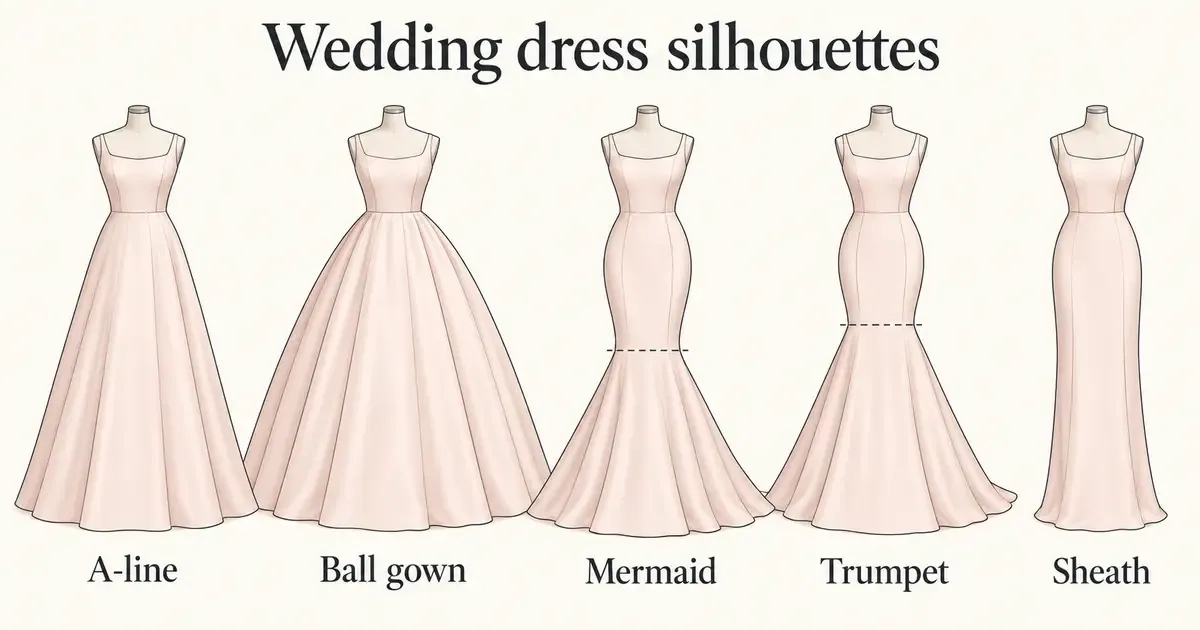
| Silhouette | Shape | What to test during a fitting |
|---|---|---|
| A-line | Fitted upper section with a skirt that gradually widens | Waist comfort, skirt weight and room to walk |
| Ball gown | Fitted bodice with a full skirt | Sitting space, layered skirt weight and navigating narrow aisles |
| Mermaid | Closely fitted through the hips and thighs, flaring around the knees or below | Stride length, steps and sitting comfortably |
| Trumpet | Fitted through the upper body with a flare that generally begins higher than a mermaid’s | Where the flare starts and how much movement it allows |
| Sheath | Relatively straight, narrow outline following the body | Lining coverage, ease through the hips and fabric movement |
| Tea-length | Hem finishing between the knee and ankle; skirt shapes vary | Hem position, shoe visibility and freedom to dance |
What is the difference between mermaid and trumpet wedding dresses?
A mermaid wedding dress stays closely fitted through the hips and thighs before flaring around the knee or below. A trumpet dress generally begins to flare higher, around mid-thigh. Designer labels vary, so compare the actual flare position and test sitting and walking in each gown.
Vows Bridal’s silhouette comparison also distinguishes these styles by where the skirt begins to flare.
If you want waist definition, compare seams, belts and the position of the waistline. If you want more skirt volume, try different layers and petticoats. If support is your priority, ask to see bodice construction and discuss straps, cups or other options. These details can matter as much as the silhouette.
Begin with a few contrasting shapes: one fuller skirt, one fitted style and one simple outline. Tell the consultant what you liked and disliked about each. Specific feedback such as “I like this neckline, but cannot sit comfortably” is more useful than deciding a style is wrong for your body.
Choose fabrics and details for your venue
Silk is a fiber; satin is a weave. A satin fabric can be made from silk, polyester or other fibers, so “silk versus satin” does not describe two mutually exclusive options. Ask about fiber content, weight and construction when comparing gowns.
| Fabric or detail | What it contributes | What to check |
|---|---|---|
| Satin | A smooth surface with sheen; drape varies by weight | Lining, creasing and how it feels against your skin |
| Chiffon | A light, sheer fabric that creates flowing layers | Coverage, lining and how layers move in wind |
| Organza | A sheer fabric with a crisper structure | Whether layered volume adds bulk or stiffness |
| Tulle | Netting used for volume, overlays and veils | Number of layers, snagging and skin contact |
| Lace | Pattern and texture, often over another fabric | Lining, seam placement and possible hem alteration work |
| Beading | Surface detail and sparkle | Weight, rubbing under the arms and repair requirements |
A light-looking gown can still feel warm if it has dense lining or many skirt layers. A satin dress can be relatively light or substantial depending on its construction. For a hot outdoor wedding, assess the whole gown rather than choosing by fabric name alone.
Think about the route you will take on the day. Gravel, sand, grass and stairs affect your choice of hem, train and shoes. A long train may need a bustle or another way to lift it for the reception. Ask how that arrangement works and whether fitting it is included in the alteration quote.
Check necklines and sleeves while moving. Raise your arms, lean forward and hug someone if you are comfortable doing so. A neckline that looks lovely when you stand still should also feel secure during the ceremony and reception.
Prepare for your bridal appointments
Before booking, tell the salon your budget, wedding date and any requirements that matter to you. Ask which sample sizes are available and whether it stocks the designers or styles you want to try.
Bring a short collection of reference images, with a note about what attracts you to each one. It might be the neckline, a soft skirt or the absence of embellishment. This gives the consultant a clearer brief than a large folder of unrelated dresses.
Appointment checklist
- Confirm appointment fees, duration, guest limits and photography rules.
- Wear comfortable undergarments and bring any support garments you intend to use.
- Bring shoes of a similar heel height if the salon recommends them.
- Choose guests who will listen to your preferences and respect your budget.
- Ask to try an alternative silhouette, even if you have a favorite.
- Record the style name, size tried, quoted price and expected delivery date.
If photography is allowed, take front, side and back pictures in consistent lighting. Record a short note about comfort too: photographs will not remind you that the bodice rubbed or the skirt was difficult to lift.
Do not feel obliged to buy because it is your first appointment or because someone else loves the gown. Ask how long a quote or promotion is valid so you can make a decision with clear information.
Understand bridal sizing and alterations
Use the designer’s size chart and your measurements rather than your usual clothing size. Bridal sizing varies, and a sample clipped into place is not a reliable demonstration of how the ordered gown will fit.
If your measurements fall across sizes, ask the consultant how the designer recommends ordering and have a seamstress assess the likely adjustment work. Do not order around an assumed future weight change. Choose using current measurements and the professional guidance available for that gown.
Some changes are straightforward; others depend on seam allowance, lace placement, beading and internal support. A dress may be easier to take in than let out, but neither should be assumed possible without inspection. Ask before buying if you want to change sleeves, lower a back or reshape a neckline.
How do you check that a wedding dress fits?
Bring the shoes and undergarments you plan to wear, following the seamstress’s instructions for each appointment. Hem length and bodice fit can change when these items change.
Use these six checks during the fitting:
- Walk at your normal pace and turn in both directions.
- Sit down and stand up without pulling painfully at the bodice.
- Raise your arms and check the neckline remains secure.
- Test a step or stair if the fitting space allows it safely.
- Try lifting or bustling the train and moving as you would at the reception.
- Point out rubbing, slipping or pressure before the work is finalized.
At the final appointment, ask someone who will help you dress to learn the fastening and bustle. Request care instructions for the specific fabric, and agree on when and how to collect the gown.
Ask these questions before ordering
A verbal estimate is useful during shopping; an itemized written order lets you check exactly what you are buying. Before paying, confirm:
- What are the style number, color, size and agreed customizations?
- What is the complete price, and what remains excluded?
- How much is the deposit, and when is the balance due?
- What delivery date is expected, and what happens if delivery is delayed?
- Are alterations provided in-house or by a separate seamstress?
- Which adjustments are possible for this gown, and what are their estimated costs?
- Can the order be changed or canceled, and are any payments refundable?
- How will damage, a manufacturing fault or an incorrect order be handled?
Policies differ, especially for personalized orders and sale samples. Read the terms before paying and keep the receipt and written correspondence. Ask the boutique to clarify anything you do not understand.
For respectful ways to discuss package inclusions and price, see our guide to negotiating with wedding vendors.
Choose accessories with the dress
Choose accessories after you understand the gown’s neckline, proportions and fitting needs. Bring important pieces to appointments rather than guessing how they will work together.
A wedding veil should be tried with the dress, especially if either has lace or a detailed train. Check attachment, weight and whether you want to remove it for the reception.
Choose comfortable wedding shoes for the surfaces at your venue. Have the hem fitted to the height you intend to wear; switching to much lower shoes afterward may leave the skirt dragging.
Compare bridal jewelry against the neckline and embellishment. Check that earrings, necklaces and bracelets do not catch on lace or snag delicate fabric. Your preferences should guide the look; there is no requirement to wear every accessory.
When arranging storage or travel, follow the boutique’s instructions for your gown. Confirm bag dimensions against the dress and train, and ask how to handle creases safely.
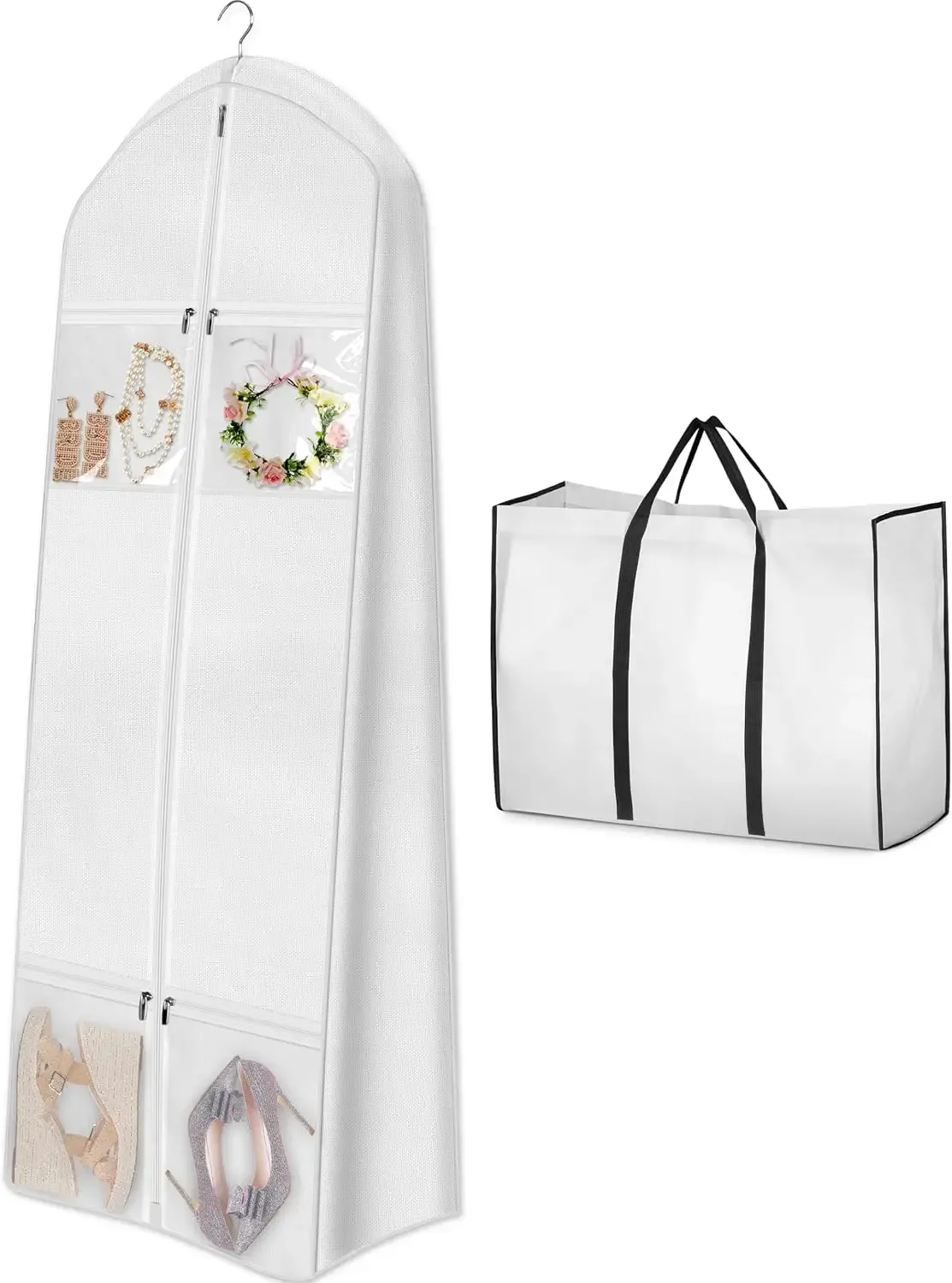
MISSLO Wedding Dress Garment Bag
Check the bag's dimensions against your gown and train, and follow your boutique's storage and transport advice.
Make your final dress decision
Compare your shortlist using the same criteria: total cost, delivery confidence, comfort, support, alteration needs and how much you enjoy wearing it. You do not need a dramatic emotional reaction to make a good choice.
Before committing, ask yourself: Can I sit and move comfortably? Is the complete cost manageable? Have I confirmed the production and fitting schedule? Do I like the gown when I am wearing it, as well as in photographs?
If two dresses feel equally right, compare the practical details that will affect your day. A simpler fastening, lighter skirt or fewer uncertain alterations may help you decide. Once you have chosen, keep your order details and fitting appointments together so the next steps are easy to follow.
Frequently Asked Questions
How do I choose a wedding dress?
Set a total attire budget, confirm your shopping deadline, and try several silhouettes. Compare dresses for comfort, support, movement, venue suitability and alteration costs before ordering.
When should I start wedding dress shopping?
For a made-to-order gown, begin researching around 12 to 15 months before the wedding and ask boutiques about ordering 9 to 12 months ahead. These are planning windows, not guarantees; confirm the specific production, delivery and fitting schedule before paying.
Do I have to choose a wedding dress for my body type?
No. Body-shape labels do not determine which dresses you can wear. Try different silhouettes and choose the fit, support, movement and appearance you prefer.
How much should I budget for a wedding dress?
Set an amount you can comfortably spend on the complete outfit. Include the gown, alterations, undergarments, shoes, accessories, taxes, delivery and any rush fees rather than relying on a fixed percentage of the wedding budget.
What should I bring to a bridal fitting?
Bring your wedding shoes or shoes of the same heel height, the undergarments you plan to wear, and any accessories that affect the fit. Ask the seamstress which items are needed at each appointment.

Bridal by Bentley
Wedding Editorial
Bridal by Bentley publishes wedding inspiration and practical planning guides to help couples compare options and prepare for their celebrations.