Wedding Dress Trends 2026 and 2027: What's Hot Now
Explore 2026 wedding dress trends and the Spring 2027 collections, from lace and basque waists to sculptural skirts, satin gowns and detachable layers.
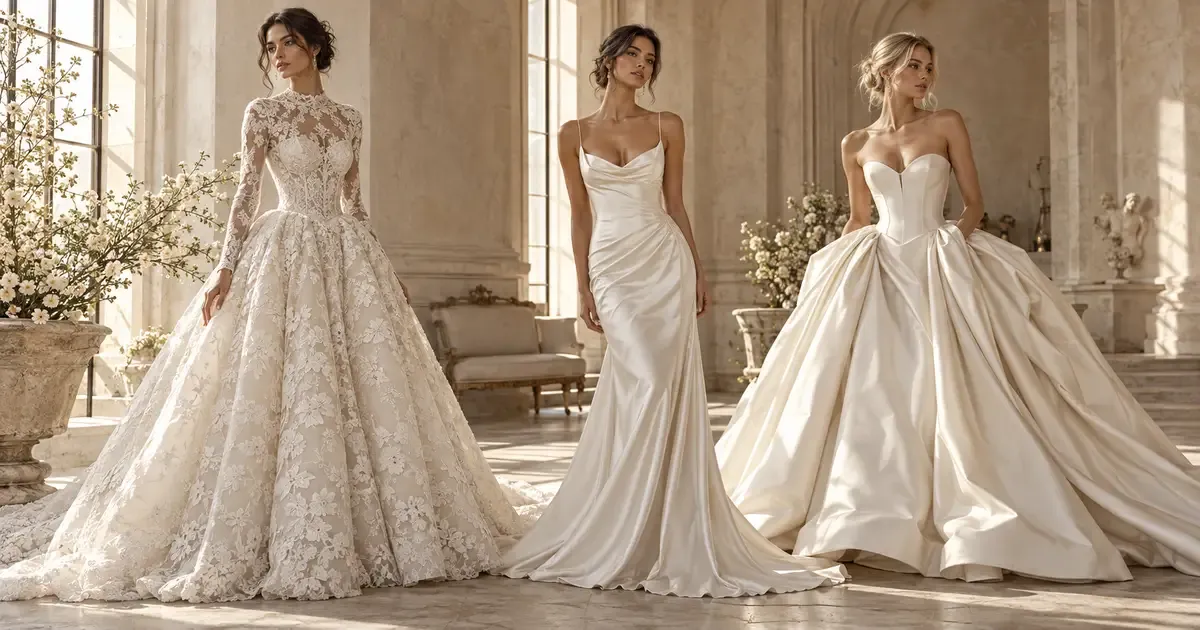
Wedding dress trends for 2026 and 2027 put texture, shape and versatility at the centre of bridal style. Lace, dramatic skirts and sculptural details are prominent in the 2026 collections. Published Spring 2027 collections continue that romance through shaped waists, detachable layers and fluid fabrics, with room for both elaborate gowns and simple satin silhouettes.
This guide was updated on 6 October 2026. The 2027 section draws on collections already released, rather than treating next year’s bridal shopping choices as settled facts. A runway direction tells you what designers are exploring; it does not prove which style is the best seller in your local salon.
The hero and comparison images are AI-generated illustrations of bridal details, not photographs of the designer gowns cited below.
In this guide
- What are the wedding dress trends for 2026 and 2027?
- What’s hot in the 2026 collections
- Wedding dress trends emerging for 2027
- How to choose a trend you will enjoy wearing
- What to ask before ordering
What are the wedding dress trends for 2026 and 2027?
Wedding dress trends for 2026 and 2027 include lace, sculptural skirts, shaped bodices and versatile layers. The 2026 collections emphasise dramatic volume, floral details and high necklines. Published Spring 2027 collections also feature basque and dropped waists, detachable pieces and fluid satin or chiffon. These are runway directions, not sales rankings.
The key bridal trends covered in this guide are:
- Lace textures: fine patterns, raised outlines and dimensional flowers.
- Dramatic skirts: full volume and rounded bubble hems.
- Sculptural details: oversized flowers and shaped fabric.
- High necklines: collars, halters and draped coverage.
- Defined waists: basque points and lowered waist seams.
- Versatile layers: detachable sleeves, jackets and overskirts.
- Fluid fabrics: satin and chiffon with softer movement.
The sections below explain the collection examples and the fitting checks to make before choosing each look.
What’s hot in the 2026 collections
1. Lace with a more individual finish
Lace is a strong thread in current bridal fashion. Vogue’s June 2026 lace report identifies its prominence in the Fall 2026 presentations. The useful shopping question is which lace treatment feels right to you: a delicate pattern, a bolder motif, or a small amount around the neckline and sleeves.
Look at the gown from several distances. A lace you love close up may create a very different overall effect in a full-length photograph. Ask to see lining options too: ivory backing emphasises a different contrast from a lining closer to your skin tone.
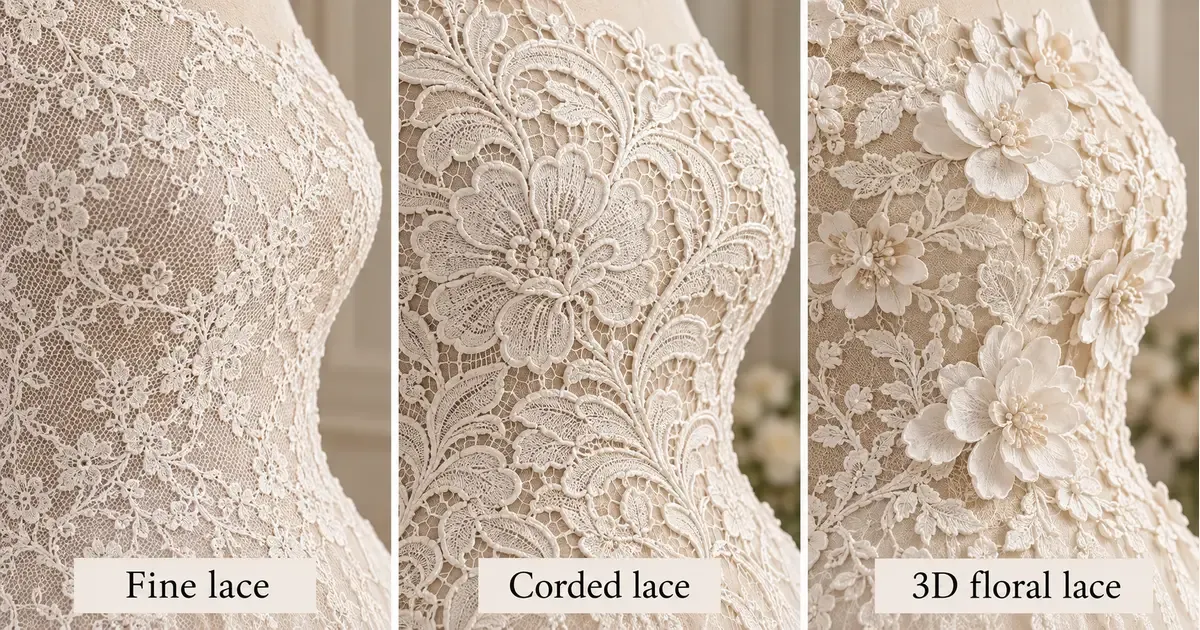
Try this at your appointment: photograph the same gown in natural light and salon lighting, with permission. Check whether you like the visible pattern and coverage in both.
2. Dramatic skirts and bubble hems
A full skirt can be the main event of an otherwise simple gown. Vogue’s Spring 2026 runway report highlights bubble skirts, including designs by Dana Harel and Markarian. Their rounded hems bring a distinct shape to both long dresses and minis.
The decision is partly practical. A skirt that looks weightless can still involve several layers, and a broad silhouette needs space around chairs and doorways. Compare a structured skirt with a softer one rather than judging volume from photographs alone.
Try this at your appointment: walk, turn and sit in the sample. Ask how the finished train will bustle and whether its shape will change when lifted for dancing.
3. Sculptural florals and dimensional fabric
Flowers are becoming part of the gown’s construction as well as its surface decoration. Viktor&Rolf’s Fall/Winter 2026 collection includes oversized roses, sculptural floral details and varied skirt proportions. These are specific collection examples, not a claim that every bridal label is taking the same approach.
One substantial flower at the shoulder or hip can create a focal point without covering the whole dress. All-over dimensional detailing gives a richer effect, but deserves a careful check against the veil and bouquet you intend to carry.
Try this at your appointment: hold your arms naturally and carry something bouquet-sized. Check that raised details do not rub, catch or disappear behind your hands.
4. High necklines and intentional coverage
High necklines offer another way to create drama. Who What Wear’s 2026 bridal runway coverage notes high-neck designs alongside voluminous gowns. A halter, lace collar and softly draped neck can each give a very different result.
Coverage and comfort are separate questions. Sheer lace may reveal more than you expect, while an opaque collar can feel warm during an outdoor ceremony. Think about the actual fabric against your skin rather than choosing from the neckline name alone.
For the complete look, coordinate your neckline with bridal hairstyles and updos before buying statement earrings or a headpiece.
Wedding dress trends emerging for 2027
Spring 2027 bridal collections are already available to view, but samples, ordering dates and size ranges vary by salon. These are documented design directions, with our practical advice on how to shop them. They are not predictions of guaranteed sales or universal availability.
5. Basque waists, dropped waists and shaped bodices
What is the difference between a basque waist and a dropped waist?
A basque waist dips into a V or curved point at the front of a wedding dress bodice. A dropped waist places the waist seam below the natural waist. A gown can combine both features, but a low horizontal seam alone does not make it a basque-waist dress.
| Waist style | Defining feature | What to check when trying it on |
|---|---|---|
| Natural waist | Seam follows the natural waist. | Does the seam align with your waist? |
| Basque waist | Seam dips into a front point or curve. | Does the pointed bodice stay comfortable when you sit? |
| Dropped waist | Seam sits below the natural waist. | Does the longer bodice fit your torso without pulling? |
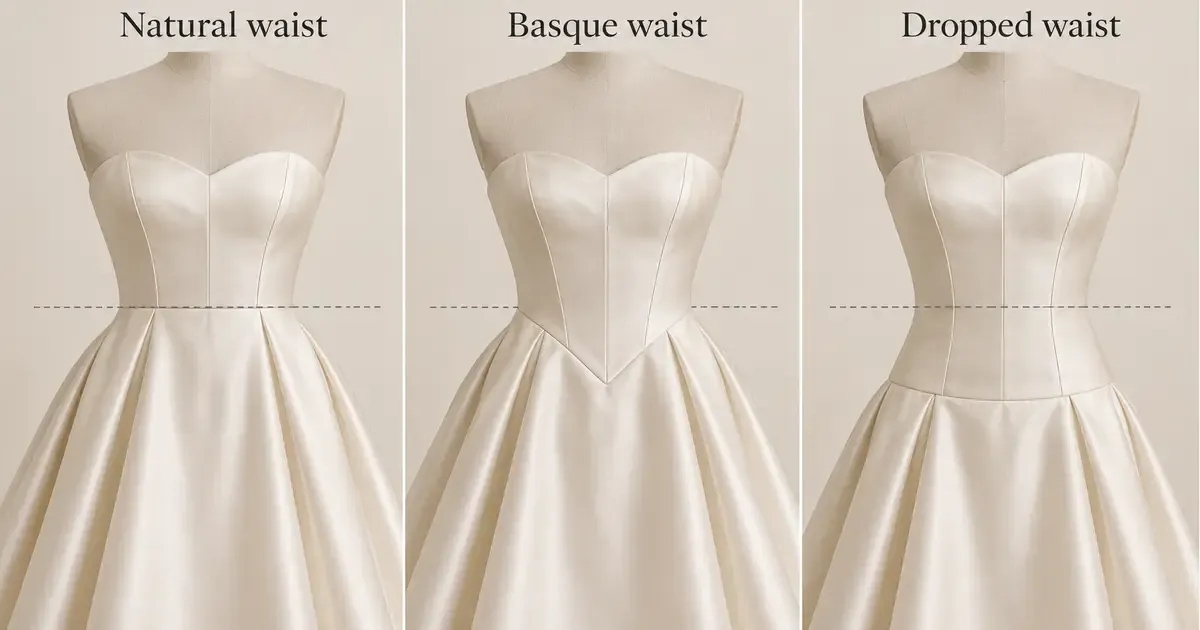
Monique Lhuillier’s Spring 2027 lookbook provides concrete examples: Beloved has a corseted basque waist, while Mercer uses a draped dropped waist. The collection shows how differently a defined waist can work with lace or flowing fabric.
The position of the sample’s waist may differ from the position on a correctly fitted gown. Ask the consultant to explain how the bodice would fit your torso, rather than relying on clips to settle every proportion.
Fit check: sit down, breathe comfortably and bend slightly. Boning should support the design without digging in. Our guide to choosing your wedding dress helps you compare silhouettes without treating body-shape rules as restrictions.
6. Detachable layers and bridal separates
Removable pieces can change a look between the ceremony and reception. The same Spring 2027 Monique Lhuillier collection includes jackets, overskirts and detachable sleeves; Revel illustrates a corset-and-skirt approach with coordinating layers.
Our view is that versatility is especially worth exploring if you love a grand entrance but want less volume later. It is not automatically cheaper than a second dress, and removing an overskirt does not necessarily turn the base gown into a mini.
Fit check: try the outfit with every removable piece off. Inspect fastenings, the finished waist and the back. Ask who will help you change and where the removed pieces can be stored safely.
7. Fluid satin, chiffon and quieter silhouettes
Minimal bridal style remains an option alongside elaborate lace. Monique Lhuillier’s Spring 2027 Tribeca gown uses crepe-back satin, while Mercer is draped chiffon. The fabrics create different kinds of movement, even when the overall silhouette looks restrained.
A simple gown can make the cut and fit easier to see. At your appointment, examine how fabric falls across the bust, waist and hips when standing and sitting. Try the undergarments you expect to wear, or ask which options work with the sample.
Style choice: begin with one accessory you love. A veil, earrings or a headpiece may be enough; you do not need to add embellishment simply because the dress is plain. See our bridal hair accessories guide for ways to finish the look.
8. Sculptural volume and expressive flowers
Viktor&Rolf’s Spring/Summer 2027 collection explores ballgowns, A-lines and columns through floral forms and shaped fabric. Its Blushing Bouquet designs and Couture Cloud organza dresses offer examples of decoration and volume working together.
This is a direction to consider when you want the dress itself to carry the visual impact. Start by deciding where you want that impact: the shoulder, waist, skirt or train. A single strong feature is easier to compare across appointments than a general request for something dramatic.
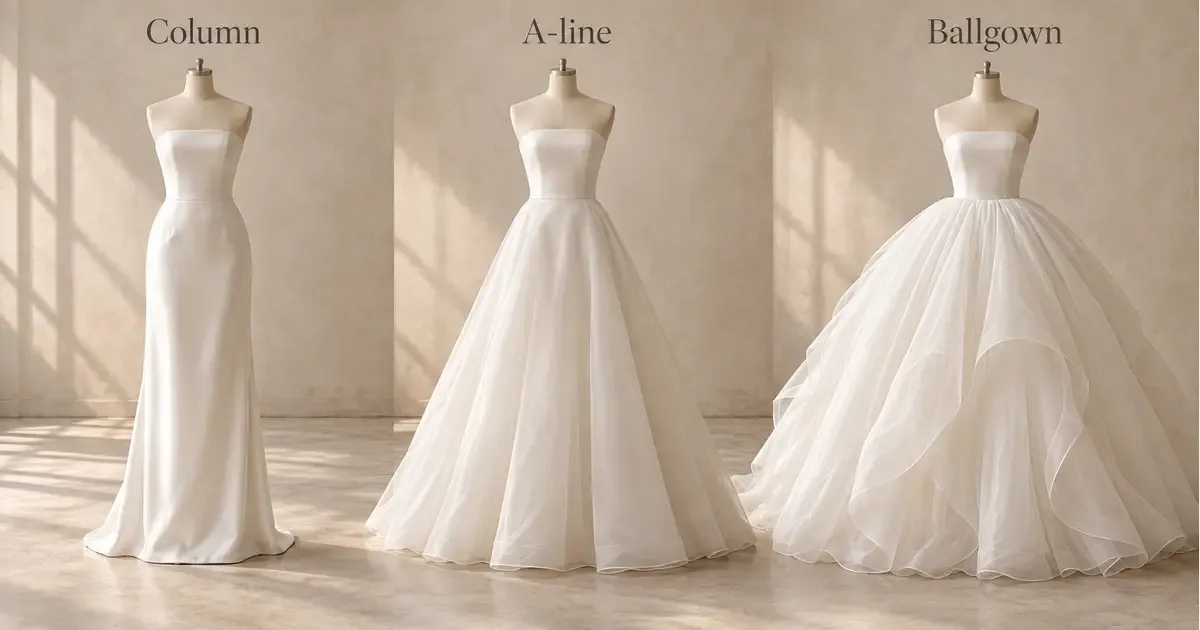
Fit check: see the gown with your planned veil length. Check that the veil’s edging does not hide the detail that drew you to the dress.
What about colour, pearls and square necklines?
These can still be lovely choices, but they should not all be presented as the defining trends of every season. The Spring 2027 Monique Lhuillier lookbook includes red and noir designs and pearl accents. Those examples establish that the options exist; they do not establish that coloured gowns have overtaken ivory.
Our advice is to keep a square neckline, pearl trim or unusual colour on your shortlist if it suits your taste. Ask for a fabric swatch before coordinating accessories, because shade names alone are a poor guide to matching fabrics.
How to choose a trend you will enjoy wearing
Pick two or three priorities before your first appointment. For example, you might want a defined waist, enough freedom to dance and a lace pattern that shows clearly in photographs. Those priorities are more useful to a consultant than a folder containing dozens of unrelated gowns.
Compare at least one alternative to your favourite trend. If you love a dropped waist, try a natural-waist gown too. If you want a high collar, compare it with an open neckline in a similar fabric. This helps you distinguish the feature you love from the styling of a particular campaign.
Use your venue and schedule to test the choice:
- Outdoor or warm-weather ceremony: check the lining, number of layers and how the bodice feels after several minutes.
- Formal indoor celebration: consider how a train and wider skirt will move through the ceremony space.
- Small ceremony or city wedding: try the dress while sitting and walking, especially if stairs or transport are involved.
- Long reception: practise the bustle and any outfit change, including your shoes.
Bring footwear with a similar heel height to what you plan to wear. Our guide to comfortable wedding shoes can help you plan the gown and shoes together.
For a South African wedding, remember that Northern Hemisphere collection names describe a fashion season, not your local weather. An October ceremony may call for different fabric and layering decisions from a winter wedding, regardless of the year printed on the lookbook.
What to ask before ordering
A Spring 2027 label does not guarantee that your nearest boutique has the gown to try on. Contact the salon with the designer and style name, then ask:
- Will that sample be available for my appointment? Confirm its size and whether it is visiting for a trunk show.
- What is the delivery estimate for my order? Include time for fittings and a buffer before the wedding.
- What is included in the quoted price? Check sleeves, overskirts, veils and other pieces separately.
- Which alterations are possible? Ask about neckline, lining, waist position and train changes before paying.
- How will I move in the finished gown? Discuss the bustle, fastening system and any removable layers.
Set a total outfit allowance before choosing upgrades. Use the wedding budget calculator to include alterations, accessories and shoes alongside the dress itself.
If your wedding is approaching, compare available samples and ready-to-order options before waiting for another release. If you have more time, ask about upcoming trunk shows without assuming a new collection will solve every fitting question.
The strongest choice is a dress whose details you love and whose fit works for your day. Use the 2026 and 2027 collections to discover possibilities, then make the decision in the fitting room.
Frequently Asked Questions
What wedding dress trends are popular for 2026?
The 2026 collections highlight lace, dramatic skirt volume, high necklines and sculptural details. Choose a trend you enjoy wearing, then check its fit, weight and movement at your appointment.
What wedding dress trends are emerging for 2027?
Published Spring 2027 collections feature lace, basque and dropped waists, detachable layers, fluid satin and chiffon, and sculptural florals. These are collection directions rather than confirmed measures of what brides will buy.
Are basque waists and drop waists the same?
A basque waist usually dips into a V or curved point at the front. A drop waist places the waist seam below the natural waist. A gown can combine both features, but they are not interchangeable terms.
Should I wait for a 2027 collection before buying my dress?
Ask your salon when the specific sample and order slots will be available. Work backward from your wedding date, including delivery, alterations and a buffer. A collection labelled Spring 2027 does not guarantee local availability by a particular date.

Bridal by Bentley
Wedding Editorial
Bridal by Bentley publishes wedding inspiration and practical planning guides to help couples compare options and prepare for their celebrations.